Español
 عربى
 русский




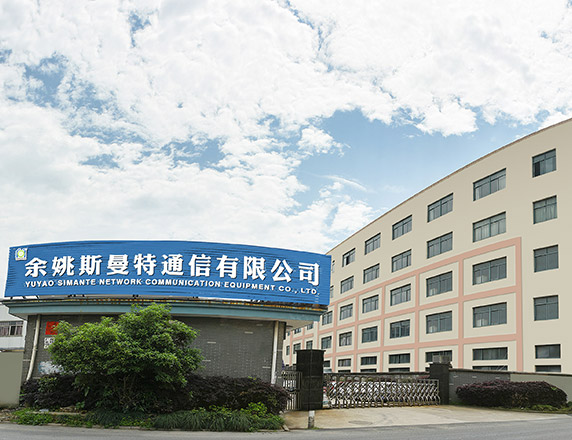
We specialize in network cabling solutions and optical fiber products integrating design, development, sales and service.
Based on the mature research and development system, the quality stability of Simante has been guaranteed at the design source. We have more than 10 engineers and over 30 full-time technical persons who continue to provide their professional value in the position, improving quality and promoting product update.
Simante provides specialized integrated solutions for customers to ensure it meets the customer's requirement. Welcome to visit.
Physical Specifications
| Port Density | 24, 48, or 96 ports depending on panel height |
| Panel Height | 1U or 2U, standard 19-inch rack mount |
| Material | Cold-rolled steel housing with powder-coated finish |
| Rack Ear Style | Flat or recessed mount, front or rear cabling |
| Labeling | Numbered port ID window with icon/label strip |
| Color Coding | Optional colored icon strips for circuit identification |
| Packaging | Individually boxed with corner protection for panel edges |
Performance Specifications
| Port Type | Cat5e/Cat6/Cat6a RJ45, or modular keystone slots |
| Termination Method | 110-type punch down or keystone insert |
| Cable Category Support | Up to Category 6A depending on port modules |
| Cable Management | Rear cable bar and strain relief points |
| Shielding Option | Shielded (STP) or unshielded (UTP) module compatibility |
| Contact Material | Gold-plated contacts for stable signal transfer |
| Certification Support | Component rating matched to installed module category |
| Insertion Cycle Rating | Designed for repeated patch cord insertion typical of active cross-connect use |
Application
High-density patch panels are specified whenever rack space is limited relative to the number of connections that must be terminated, including:
- Data center main distribution and horizontal cross-connect frames
- Internet service provider and telecom central office racks
- Enterprise network cores supporting large floor populations
- Colocation facilities where rack space is billed by the unit
- Campus and building backbone distribution frames
- Broadcast facilities requiring dense structured connections
- Hospital and campus network cores with continuous uptime requirements
- Retrofit projects consolidating multiple low-density panels into fewer units
Density Planning Reference
| Panel Height | Typical Port Count | Best Suited For |
| 1U | 24 ports | Smaller equipment rooms, moderate growth expectations |
| 1U high-density | 48 ports | Data center cross-connects, space-constrained racks |
| 2U high-density | 96 ports | Carrier-grade or large enterprise distribution frames |
Design Considerations Before Ordering
- Confirm whether the installation uses front cabling, rear cabling, or both, since panel models are often optimized for one approach
- Plan cable manager placement above and below the panel before finalizing rack elevation drawings
- Match port category rating to the cabling standard already in use elsewhere in the facility
- Decide on fixed-port versus keystone-modular panels based on how often media types are expected to change
- Account for patch cord boot clearance when calculating realistic usable density, not just the rated port count
Advantages
The main appeal of a high-density panel is reducing the physical footprint required for a given number of connections, but the practical benefits extend into cabling consistency and long-term capacity planning as well.
- Space efficiency, reducing the number of rack units needed for a given port count
- Modular port layout that supports mixed copper and fiber configurations
- Consistent cable management when paired with matching horizontal organizers
- Supports structured cabling standards for predictable performance up to Cat6A
- Simplifies future capacity planning since panels can be added in known increments
- Reduces the number of separate frames a technician needs to check during audits
- Lowers total rack unit consumption, which can reduce facility floor space costs
- Standardized port numbering makes documentation and change tracking simpler
High-Density vs Standard-Density Panels
| Factor | Standard-Density Panel | High-Density Panel |
| Ports per rack unit | Lower, typically 24 per 1U | Higher, up to 48 per 1U |
| Rack space required | More units for the same port count | Fewer units for the same port count |
| Patch cord clearance | Generally more spacing per port | Requires careful cable management planning |
| Best fit | Smaller rooms, lighter port counts | Data centers and carrier-grade frames |
Quality Assurance Practices
- Continuity and wiring pattern checks performed on production samples before batch approval
- Dimensional checks against rack unit height and port spacing tolerances
- Visual inspection of contact plating and housing finish prior to packing
- Packaging inspection to protect port faces and labeling strips during transit