Español
 عربى
 русский




We specialize in network cabling solutions and optical fiber products integrating design, development, sales and service.
Based on the mature research and development system, the quality stability of Simante has been guaranteed at the design source. We have more than 10 engineers and over 30 full-time technical persons who continue to provide their professional value in the position, improving quality and promoting product update.
Simante provides specialized integrated solutions for customers to ensure it meets the customer's requirement. Welcome to visit.
Physical Specifications
| Material | Cold-rolled steel, aluminum alloy, ABS/PVC plastic |
| Rack Compatibility | Standard 19-inch rack and cabinet systems |
| Common Heights | 1U, 2U horizontal panels; full-height vertical columns |
| Mounting Type | Screw-mount to rack rails, front or rear position |
| Finish | Powder-coated black, gray, or custom colors on request |
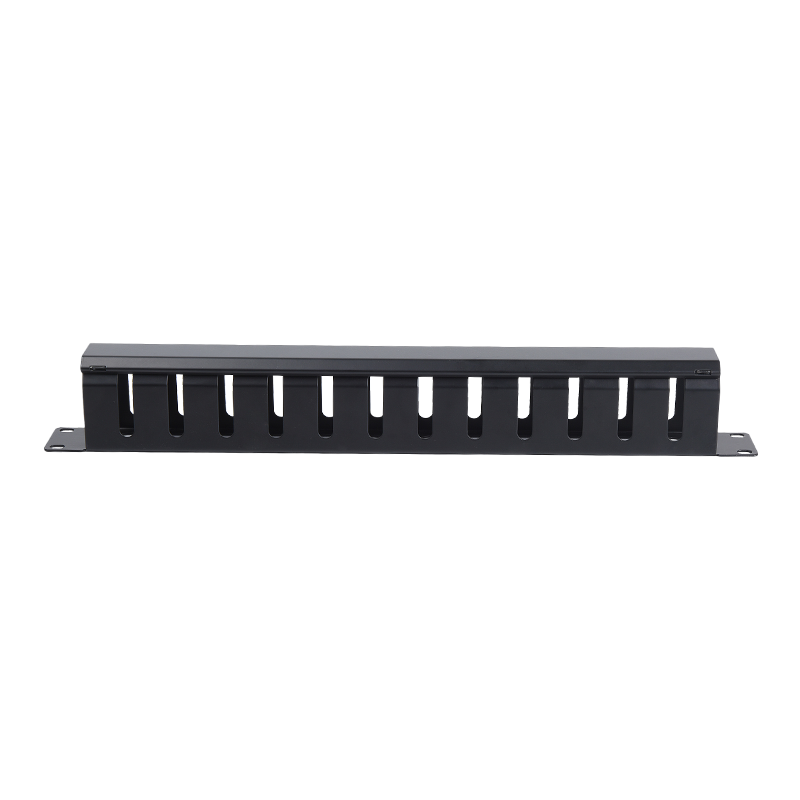
| Duct Style | Open finger duct or enclosed channel with hinged cover |
| Ring/Hook Spacing | Evenly spaced D-rings, 25 to 50 mm intervals |
| Packaging | Individually boxed or bulk-packed for OEM assembly lines |
Performance Specifications
| Cable Capacity | Typically 20 to 60 cables per panel, model dependent |
| Load Rating | Rated for standard copper and fiber patch cord bundles |
| Fire Rating | Flame-retardant plastic components available on request |
| Edge Finishing | Rounded or covered edges to reduce cable jacket wear |
| Accessory Options | Brush strip cutouts, hinged covers, label windows |
| Corrosion Resistance | Powder coating resists surface rust in indoor environments |
| Operating Environment | Suited to standard indoor equipment room conditions |
| Service Life Consideration | Designed for repeated cable additions and removals over the equipment lifecycle |
Application
Cable management products are used wherever structured cabling needs to stay organized, ventilated, and accessible for future changes. Typical deployment settings include:
- Data center and server room racks handling dense, high-count cable runs
- Telecom equipment rooms and network operation centers
- Office IT closets and small business server cabinets
- Educational and government facility network rooms
- Colocation environments where multiple tenants share a single row
- OEM cabinet assembly lines requiring pre-fitted cable routing
- Broadcast and audio-visual control rooms with mixed cable types
- Retrofit projects upgrading an existing cabinet without full re-cabling
Typical Configuration by Environment
| Environment | Recommended Configuration |
| Small office cabinet | 1U horizontal manager above and below each patch panel |
| Data center row | Vertical D-ring columns paired with horizontal managers per rack unit block |
| Telecom equipment room | Enclosed trunking channels for exposed overhead runs |
| OEM cabinet assembly | Pre-mounted finger duct panels matched to cabinet width |
Design Considerations Before Ordering
- Estimate peak cable count per rack section, not just the current count, to avoid undersizing the panel
- Confirm whether front cabling, rear cabling, or both need to be accommodated
- Check clearance between adjacent rack equipment before selecting a deep-profile duct style
- Match panel finish and color to existing cabinet hardware for a consistent installation
- Consider vertical management early in data center layouts, since retrofitting it later is more disruptive than horizontal panels
Advantages
Investing in structured cable management pays off mainly through reduced operating friction rather than a single dramatic improvement, since most of the benefit shows up in day-to-day maintenance rather than at initial installation.
- Improved airflow around switches and patch panels by keeping cable bundles away from ventilation paths
- Faster fault isolation, since individual cable runs stay visible and traceable
- Reduced cable strain and connector wear from better bend radius control
- Cleaner, more professional cabinet appearance for client-facing installations
- Scalable design that supports adding cable runs without a full re-cable
- Lower risk of accidental disconnection when working on adjacent equipment
- Easier compliance documentation, since cable paths match as-built diagrams
- Reduced labor time on future moves, adds, and changes
Managed vs Unmanaged Cabling
| Factor | Unmanaged Cabling | Managed Cabling |
| Airflow | Often restricted by tangled bundles | Maintained by dedicated routing paths |
| Troubleshooting time | Longer, cables hard to trace | Shorter, runs are visible and labeled |
| Risk during maintenance | Higher chance of accidental disconnects | Lower, cables are secured and separated |
| Future scalability | Difficult to add runs cleanly | New runs follow existing organized paths |
Quality Assurance Practices
- Visual inspection of coating, edge finishing, and panel alignment before packing
- Dimensional checks against rack unit height and mounting hole spacing
- Batch sampling to confirm consistent material thickness across production runs
- Packaging inspection to reduce transit damage on corners and hinged covers