Español
 عربى
 русский




We specialize in network cabling solutions and optical fiber products integrating design, development, sales and service.
Based on the mature research and development system, the quality stability of Simante has been guaranteed at the design source. We have more than 10 engineers and over 30 full-time technical persons who continue to provide their professional value in the position, improving quality and promoting product update.
Simante provides specialized integrated solutions for customers to ensure it meets the customer's requirement. Welcome to visit.
Introduction
Copper patch cords use stranded 24–26 AWG conductors rather than the solid conductors found in permanent horizontal cabling, because stranded wire tolerates the repeated flexing that happens every time a technician moves a cord between switch ports. They're manufactured and tested in-house to guarantee performance before shipping, then color-coded and length-labeled to make cable management predictable in dense equipment racks.
Fiber patch cords follow the same logic in a different medium: a short length of tight-buffered fiber, factory-polished and tested for insertion and return loss at both ends, used to jump between a patch panel and active equipment or between two patch panels. Between the two families, patch cords are specified by length, category or fiber type, connector type, and jacket rating (plenum, riser, or general-purpose) to match the project's fire-code and performance requirements.
Applications
Patch cords are used at nearly every active connection point in a structured cabling deployment:
- Cross-connecting patch panels to network switches in telecom and server rooms
- Connecting desktop devices to wall data sockets in offices and homes
- Jumper connections between fiber patch panels and transceivers in data centers
- Temporary or test-bench connections during network commissioning
- Structured cabling channel completion between the permanent link and the equipment
Specifications
| Cord families | Copper (Cat5e/6/6A) and fiber optic (singlemode/multimode) |
| Connector types | RJ45 (copper); LC, SC, FC, ST, MPO (fiber) |
| Standard lengths | 0.3 m to 30 m, custom lengths on request |
| Jacket options | PVC, LSZH, plenum (CMP/OFNP), riser (CMR/OFNR) |
| Testing | 100% factory tested for continuity/wiremap (copper) or insertion & return loss (fiber) |
| Color coding | Multiple jacket colors for visual cable management |
| Compliance | TIA/EIA-568-C.2, IEC 61754 / IEC 60793 (fiber) |
Installation Tips
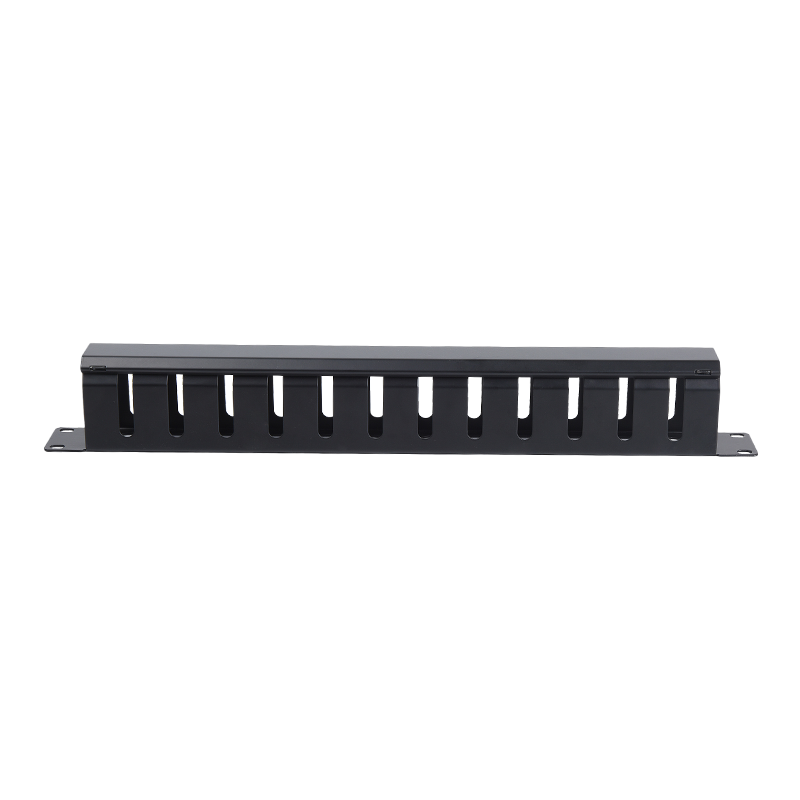
Route patch cords through cable management arms or rings rather than letting them hang free across the front of a rack, leave a small service loop rather than pulling cords drum-tight, and keep fiber patch cords within their minimum bend radius at all times, including during storage.
Troubleshooting & FAQ
When a link that worked before suddenly fails, swap the patch cord first — it's the most frequently replaced component in a channel and the easiest place to introduce or rule out a fault without touching permanent cabling.
- Q: What's the difference between a patch cord and a cross-connect cable?
- A: In practice the terms overlap; a cross-connect cable specifically refers to a patch cord used between two patch panels rather than from a panel to an end device.
- Q: What's the purpose of a snagless boot on a patch cord?
- A: It protects the RJ45 clip from catching on other cables or obstructions when the cord is pulled, preventing the tab from breaking off.
- Q: Is there a maximum patch cord length in a structured cabling channel?
- A: TIA/ISO standards generally recommend total patch cord length (both ends combined) not exceed about 10 meters within a 100-meter channel, though this depends on the specific standard and application.
- Q: What do patch cord jacket colors typically indicate?
- A: There's no universal rule, but many organizations standardize colors internally — for example, blue for data, yellow for voice, or red for out-of-band management — to speed up visual tracing.
- Q: When should I use shielded patch cords?
- A: In environments with significant electromagnetic interference, and only when the rest of the channel (jacks, panels, cable) is also shielded and properly grounded end to end.
- Q: Are flat patch cords as reliable as round ones?
- A: Flat cords are convenient for under-carpet or tight-space routing but can be more prone to crosstalk at higher categories; round cords remain the more common choice for performance-critical runs.
- Q: How are patch cords tested before shipping?
- A: Copper cords are typically wiremap-tested for continuity and correct pinout; fiber cords are tested for insertion loss and return loss against the relevant connector and fiber-type spec.
- Q: Should I use a patch cord or solid cable for a permanent run?
- A: Patch cords are for the flexible, frequently-changed connections at each end of a channel; solid-conductor cable is for the fixed, permanent horizontal or backbone run in between.