Español
 عربى
 русский
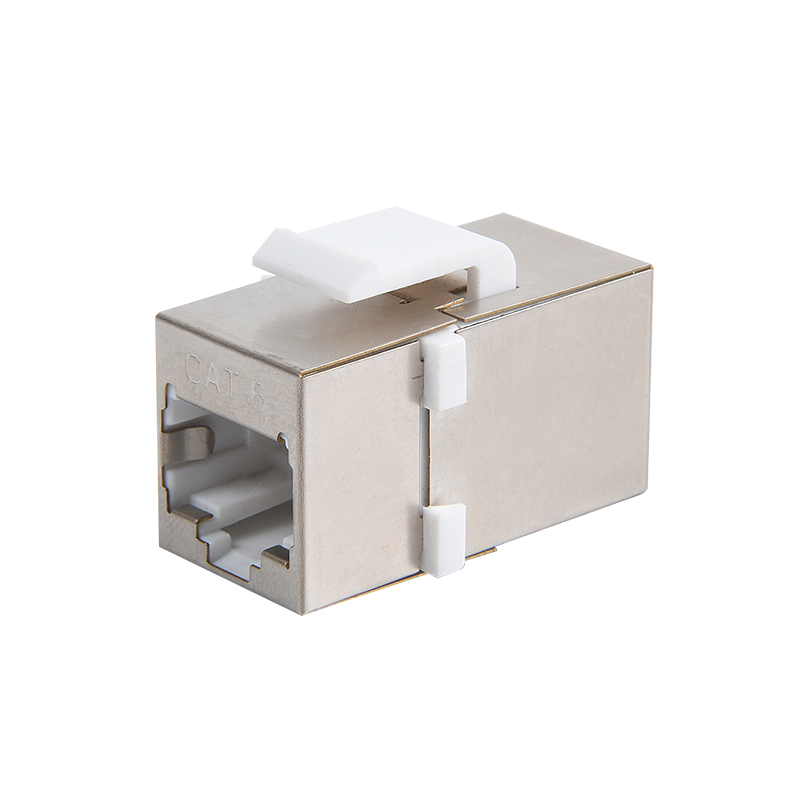
We specialize in network cabling solutions and optical fiber products integrating design, development, sales and service.
Based on the mature research and development system, the quality stability of Simante has been guaranteed at the design source. We have more than 10 engineers and over 30 full-time technical persons who continue to provide their professional value in the position, improving quality and promoting product update.
Simante provides specialized integrated solutions for customers to ensure it meets the customer's requirement. Welcome to visit.
Product Introduction
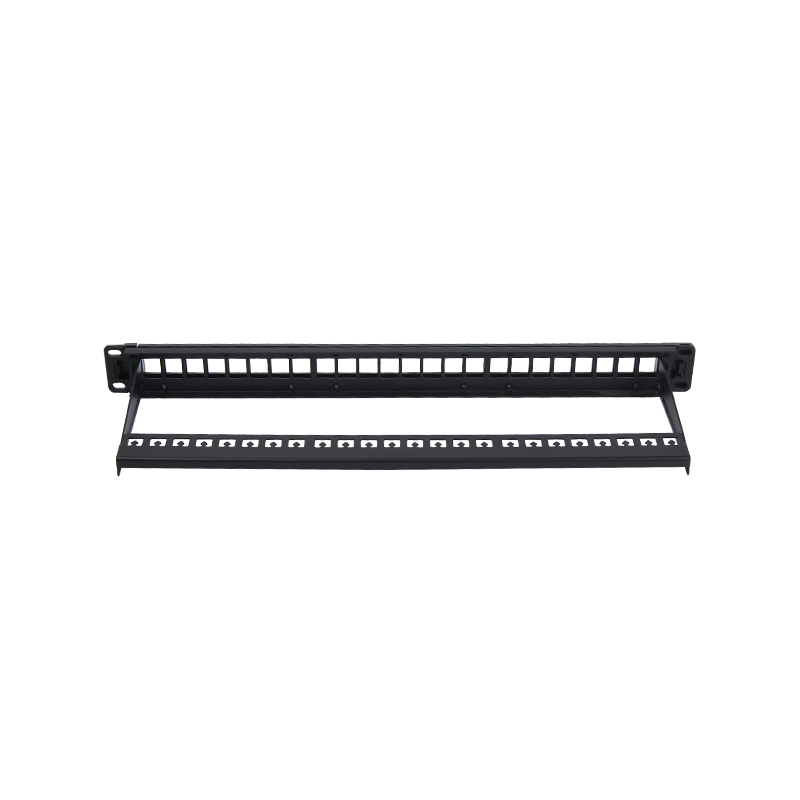
This patch panel provides a structured, rack-mountable termination point for horizontal cabling, consolidating dozens of individual cable runs into a single, organized, labeled panel that connects to network switching equipment through short, easily replaceable patch cords.
Available in 12, 24, and 48-port configurations, the panel is built to standard 19-inch rack dimensions and typically occupies 1U of vertical rack space for 24-port models, making it compatible with virtually any commercial server rack, wall-mount rack, or open rack frame.
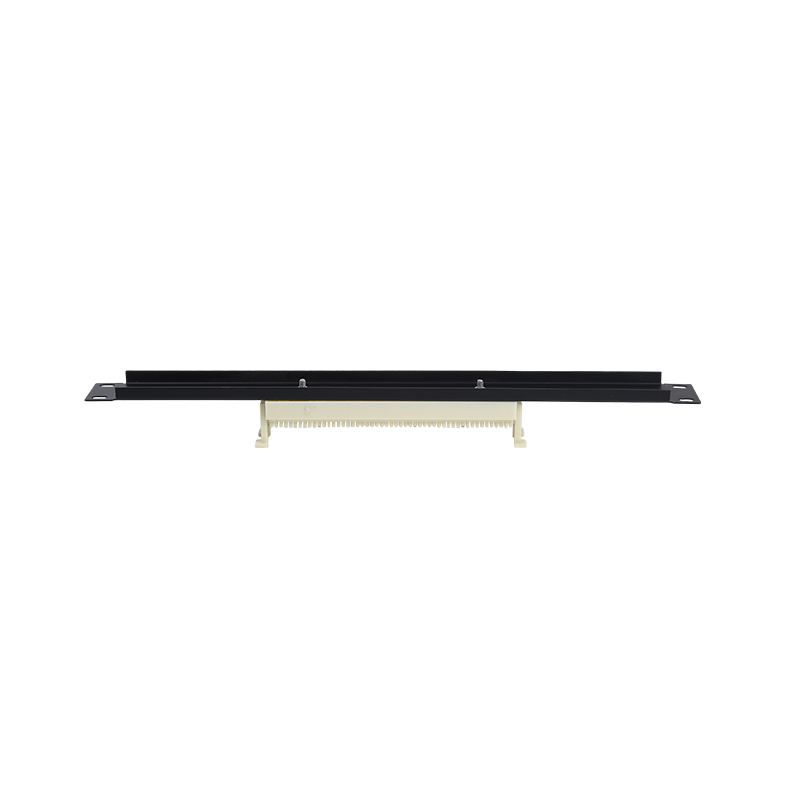
Two main product families are offered: a fixed punch-down version with 110-style IDC terminals for each port, wired directly to a specific category (Cat5e, Cat6, or Cat6A), and a modular keystone version with open slots that accept standard keystone jacks, allowing a single panel to host a mix of categories, shielded and unshielded ports, or even fiber optic adapters as needed.
The rear of the panel includes cable management features such as a strain-relief bar and labeled port numbering, while the front face is typically angled or flat depending on the model, with angled versions helping reduce patch cord bend radius issues in tight rack spaces.
Construction is typically 16-18 gauge steel with a powder-coated finish for durability, and mounting hardware (rack screws or cage nuts) is generally included. Color-coded and numbered port labeling comes standard, supporting the documentation practices needed for large, well-organized network racks.
Application Scenarios
Patch panels are a core component of virtually any structured cabling system where horizontal cable runs need to be organized, labeled, and connected to active network equipment in a serviceable way.
Office network closets and server rooms use patch panels as the central termination point for every wall jack and access point in the building, allowing IT staff to manage the entire floor's connectivity from one rack rather than tracing cables through walls for every change.
Data centers rely on high-density patch panels, often 48-port or higher, to organize massive numbers of server, storage, and network device connections, with fiber and copper panels frequently used side by side to support hybrid cabling architectures.
Educational campuses use patch panels in each building's telecommunications room to aggregate classroom, office, and common-area connections, simplifying the process of adding new devices or reconfiguring rooms for different uses over time.
Multi-dwelling units and hospitality properties use patch panels per floor or per building to organize resident or guest room connections, security camera feeds, and building management system links, which is especially valuable when tenant or room configurations change over the property's lifetime.
Industrial and manufacturing facilities use patch panels to organize connections for networked equipment, sensors, and control systems, often selecting ruggedized or shielded panel versions to match the facility's overall EMI environment.
Small businesses and co-working spaces use compact 12 or 24-port patch panels even in modest network closets, since the organizational and troubleshooting benefits scale down effectively even for smaller port counts, and the cost difference for a properly organized rack versus a tangle of direct switch connections is minimal.
| Port Count Options | 12, 24, 48 ports (other counts available on request) |
| Rack Compatibility | Standard 19-inch EIA rack |
| Rack Space (24-port) | 1U |
| Panel Type | Fixed punch-down (Cat5e/Cat6/Cat6A) or modular keystone slots |
| Standard Compliance | TIA/EIA-568-C.2 / ISO/IEC 11801 (category dependent), RoHS |
| Termination Type | 110-style IDC punch-down (fixed models) |
| Construction Material | 16-18 gauge powder-coated steel |
| Cable Management | Rear strain-relief bar, numbered port labeling |
| Mounting Hardware | Rack screws / cage nuts, typically included |
| Front Face Style | Flat or angled options available |
| Fiber Option | Modular panels accept LC/SC fiber adapter plates |
| Operating Temperature | -10 to 60 C |
| Packaging | Individually boxed with mounting hardware |
- Q: What is the difference between a fixed and a modular keystone patch panel?
- A: A fixed panel has each port permanently wired to a specific category using 110-style IDC terminals, while a modular keystone panel has open slots that accept any standard keystone jack, letting you mix categories, shielded/unshielded types, or fiber adapters within the same panel.
- Q: How many rack units (U) does a patch panel take up?
- A: This depends on port count and panel design, but a typical 24-port patch panel occupies 1U of rack space, while some high-density 48-port models may use 1U or 2U depending on the manufacturer's design.
- Q: Can I mix Cat6 and Cat6A jacks in the same modular patch panel?
- A: Yes, a modular keystone patch panel accepts any standard keystone jack regardless of category, so mixing Cat6 and Cat6A jacks in the same panel is physically possible. For consistent network performance, however, it's best practice to match the jack category to the connected horizontal cable and downstream equipment on each specific port.
- Q: Do patch panels need to be grounded?
- A: Standard unshielded patch panels do not require grounding. Shielded patch panels, however, must be properly bonded to the rack or building ground for the shielding on connected shielded jacks and cable to function correctly.
- Q: Why is my patch panel port not passing a network signal?
- A: Common causes include a loose or improperly seated patch cord, a termination error on the punch-down side (check color-coded wiring against the panel's labeled diagram), or a fault further down the horizontal cable run. Testing with a cable certifier at the panel isolates whether the issue is at the panel or elsewhere in the channel.
- Q: Can a 24-port patch panel be expanded later?
- A: Not directly; patch panels have a fixed physical port count. If more ports are needed later, an additional patch panel is typically installed in the rack rather than expanding the existing unit.
- Q: What is the purpose of the rear strain-relief bar on a patch panel?
- A: The strain-relief bar secures the bundle of incoming horizontal cables so that the weight and movement of the cables does not put mechanical stress directly on the termination points, which helps prevent connection failures over time.
- Q: Should I choose an angled or flat patch panel?
- A: Angled patch panels help manage patch cord bend radius in tight racks and can improve airflow and cable organization in dense installations, while flat panels are simpler and slightly less expensive; the choice mostly comes down to available rack depth and personal cable management preference.