Español
 عربى
 русский
We specialize in network cabling solutions and optical fiber products integrating design, development, sales and service.
Based on the mature research and development system, the quality stability of Simante has been guaranteed at the design source. We have more than 10 engineers and over 30 full-time technical persons who continue to provide their professional value in the position, improving quality and promoting product update.
Simante provides specialized integrated solutions for customers to ensure it meets the customer's requirement. Welcome to visit.
Product Introduction
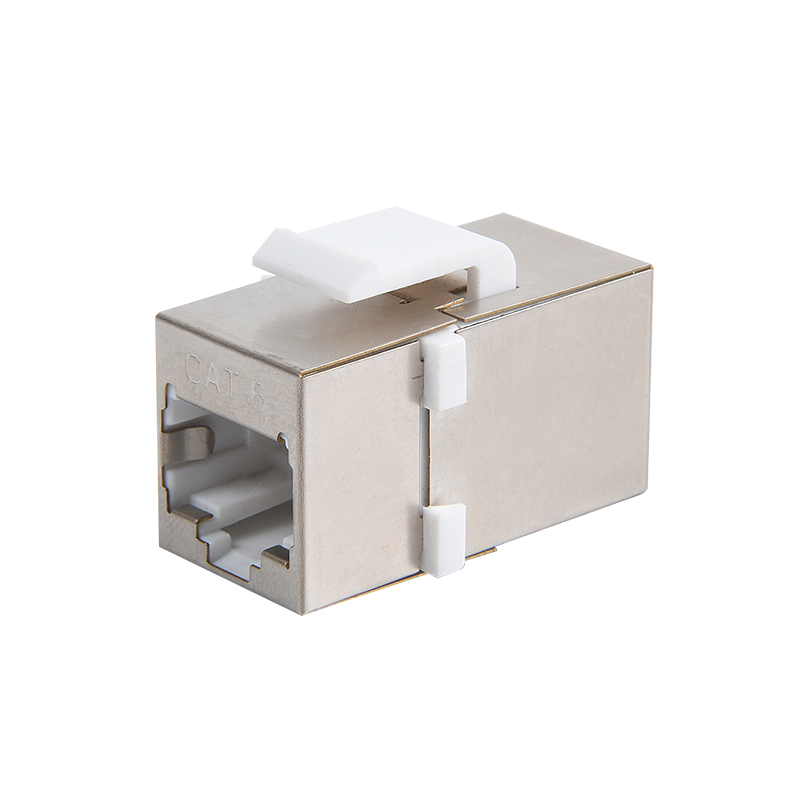
Our RJ45 keystone jacks are purpose-built to terminate twisted-pair Ethernet cable and deliver the electrical performance their category rating promises, while keeping the physical installation as fast and error-resistant as possible. Each jack uses the industry-standard 8P8C port geometry on the front face and the universal keystone cut-out on the rear, so it works with virtually any keystone-compatible wall plate, surface mount box, or patch panel already on the market.
Contact and Housing Design
The contact block is stamped from phosphor bronze for consistent spring pressure over years of patch-cord insertions, then plated with gold over a nickel underlayer to resist oxidation and keep contact resistance stable. The outer housing is molded from UL 94V-0 flame-retardant plastic, chosen for its dimensional stability during punch-down and its resistance to cracking under the mechanical stress of repeated cable dressing and re-termination.
Termination and Wiring
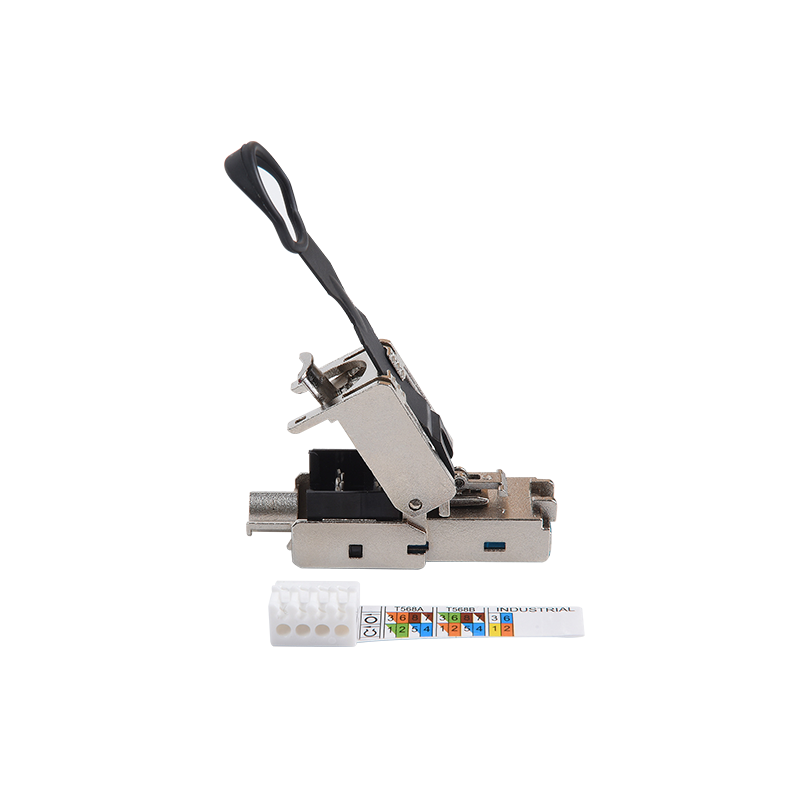
Eight IDC slots inside the jack accept 22 to 24 AWG solid conductors, color-coded and labeled for both T568A and T568B so installers never have to consult a separate wiring chart. Two termination approaches are offered: a conventional 110/Krone style that uses a punch-down tool for a fast, familiar workflow on commercial projects, and a tool-less lever style that lets a technician seat all eight conductors by hand, which is popular for smaller jobs, moves and changes, and residential installs where a dedicated punch-down tool may not be on hand.
Body Styles
Straight, 90-degree, and 180-degree housing options let the cable exit in whichever direction best fits the depth of the back box and the bend-radius requirements of the cable being used, without requiring any change to the front-facing keystone footprint. LED link-indicator versions are also available, giving a quick visual confirmation of an active link directly at the wall plate, which is especially useful in classrooms, hospitals, and other environments where fast, low-tool troubleshooting matters.
Category Coverage
The RJ45 keystone jack line spans Cat5e, Cat6, Cat6A, and Cat7, each built to meet the return loss, insertion loss, and crosstalk requirements defined for that category under ANSI/TIA-568 and ISO/IEC 11801. Shielded variants add a metal shell around the contact block and are designed to bond to shielded patch panels and grounded back boxes, delivering additional protection against electromagnetic interference in electrically noisy environments such as industrial floors or data centers with dense power infrastructure.
Manufacturing Consistency
Every RJ45 keystone jack is produced on the same in-house tooling and assembly line, then tested for continuity and correct wire mapping before it leaves the factory. This means a Cat6 jack purchased today and a Cat6 jack purchased a year from now, from the same product line, will match in footprint, plating, and electrical performance, which is exactly the kind of consistency that large projects and repeat OEM buyers depend on.
Testing Before Shipment
Beyond the standard continuity and wire-map check, sample lots from each production batch are pulled for closer electrical verification, checking that contact resistance and insertion behavior stay within the tolerances expected for the stated category. This extra layer of batch-level verification is part of how we catch tooling drift or plating inconsistencies before a full shipment goes out, rather than relying solely on end-of-line functional testing.
Packaging for Project and Retail Channels
RJ45 keystone jacks are available in bulk trade packaging for contractors and system integrators buying in project quantities, as well as individually blister-packed retail packaging for distributors selling through hardware and electrical supply channels. Carton labeling, barcoding, and multi-language packaging can be arranged for buyers exporting to markets outside mainland China.
Documentation for Specification Approval
For commercial and institutional projects that require submittal packages before installation, we provide category compliance data, RoHS declarations, and dimensional drawings on request, helping engineers and specifiers confirm a product meets project requirements without delay to the schedule.
Serving Distributors and OEM Customers
Beyond project buyers, a large share of our RJ45 keystone jack volume moves through distributors and cabling brands who resell the product under their own name. For these customers, we can adapt housing color, printed branding, and packaging while keeping the internal contact geometry and category performance identical to the standard catalog part, so the finished product carries a distributor's own identity without any compromise in electrical performance.
Where RJ45 Keystone Jacks Are Used
Because RJ45 is the connector standard behind virtually all wired Ethernet, these jacks show up anywhere a network cable needs to terminate cleanly into a wall, floor, or rack, spanning almost every type of building and network.
Workstation and Desktop Connectivity
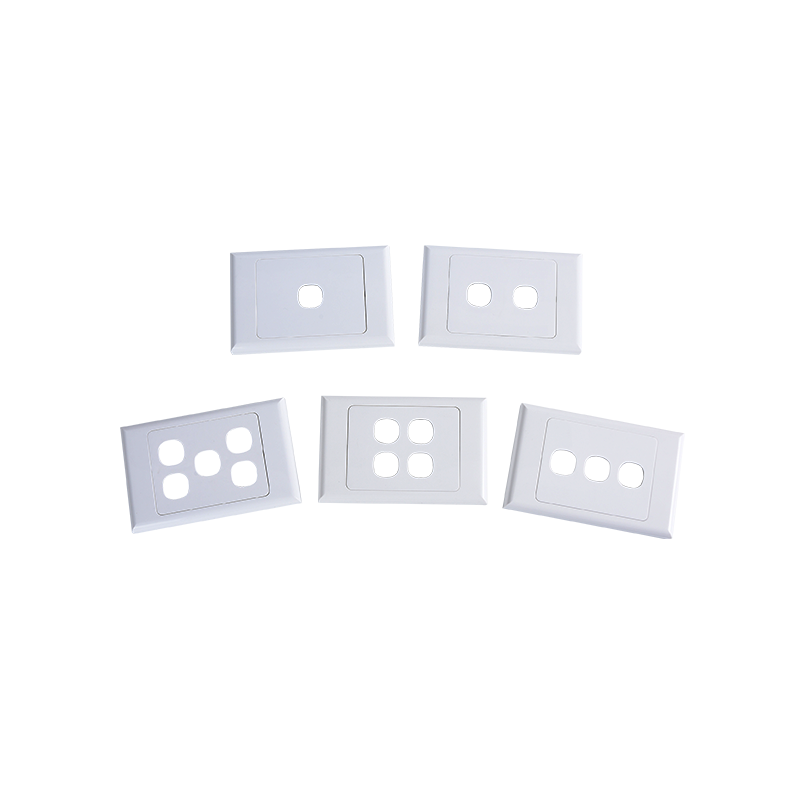
The most common application is the simplest: a wall plate at a desk or workstation, wired back to a patch panel, giving a computer, VoIP phone, or printer a dependable hard-wired link. Because the jack is field-replaceable, IT teams can swap a damaged port during normal business hours without an electrician or a service disruption for the rest of the floor.
Wireless Access Point Backhaul
Modern Wi-Fi deployments rely on RJ45 keystone jacks in ceiling-mounted enclosures or surface boxes to carry both data and Power over Ethernet to access points. Because PoE pushes real current through the jack's contacts, installers on these runs generally favor Cat6 or Cat6A jacks with robust contact plating to handle the added thermal and electrical load reliably over the life of the installation.
Security and Access Control
IP cameras, door controllers, and intrusion sensors increasingly connect over structured cabling rather than dedicated coax or proprietary wiring, and RJ45 keystone jacks are the termination point at each device location. Shielded versions are common in this application when cameras or readers are mounted near motors, elevators, or other sources of electrical noise.
Data Centers and Communication Rooms
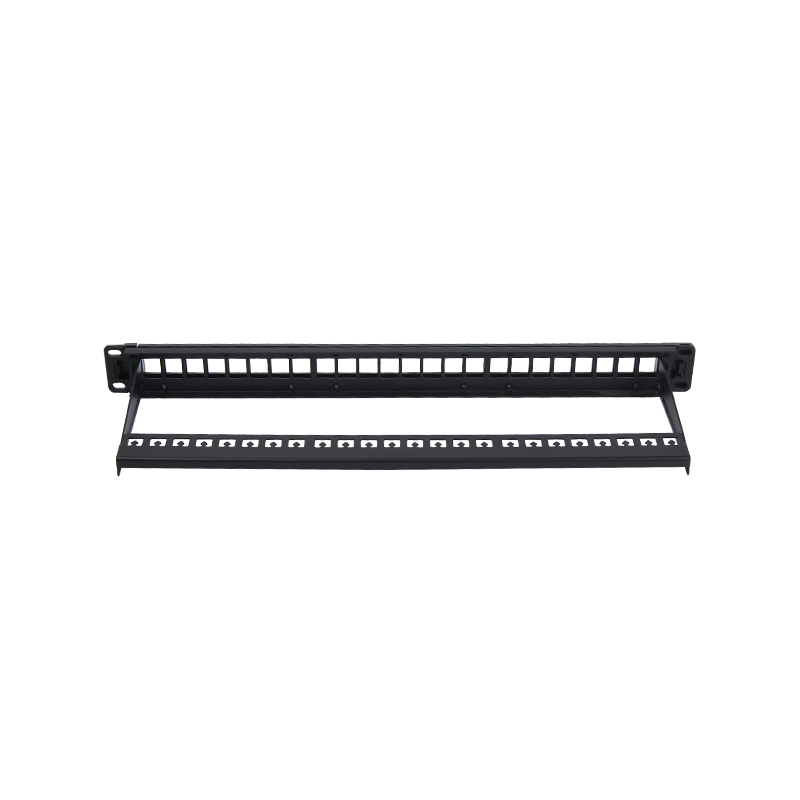
Inside racks, RJ45 keystone jacks populate high-density angled and flat patch panels, providing the organized cross-connect layer between server, switch, and structured cabling to the rest of the building. The modular nature of the jack lets a technician re-patch or replace a single port during a live maintenance window without touching neighboring, active connections.
Education Facilities
Classrooms, libraries, and administrative offices in schools and universities depend on RJ45 keystone jacks for the growing number of wired devices per room, from interactive displays to laptop carts to point-of-sale systems in cafeterias. LED-indicator jacks are a common choice here, letting non-specialist facilities staff confirm link status without a separate tester.
Healthcare Environments
Hospitals and clinics use RJ45 keystone jacks throughout patient rooms, nursing stations, and administrative areas to support electronic health record terminals, monitoring equipment, and voice-over-IP phones, often specifying shielded Cat6A jacks where cabling runs near imaging or electrical equipment.
Hospitality, Retail, and Multi-Tenant Buildings
Hotels terminate in-room internet and IPTV connections on RJ45 keystone jacks behind guest-room wall plates, while retail locations use the same jacks for POS terminals and back-office systems. Multi-tenant residential and office buildings rely on them for structured media panels that distribute connectivity to individual units or suites.
Industrial and Outdoor-Adjacent Installations
Factories and warehouses use ruggedized and shielded RJ45 keystone jacks to connect PLCs, sensors, and monitoring equipment on the plant floor, where electrical noise from motors and variable-frequency drives makes shielding and solid grounding especially important for a stable link.
Structured Media Panels and Smart Homes
Residential and small-office structured media enclosures rely on RJ45 keystone jacks as the central distribution point for whole-home networking, terminating the incoming service and feeding out to individual rooms for smart TVs, streaming devices, gaming consoles, and Wi-Fi access points. Homeowners increasingly ask for these panels during new construction and major renovations as more devices in the home benefit from a hard-wired connection instead of relying solely on Wi-Fi.
Government and Institutional Facilities
Municipal offices, libraries, courthouses, and other public buildings use RJ45 keystone jacks throughout their structured cabling in much the same way private commercial buildings do, though often with added documentation requirements for public procurement and tender processes.
Renovation and Phased Network Upgrades
Because RJ45 keystone jacks are individually field-replaceable, buildings upgrading their network incrementally can swap jacks category by category or floor by floor as budget allows, without needing to replace wall plates, boxes, or patch panel frames that are already in place and still serviceable.
Distributor and Reseller Channels
A significant share of RJ45 keystone jack volume moves through electrical wholesalers, IT supply distributors, and e-commerce channels rather than directly to a single job site. These buyers depend on consistent packaging, accurate category labeling, and predictable stock availability across a range of categories and colors, since their own customers are placing smaller, more frequent orders for a wide variety of individual projects.
| Connector Type | RJ45 (8P8C), female port |
| Category Range | Cat5e, Cat6, Cat6A, Cat7 |
| Housing Material | UL 94V-0 flame-retardant PC / ABS plastic |
| Contact Material | Phosphor bronze, gold-plated over nickel underplate |
| Termination Type | 110 / Krone IDC or tool-less lever type |
| Wire Gauge Accepted | 22-24 AWG solid conductor |
| Wiring Standard | T568A / T568B, both labeled on body |
| Body Orientation | Straight (0°), 90°, 180° angled options |
| Footprint | Standard keystone cut-out, approx. 14.5 x 16 mm |
| Shielding | Unshielded (UTP) and shielded (STP/FTP) options |
| Insertion Life | 750 to 1,500 mating cycles depending on category |
| PoE Compatibility | Supports PoE / PoE+ / PoE++ up to 4PPoE per IEEE 802.3bt |
| Standards Compliance | ANSI/TIA-568, ISO/IEC 11801, RoHS |
| Color Options | White, ivory, black, blue, green, red, yellow, orange; custom colors available |
Installation and Troubleshooting FAQ
- Q: Can I terminate an RJ45 keystone jack without a punch-down tool?
- A: Yes, if you choose a tool-less version. These jacks use a built-in lever or slide mechanism that lets you seat each conductor by hand, so no dedicated punch-down tool is required, though a cable stripper is still needed to prepare the jacket.
- Q: Why does my connected device show a link but run at a slower speed than expected?
- A: This usually points to a mismatch somewhere in the channel rather than the jack itself. Check that the cable category, the jack category, and the patch cords at both ends are all rated for the target speed, and confirm the network switch port is actually configured or capable of that speed.
- Q: Do I need a shielded RJ45 keystone jack for a normal office installation?
- A: In most offices, no. Shielded jacks only provide their benefit when paired with shielded cable and a fully grounded system end-to-end; in a typical low-interference office environment, unshielded jacks perform reliably and are simpler to install correctly.
- Q: My PoE camera keeps dropping power intermittently. Could the keystone jack be the cause?
- A: It is possible if the jack has a poor or loose IDC termination, since PoE runs continuous current through the contacts and a marginal connection can heat up and become unstable under load. Re-terminate the jack carefully, confirm all eight conductors are fully seated, and test with a PoE-capable cable tester if the problem continues.
- Q: How do I identify T568A versus T568B wiring on the jack?
- A: Every jack in the line has both wiring diagrams printed directly on the housing near the IDC slots, using standard color codes for each pair, so you can follow whichever standard your project specifies without needing a separate reference chart.
- Q: Can Cat6 and Cat6A jacks be mixed in the same patch panel or wall plate?
- A: Yes, physically they mix without any issue since both use the identical keystone footprint. Just be aware that each port's actual performance is limited to its own jack's category rating, so label the panel clearly to avoid confusion about which ports support higher-speed links.
- Q: A port that used to work suddenly stopped. What is the fastest way to diagnose it?
- A: Swap in a known-good patch cord first, since cords fail more often than jacks. If the port is still dead, test the run with a cable tester to check continuity and wire map; a shifted or broken conductor inside the IDC slot is the next most likely cause and usually means the jack needs re-termination or replacement.
- Q: How many times can I re-terminate the same RJ45 keystone jack?
- A: The IDC contacts are designed for a small number of re-terminations, typically two to three, before the insulation-displacement slots lose their grip on the conductor. For jacks that need to be moved or re-wired repeatedly, plan on replacing the jack rather than reusing the same one indefinitely.