Español
 عربى
 русский
We specialize in network cabling solutions and optical fiber products integrating design, development, sales and service.
Based on the mature research and development system, the quality stability of Simante has been guaranteed at the design source. We have more than 10 engineers and over 30 full-time technical persons who continue to provide their professional value in the position, improving quality and promoting product update.
Simante provides specialized integrated solutions for customers to ensure it meets the customer's requirement. Welcome to visit.
Product Introduction
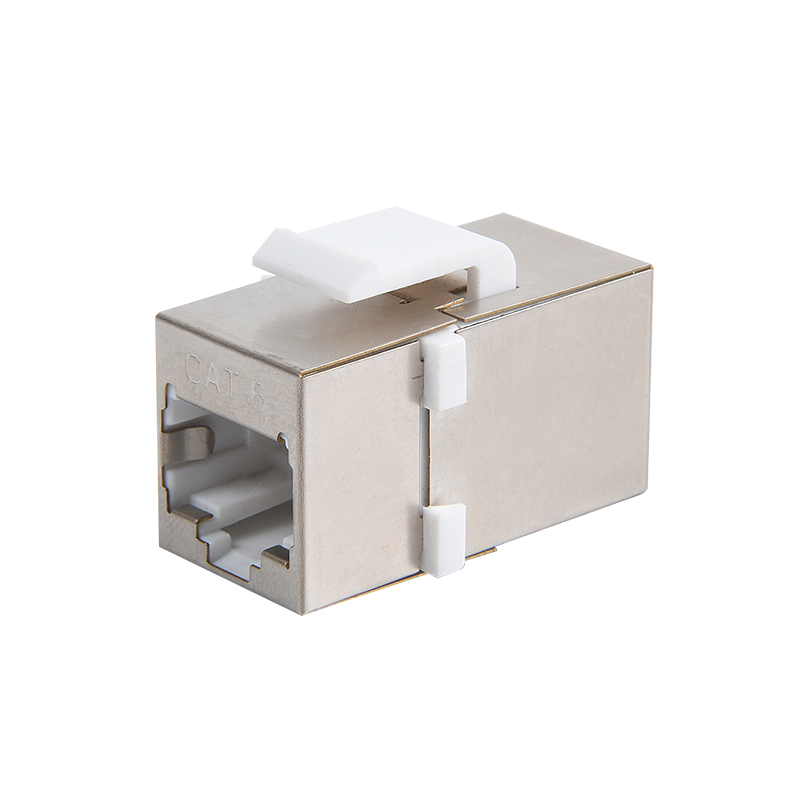
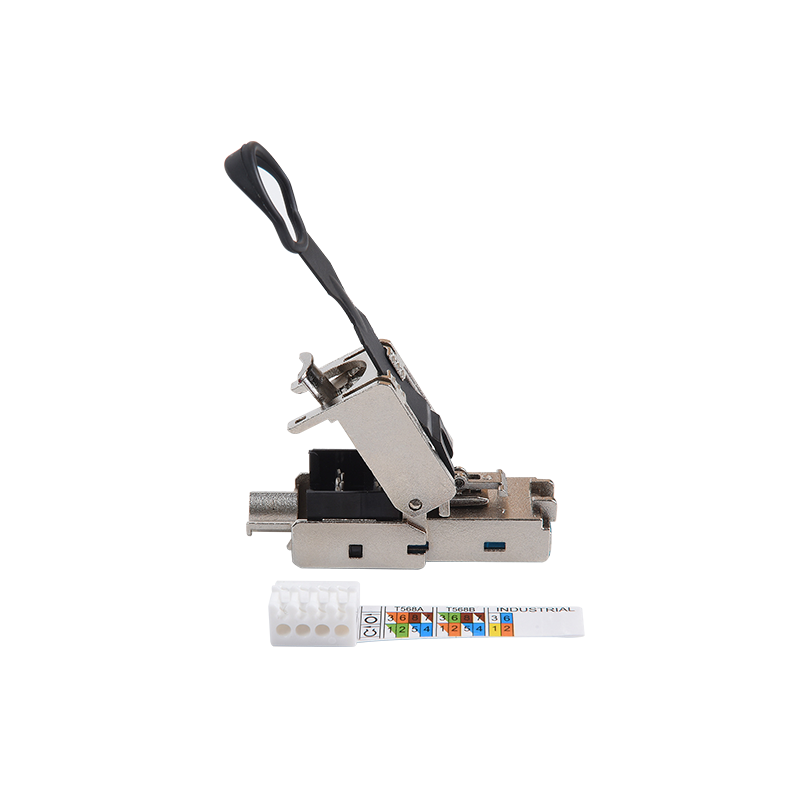
This tool-less keystone jack is engineered to speed up structured cabling installations without sacrificing certified electrical performance. The termination mechanism uses a hinged, color-coded wire management cap that guides each of the eight conductors into its correct position before a single clamping action seats all contacts at once.
Unlike traditional 110-style jacks that require a punch tool and careful attention to blade depth and angle, this design standardizes the termination force applied to every conductor, which reduces the variability that comes from different installers using slightly different technique. The result is a more predictable, repeatable termination across a large crew working on the same project.
The jack accepts 22-24 AWG solid copper conductors and is offered in multiple performance categories, so buyers do not have to compromise category rating to get the tool-less convenience. Contact points use gold-plated phosphor bronze, matching the material quality found in premium traditional IDC jacks.
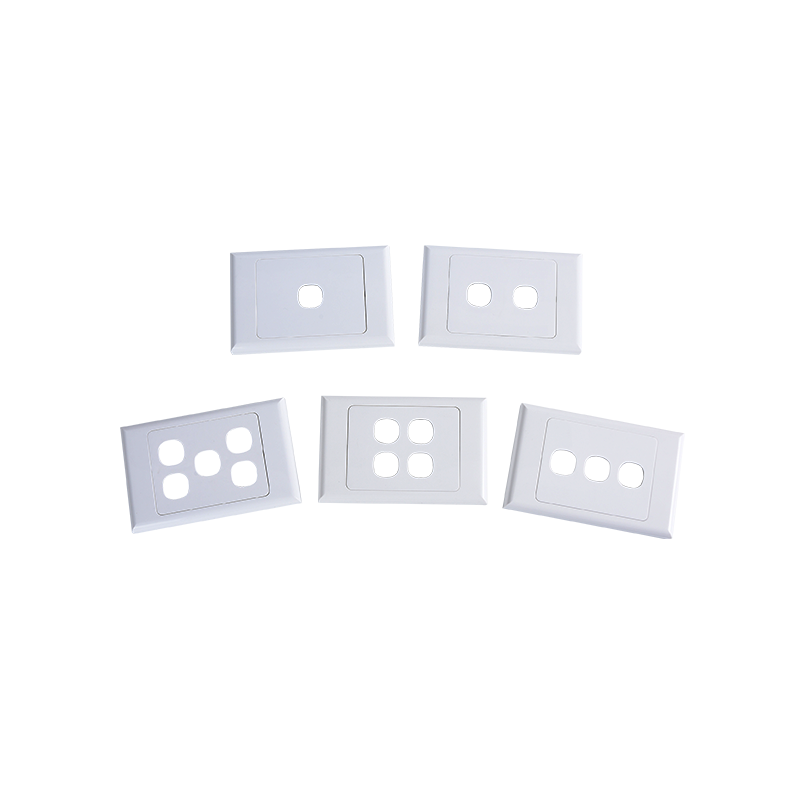
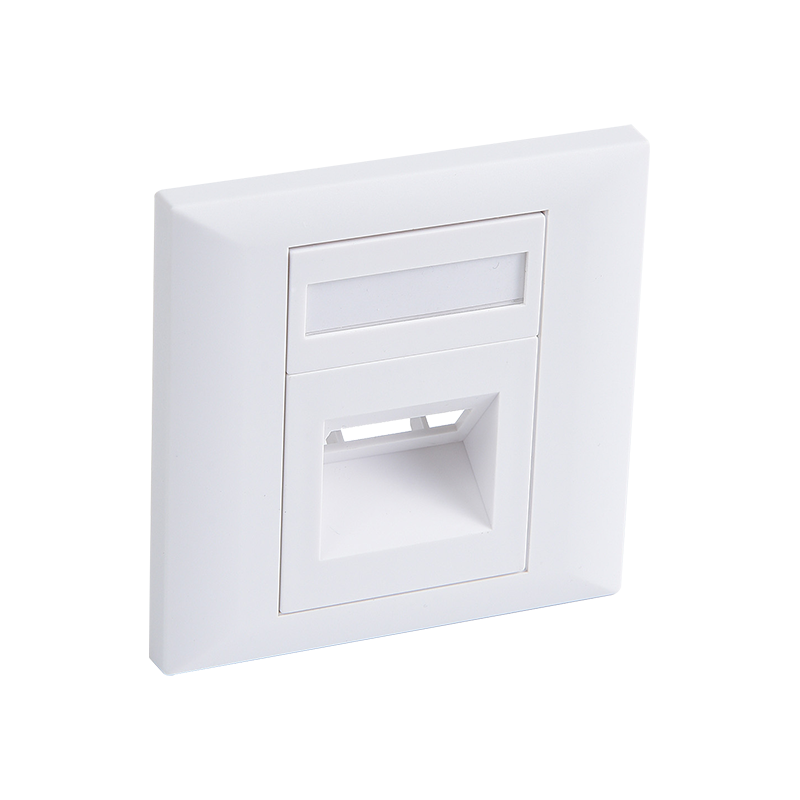
The housing follows the same universal keystone footprint as all other jack types, so it installs into standard wall plates, surface boxes, and patch panels without any special hardware. A small lever or latch typically allows the cap to be reopened for re-termination if needed, though manufacturers generally recommend limiting re-termination cycles to preserve long-term contact reliability.
Bulk packaging (10, 24, 50, or 100 pieces) is standard, and color options generally mirror the equivalent traditional-IDC product line, making it easy for a contractor to standardize on tool-less jacks across an entire project's color-coding scheme.
Application Scenarios
Tool-less keystone jacks are most valuable wherever the number of ports being terminated is large enough that labor time savings translate into real project cost or schedule benefits.
Large commercial office build-outs with hundreds or thousands of data and voice ports are the classic use case; even a modest time savings per port compounds quickly across a project of that scale, often shaving days off the overall termination schedule.
Data center and server room deployments with high port-density patch panels benefit from the speed and consistency of tool-less termination, particularly when crews are working under tight commissioning deadlines before a facility goes live.
Multi-dwelling unit and hospitality projects, such as apartment complexes or hotel renovations, frequently use tool-less jacks because the repetitive nature of terminating similar ports across many identical units rewards a faster, more standardized process.
Mixed-experience installation crews benefit particularly from tool-less designs, since newer technicians achieve more consistent results without years of punch-tool experience, which helps contractors staff large projects without every technician needing to be a cabling veteran.
Retrofit and occupied-building projects where minimizing on-site time is important (to reduce disruption to tenants or ongoing business operations) also benefit from the faster termination process, since crews can complete more ports per site visit.
Some IT departments also stock tool-less jacks specifically for moves, adds, and changes (MACs) in an existing network, since the speed and simplicity make quick single-port terminations easier to handle without pulling a punch tool from storage for a one-off job.
| Termination Type | Tool-less clamp / hinged cap mechanism |
| Category Options | Available in Cat5e, Cat6, and Cat6A performance grades |
| Standard Compliance | TIA/EIA-568-C.2 (category dependent), RoHS |
| Conductor Compatibility | 22-24 AWG solid copper |
| Contact Material | Phosphor bronze, gold-plated contact points |
| Wiring Scheme | T568A / T568B, color coded internally |
| Termination Time | Approx. 10-15 seconds per port (typical, tool-less) |
| Re-termination | Reopenable cap for limited re-termination cycles |
| Housing Material | Flame-retardant PC/ABS, UL 94V-0 |
| Mounting | Standard keystone footprint, snap-in |
| Operating Temperature | -10 to 60 C |
| Available Colors | White, Black, Ivory, Blue (category dependent) |
| Packaging | Single, 10-pack, 24-pack, 50-pack, 100-pack cartons |
- Q: Do tool-less keystone jacks perform as well as traditional punch-down jacks?
- A: Yes, when properly rated for the same category, tool-less jacks meet the same TIA/EIA and ISO/IEC performance standards as traditional IDC jacks. The termination method affects installation speed and consistency, not the underlying category performance.
- Q: How much faster is a tool-less jack to install?
- A: Typical termination time drops from around 45-60 seconds with a punch tool to roughly 10-15 seconds with a tool-less design, though actual time varies by installer experience and specific product design.
- Q: Can I re-terminate a tool-less jack if I make a mistake?
- A: Most tool-less jacks include a reopenable cap or latch that allows conductors to be repositioned and re-clamped. Manufacturers typically recommend limiting re-termination cycles compared to traditional IDC jacks to preserve contact reliability.
- Q: Are tool-less jacks more expensive than traditional IDC jacks?
- A: Generally yes, tool-less jacks carry a modest per-unit price premium, but this is often offset by labor savings on projects with a large number of ports.
- Q: Will a tool-less jack fit the same wall plates as my existing traditional jacks?
- A: Yes, tool-less jacks use the identical keystone footprint as traditional jacks, so they are fully interchangeable within the same wall plates, surface boxes, and patch panels.
- Q: Why did my tool-less jack fail a certification test?
- A: Common causes include not fully closing the clamping cap, conductors not seated in the correct color-coded channel, or excessive untwisting of pairs before insertion. Reopen the cap, verify wire placement against the printed color code, and re-close firmly.
- Q: Can tool-less jacks be used for Cat6A 10G applications?
- A: Yes, tool-less mechanisms are available in Cat6A-rated versions that meet full Class EA channel requirements, so 10GBASE-T performance is not sacrificed for installation speed.
- Q: Do I need any tool at all for a tool-less jack, even for cutting the cable?
- A: You will still need standard cable prep tools, such as a cable stripper and a pair of flush cutters to trim excess conductor length; 'tool-less' refers specifically to eliminating the punch-down tool for seating conductors into the contacts, not to cable preparation.