Español
 عربى
 русский




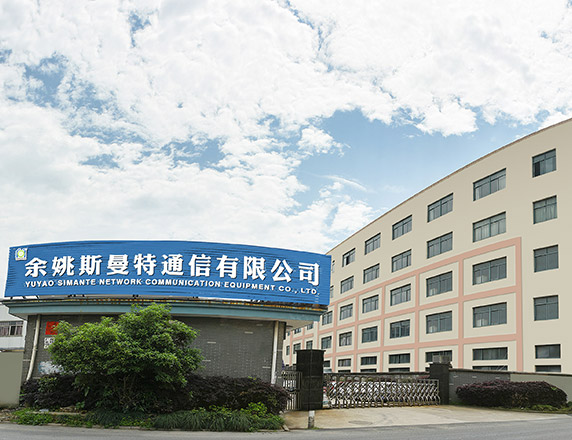
We specialize in network cabling solutions and optical fiber products integrating design, development, sales and service.
Based on the mature research and development system, the quality stability of Simante has been guaranteed at the design source. We have more than 10 engineers and over 30 full-time technical persons who continue to provide their professional value in the position, improving quality and promoting product update.
Simante provides specialized integrated solutions for customers to ensure it meets the customer's requirement. Welcome to visit.
Introduction
Construction starts with the fiber type: singlemode fiber has a small 9-micron core designed for long-distance, high-bandwidth links using laser sources, while multimode fiber has a larger 50-micron core suited to shorter data center and LAN distances at lower cost. Around the fiber sits a tight buffer coating, aramid yarn for strength, and an outer jacket — commonly OFNP (plenum), OFNR (riser), or LSZH for low-smoke environments.
Connector polish matters as much as connector type: UPC (ultra physical contact) polish is standard for most data and LAN applications, while APC (angled physical contact) polish, identifiable by its green connector body, reduces back-reflection and is preferred for PON, CATV, and other return-loss-sensitive systems. Mixing UPC and APC on the same link isn't physically possible without an adapter and generally isn't recommended, since it introduces excess loss.
Applications
Fiber optic patch cords appear anywhere fiber cabling meets active equipment:
- Data center connections between fiber patch panels and switch or server transceivers
- FTTH and PON network jumpers between ODFs and optical line terminals
- Telecom central office and equipment room cross-connects
- Campus and enterprise backbone links between buildings or floors
- Storage-area network (SAN) high-speed interconnects between switches and arrays
Specifications
| Fiber type | OS2 singlemode; OM3, OM4, or OM5 multimode |
| Connector types | LC, SC, FC, ST, MPO/MTP (simplex or duplex) |
| Polish type | UPC (blue) or APC (green) |
| Insertion loss | Typically ≤ 0.3 dB (UPC), ≤ 0.3 dB (APC) per mated pair |
| Return loss | ≥ 50 dB (UPC), ≥ 60 dB (APC) |
| Jacket | OFNP (plenum), OFNR (riser), or LSZH |
| Standard lengths | 0.5 m to 50 m, custom on request |
| Compliance | IEC 61754, TIA/EIA-568-C.3 |
Installation Tips
Always clean connector end faces before mating, using a dedicated fiber cleaning tool rather than any general-purpose cloth, and never exceed the cord's minimum bend radius, including in coiled slack stored in a rack or cabinet.
Troubleshooting & FAQ
The majority of fiber link failures trace back to contaminated or damaged connector end faces rather than the fiber itself — inspect and clean both ends of a cord before troubleshooting further up the link.
- Q: What's the difference between OM3 and OM4 multimode fiber?
- A: OM4 supports longer link distances and higher bandwidth than OM3 at the same wavelengths, largely due to tighter manufacturing tolerances — both are backward compatible with OM1/OM2 equipment.
- Q: Can I mix UPC and APC connectors on the same link?
- A: Not directly — the angled and flat polish geometries aren't compatible, and forcing a mismatched mating pair increases insertion loss and risks damaging the ferrule.
- Q: What insertion loss is considered acceptable for a patch cord?
- A: Most quality fiber patch cords specify a maximum insertion loss around 0.3 dB per mated connector pair; anything noticeably higher suggests contamination or a manufacturing defect.
- Q: What's the difference between LC and SC connectors?
- A: LC connectors use a smaller 1.25 mm ferrule and push-pull latch, allowing higher port density; SC connectors use a larger 2.5 mm ferrule with a push-pull design and remain common in older equipment.
- Q: Why are fiber optic patch cords color coded?
- A: Jacket color typically indicates fiber type at a glance — commonly yellow for singlemode, aqua for OM3, and violet/erika for OM4 — helping technicians avoid mixing incompatible fiber types.
- Q: How far can singlemode vs. multimode fiber patch cords transmit?
- A: Singlemode fiber supports distances up to tens of kilometers depending on the transceiver, while multimode fiber is typically limited to a few hundred meters at higher data rates.
- Q: What's the difference between an MPO trunk cable and a patch cord?
- A: An MPO trunk is generally used for the longer, permanent multi-fiber backbone run, while an MPO patch cord is a shorter jumper between a cassette or panel and equipment.
- Q: How should fiber connectors be cleaned before use?
- A: Use a dedicated one-click or cassette-style fiber cleaner on the ferrule end face immediately before mating, and inspect with a fiber microscope when performance issues are suspected.