Español
 عربى
 русский




We specialize in network cabling solutions and optical fiber products integrating design, development, sales and service.
Based on the mature research and development system, the quality stability of Simante has been guaranteed at the design source. We have more than 10 engineers and over 30 full-time technical persons who continue to provide their professional value in the position, improving quality and promoting product update.
Simante provides specialized integrated solutions for customers to ensure it meets the customer's requirement. Welcome to visit.
Introduction
Category rating determines what an Ethernet patch cord can carry: Cat5e supports gigabit Ethernet over its rated distance, Cat6 adds headroom and reduces crosstalk for cleaner gigabit and limited 10-gigabit performance over short runs, and Cat6A is built specifically to guarantee 10-gigabit Ethernet over the full 100-meter channel. Shielded variants (FTP, with one overall foil shield, or SFTP, with individually shielded pairs) add protection against electromagnetic interference at the cost of a slightly stiffer, more expensive cord.
Conductors are stranded — typically 24 to 26 AWG — rather than solid, which is what lets a patch cord survive years of being unplugged and re-routed without the conductor fatigue that would eventually crack a solid-core cable. A molded snagless boot over the RJ45 plug protects the small locking tab, the most common point of physical failure on any patch cord.
Applications
Ethernet patch cords are used at nearly every point where a device physically connects to the network:
- Connecting computers, printers, and other devices to wall data sockets
- Rack-to-rack and panel-to-switch jumpers in server and telecom rooms
- PoE-powered device connections such as IP cameras, access points, and phones
- Home networking between routers, switches, and streaming or gaming devices
- Temporary test and commissioning connections during network installation
Specifications
| Category rating | Cat5e, Cat6, or Cat6A |
| Conductor | Stranded copper, 24–26 AWG |
| Shielding | UTP, FTP, or SFTP |
| Jacket | PVC or LSZH, various colors |
| Connector | RJ45 8P8C with snagless boot |
| Standard lengths | 0.3 m to 30 m |
| PoE rating | Supports PoE/PoE+/PoE++ per category and AWG |
| Compliance | TIA/EIA-568-C.2 |
Installation Tips
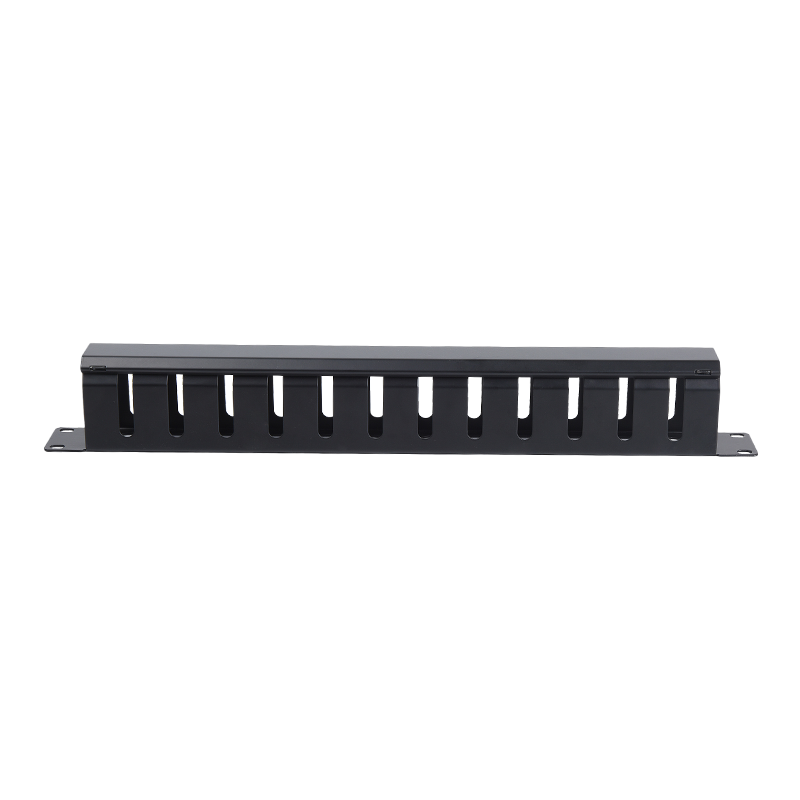
Choose a length close to the actual run needed rather than always defaulting to a longer cord, coil any slack loosely rather than tightly, and route cords through cable management arms in racks to avoid tension on the RJ45 clips.
Troubleshooting & FAQ
If a device drops connection intermittently, the patch cord is usually the fastest thing to swap and test — a partially broken locking tab or a stressed conductor near the plug is a common, easily overlooked cause.
- Q: What's the difference between a patch cord and solid cable?
- A: Patch cords use flexible stranded conductors built for repeated handling, while solid-conductor cable is used for the fixed, permanent horizontal wiring inside walls and ceilings.
- Q: Do I need Cat6A for a 10-gigabit connection?
- A: Cat6A is purpose-built to guarantee 10-gigabit performance over the full 100-meter channel; Cat6 can support 10G but often only over shorter distances.
- Q: What's the maximum recommended patch cord length in a channel?
- A: Combined patch cord length at both ends of a 100-meter channel is generally recommended to stay under about 10 meters to preserve overall link performance.
- Q: Do Ethernet patch cords support PoE++?
- A: Yes, provided the cord's category and conductor gauge match the PoE++ standard's current-carrying requirements — thinner, lower-category cords may not be rated for it.
- Q: Why do snagless boots matter on a patch cord?
- A: They cover and protect the small plastic locking tab on the RJ45 plug, which is the most common point of physical failure during routine unplugging.
- Q: Do shielded Ethernet cords need to be grounded?
- A: Yes — the shield only provides interference protection when it's bonded through shielded jacks and panels to a proper ground; leaving it floating offers little benefit.
- Q: Is color coding on patch cords standardized?
- A: There's no single industry standard; most organizations set their own internal convention — for example, one color for data and another for voice or management traffic.
- Q: Can Ethernet patch cords be used outdoors?
- A: Standard indoor-rated cords are not suited to outdoor exposure; outdoor runs need cable and connectors specifically rated for UV, moisture, and temperature extremes.