Español
 عربى
 русский
Content
- 1 Start With the Conductor: What Solid Copper Cat 6 Actually Means
- 2 Why Solid Bare Copper Holds Up on Long Runs and PoE Loads
- 3 Four Failure Patterns Buyers Notice Too Late
- 4 Comparing Solid Copper Cat 6 Against the Alternatives on Four Buying Criteria
- 5 Matching the Cable Construction to the Route: Riser, Plenum, Outdoor and Wet Areas
- 6 Termination Details That Decide Whether a Solid Copper Cat 6 Link Certifies
- 7 How to Verify a Solid Copper Cat 6 Shipment Before It Reaches Site
- 8 Sourcing Solid Copper Cat 6 From a Manufacturer or Wholesaler
- 9 Total Cost of Ownership: Where the Cheap Drum Costs More
- 10 A Practical Approval Checklist for Solid Copper Cat 6
- 11 Frequently Asked Questions About Solid Copper Cat 6
- 11.1 Is solid copper Cat 6 the same as 100 percent copper?
- 11.2 Does solid copper Cat 6 support 10GBASE-T?
- 11.3 Can I use solid copper Cat 6 for patch cords?
- 11.4 What AWG should I specify for solid copper Cat 6?
- 11.5 How can I tell whether a Cat 6 cable is copper-clad aluminium on site?
- 11.6 Which fire rating do I need for a solid copper Cat 6 installation?
- 11.7 Why is solid copper Cat 6 more expensive than the alternatives?
- 11.8 Can I mix solid copper Cat 6 cable with Cat 5e jacks or panels?
- 11.9 What should a distributor ask a manufacturer before an OEM order?
- 11.10 Does solid copper Cat 6 need shielded construction for industrial sites?
- 12 What a Dependable Solid Copper Cat 6 Supply Chain Looks Like
A network installer opens a box marked Cat 6 and finds a conductor that scrapes bright silver under the knife. The links still pass a continuity check, the drums still cost less than last quarter's quote, and the paperwork looks convincing enough to sign. Six months later the same installer is back on site because three PoE cameras reboot at dusk, one run no longer certifies above 100 MHz, and the distributor has stopped answering the phone.
Solid copper Cat 6 cable is the baseline construction the category assumes: four twisted pairs of solid bare copper conductors, almost always 23 AWG, characterised to 250 MHz and built to hold a permanent link for the life of the building. Anything less is not a cheaper version of the same product. It is a different product with a different failure curve, and the failure usually arrives after the cable is inside the wall.
The problems tend to arrive in three stages. First a specification that says Cat 6 without naming the conductor. Then a quotation that wins on price because copper was replaced with aluminium. Finally a certification report with margins so thin that any change in temperature, bundle size or patch cord pushes the link below the limit. Each stage is preventable at the purchase order, and prevention costs a fraction of a revisit. What follows is written for the people who carry that risk: contractors, integrators, distributors and private-label buyers who need a repeatable answer rather than a spec sheet that repeats the word "premium".
Start With the Conductor: What Solid Copper Cat 6 Actually Means
Two different claims hide inside the phrase solid copper Cat 6, and buyers frequently merge them. "Solid" describes the strand construction: one conductor per insulation, rather than seven strands twisted together. "Copper" describes the metal. A cable can be solid and still not be copper, because copper-clad aluminium is also drawn as a single solid conductor. If the purchase order says only "solid", a supplier can satisfy the wording and still ship a conductor that fails the standard the project is paying for.
For permanent horizontal cabling the expected construction is solid bare copper, normally 23 AWG, with four unshielded twisted pairs and a nominal impedance of 100 ohms. Solid conductors are used because they hold their geometry inside the jacket, keep the twist lay stable over decades and terminate reliably in insulation displacement contacts. Stranded copper belongs on the equipment side, where a patch cord has to survive repeated flexing and re-plugging. Both can be genuine copper, and both have a place, but they are not interchangeable in a wall or ceiling void.
Solid, Stranded and Copper-Clad: A Practical Comparison
The table below is the comparison most procurement teams should keep in front of them when a quotation looks unusually competitive. It is deliberately blunt, because the differences are not subtle once a cable is asked to carry power as well as data.
| Construction | What It Is | Where It Fits | What Buyers Should Watch |
|---|---|---|---|
| Solid bare copper, 23 AWG | Single copper conductor per pair, minimum 99.9 percent copper content in compliant designs | Permanent links, risers, horizontal runs, PoE backbones | Confirm AWG, conductor resistance and batch test reports, not just the drum label |
| Stranded bare copper | Multiple fine copper strands per conductor | Patch cords, cabinet jumpers, test leads | Higher attenuation; keep lengths short and match the cord to the cable grade |
| Solid copper-clad aluminium | Aluminium core with a thin copper cladding | Occasional short-run voice or low-power links at best | Resistance roughly 60 percent higher than copper; corrosion risk at terminations; generally non-compliant for Cat 6 |
| Copper-clad steel or undersized copper | Steel core or reduced conductor diameter | Not appropriate for structured cabling | Fails resistance and PoE heat limits; often paired with exaggerated marketing claims |
Where the Standard Draws the Line
Category 6 is defined in ANSI/TIA-568.2-D in North America and in the ISO/IEC 11801 series internationally, with the cable requirements also covered by IEC 61156. The headline numbers are familiar: 250 MHz of characterised bandwidth, a 100 m channel across four connections, and support for 10GBASE-T over shorter distances, typically up to about 55 m in a four-connector channel, with Cat 6A extending that to the full 100 m. Those numbers assume the cable meets the conductor, resistance, impedance and crosstalk requirements in the standard.
The standard also constrains the conductor itself. Solid copper is the expected construction for horizontal cable, with 22 to 24 AWG permitted and 23 AWG by far the most common. DC resistance per conductor sits near 6.5 to 7 ohms per 100 m for 23 AWG copper, against a limit in the region of 9.4 ohms per 100 m depending on the edition and AWG you are working to. An aluminium conductor of the same diameter lands well above that limit. This is the point where a technical argument becomes a commercial one, because the cable that fails resistance will also fail heat, voltage drop and long-term reliability.
Why Solid Bare Copper Holds Up on Long Runs and PoE Loads
Ten years ago the conductor debate was mostly about certification margin. Today it is about power. A single IEEE 802.3bt Type 4 port can deliver up to 90 W at the power sourcing equipment, which means roughly 0.6 to 1 A per pair depending on the implementation, running through cables that were often specified when 15 W was the ceiling. Power over Ethernet turns every horizontal cable into a small heating element, and the conductor decides how much heat is produced and how much voltage reaches the device.
Copper is not magic; it simply has lower resistivity than the alternatives. With lower resistance, less energy is lost as heat along the run, the voltage at the powered device stays higher, and the temperature rise inside a bundled conduit stays lower. Those three effects compound in the field. A device that receives marginal voltage may boot, then reset when the port draws peak current. A bundle that runs a few degrees hotter ages faster and can push insertion loss out of specification on the warmest afternoons.
- PoE headroom: lower conductor resistance means less voltage drop over 90 m, which matters most for pan-tilt-zoom cameras, access points and displays with tight input tolerances.
- Bundle temperature: heat rises with current squared multiplied by resistance, so a higher-resistance conductor generates more heat in the same tray or conduit.
- Resistance unbalance: uneven conductor geometry and impurities increase unbalance, which shows up as common-mode noise and can disturb 2.5GBASE-T and 5GBASE-T links.
- Service life: copper terminations stay metallurgically stable, while aluminium in contact with copper-plated contacts is a galvanic couple waiting for moisture.
Resistance, Heat and Bundle Size in Practice
Consider a 90 m run feeding a 60 W device at 55 V. With 23 AWG copper at around 6.7 ohms per 100 m per conductor, a pair carries current out and back, so the loop resistance is roughly 12 ohms over 90 m. At about 0.55 A per pair that is a few volts lost and a couple of watts dissipated along the cable. Substitute a copper-clad aluminium conductor of the same diameter and the resistance rises by roughly 60 percent, so the loss rises with it. Multiply that across 48 ports in a crowded riser and the thermal picture changes noticeably.
That is why serious buyers treat the conductor as a system decision rather than a line item. The cable, the keystone jacks, the patch panel and the patch cords all have to be specified together, because a compliant cable terminated into mismatched contacts still produces a link that fails. The core components of a structured cabling system are designed as a chain, and the weakest link sets the certification result.
Four Failure Patterns Buyers Notice Too Late
Most complaints about solid copper Cat 6 do not come from buyers who were careless. They come from buyers who asked reasonable questions and received answers that were technically true but commercially misleading. These four patterns cover the majority of the disputes that reach a warranty claim.
Pattern One: The Certificate That Passes by Two Tenths
The link certifies, but every margin value sits just above the limit. On a cool morning with short patch cords, the report looks acceptable. Add a warm afternoon, a bundle of PoE cables and a replaced patch cord, and the same link drifts outside the limit. Genuine solid copper Cat 6 usually shows comfortable headroom on insertion loss and return loss, while marginal cable shows the opposite. A test report is not a pass or fail stamp; the margin column is the part that predicts the future.
Pattern Two: The Termination That Turns Green
Copper-clad aluminium exposes aluminium at the cut end. In humid or coastal sites, that exposed surface forms an oxide layer and, in contact with copper-plated contacts, sets up a galvanic couple. The link works for a year, then develops intermittent faults that disappear when the jack is re-terminated and return a few months later. By then the cable is in the ceiling and the cost of replacement is measured in disrupted business, not in drums.
Pattern Three: The Camera That Reboots at Night
PoE faults are often blamed on the switch. In practice, a marginal conductor shows up as a voltage drop at peak current, when infrared illumination switches on and the camera heater engages. The port logs a power classification error, the device reboots, and the network team spends a week replacing switches before anyone measures loop resistance. A simple resistance check at the far end, performed before the cable is pulled, would have ended the investigation in an hour.
Pattern Four: The Batch That Changes Mid-Project
A supplier may ship compliant cable for the first order and a different construction for the second, especially when copper prices move quickly. The drums look identical, the print legend is similar, and the only clue is a slightly different weight or a marginally different conductor diameter. Batch traceability, consistent print legends and a retained sample from each delivery are the practical defence. For multi-phase projects, it is worth writing the conductor and resistance requirement into the contract rather than the catalogue description.
Comparing Solid Copper Cat 6 Against the Alternatives on Four Buying Criteria
Procurement arguments tend to settle on four criteria: electrical efficiency, certification margin, tolerance of repeated handling, and cost per metre. Those criteria do not carry equal weight in every project, which is exactly why the trade-offs should be made explicit before a purchase order is signed. The chart below positions the three common constructions on a qualitative scale rather than a laboratory measurement.
The chart shows the trade-off honestly: copper-clad aluminium wins only on the criterion that is visible at the quotation stage, and loses on the three that determine whether the installation survives. That asymmetry is why price comparisons between "Cat 6" drums are often meaningless until the conductor is confirmed. It also explains why experienced buyers ask for the resistance figure before they ask for the discount.
There is a second lesson in the third criterion. Solid copper is not the best choice for a patch cord, and a supplier who pushes solid cable into every position in the rack is optimising for a specification rather than an installation. Permanent links want solid conductors; equipment cords want stranded conductors with a strain relief that absorbs movement. Mixing those roles is a common source of return loss complaints at the patch panel, where a stiff solid cord puts torque on the jack.
For a manufacturer supplying both sides of that equation, the practical answer is a matched family: 23 AWG solid cable, Cat 6 keystone jacks and patch panels rated for the same frequency, and stranded patch cords in the same grade. When the components are designed together, the certification margin belongs to the system rather than to a single part number, and the installer has fewer variables to defend during commissioning.
Matching the Cable Construction to the Route: Riser, Plenum, Outdoor and Wet Areas
Conductor grade is the first decision, but the jacket and the fire rating decide whether the cable is legal on a given route. A solid copper Cat 6 cable that is correct for a concrete-encased duct may be entirely wrong in a return-air plenum, and the reverse is equally true. Building codes and insurance requirements follow the route, not the data rate, so the specification has to name both.
The table below summarises the ratings that appear most often in international tenders. Local codes take precedence, and a supplier should be able to produce the listing document for the exact construction being shipped rather than a generic certificate for the factory.
| Rating or Construction | Typical Test Reference | Normal Route | Buyer Note |
|---|---|---|---|
| CMP, plenum rated | NFPA 262 flame and smoke | Return-air plenums and air-handling ceilings | Low smoke emission matters more than the price difference; verify the listing mark on the jacket |
| CMR, riser rated | UL 1666 vertical flame | Vertical shafts between floors | Commonly specified for backbone runs; must not be substituted with CM in a riser |
| CM or CMG, general purpose | UL 1685 or local equivalent | Horizontal runs in trays and conduits | Check tray and conduit fill; general purpose does not mean suitable for a plenum |
| LSZH with CPR class | IEC 60332-1 and EN 50575 classes such as Dca, Cca, B2ca | Public buildings, tunnels, enclosed spaces in many export markets | Ask for the declaration of performance and confirm the class the project actually requires |
| Outdoor, UV stabilised | Jacket ageing and moisture tests | Exterior walls, aerial spans, duct entries | Solid copper is fine outdoors, but the jacket and the water blocking decide the service life |
| Direct burial with flooding compound | Water penetration and crush resistance | Underground trenches and duct banks | Transition to indoor rated cable before the cable enters the building envelope |
Two practical rules reduce most of the confusion. First, never assume that a higher data category substitutes for a fire rating; Cat 6 performance and plenum compliance are unrelated properties. Second, plan the transition points before the pull. Outdoor cable entering a building must be terminated or transitioned within a defined distance, and the connector or splice point has to be accessible for inspection.
For the equipment side of the same installation, the choice reverses. A 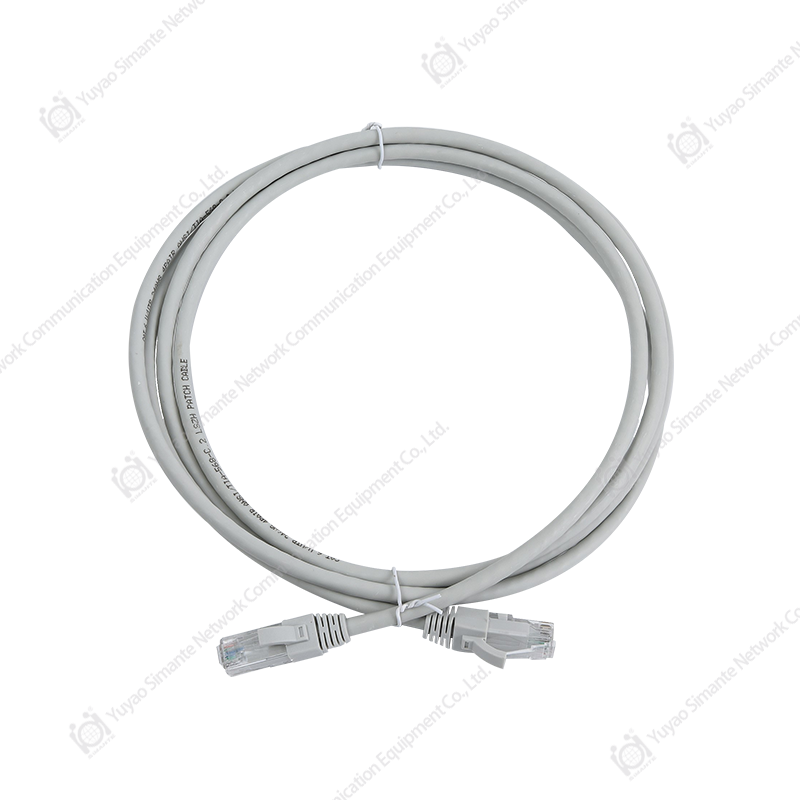 Custom Copper Patch Cords for Structured CablingView OEM/ODM patch cords in CAT.6A UTP, CAT.6A S/FTP and CAT.8 flat variants, with T568A/T568B wiring and matched connector-series compatibility.View Product → is normally built with stranded conductors so that the cord survives movement, tight bend radii and repeated re-patching at the switch. The card above points to the product family; the technical requirement to write into the specification is that the cord matches the cable category and the connector grade, and that its length stays inside the channel budget.
Termination Details That Decide Whether a Solid Copper Cat 6 Link Certifies
Good cable terminated badly is still a bad link. Solid 23 AWG conductors are less forgiving than stranded wire because they keep whatever geometry the installer gives them, and that geometry is measured as return loss and near-end crosstalk. The common mistakes are consistent across sites: too much untwisted conductor at the jack, nicked copper from a dull blade, cable ties pulled tight enough to deform the pair lay, and a bend radius tighter than the manufacturer's limit.
The practical tolerances are worth training into every crew. Keep the untwisted length at the termination to 13 mm or less, and follow the jack manufacturer's colour chart rather than working from memory. Punch with the correct tool for the jack, not a screwdriver, and confirm the conductor is seated without being cut. Respect a bend radius of roughly four times the cable diameter once installed, with a larger radius during the pull. Support horizontal cable at intervals of about 1.5 m and use hook-and-loop fasteners where the bundle is likely to be reconfigured.
Working With 23 AWG Solid Conductors
Solid conductors transmit force. A tightly cinched tie at the back of a rack does not just compress the jacket; it changes the distance between pairs over a short section, which shows up as an impedance bump. The same applies to stapling. Where cable is fixed to a structure, use a staple guide or a cable support that spreads the load, and leave the jacket round rather than flattened.
Terminations also need to match the grade. A Cat 6 cable punched into a Cat 5e jack will pass at low frequencies and fail at 250 MHz, and the installer will blame the cable. The reverse combination, a Cat 5e cable into a Cat 6 jack, produces a similar result for different reasons. The safest procurement rule is to buy cable, jacks and panels as a matched set from the same manufacturer, so that any certification dispute has a single technical owner.
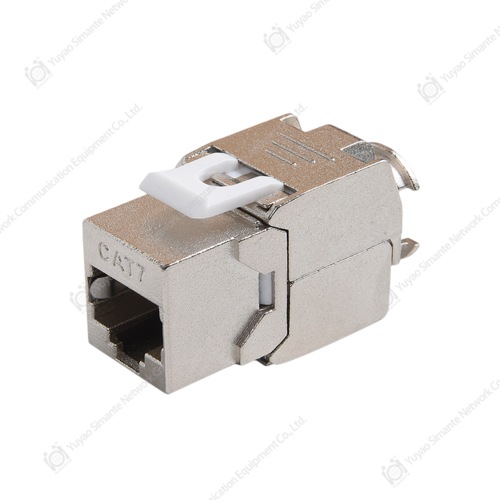
For projects that need a repeatable Cat 6 termination across thousands of ports, the jack design matters as much as the installer's technique. A 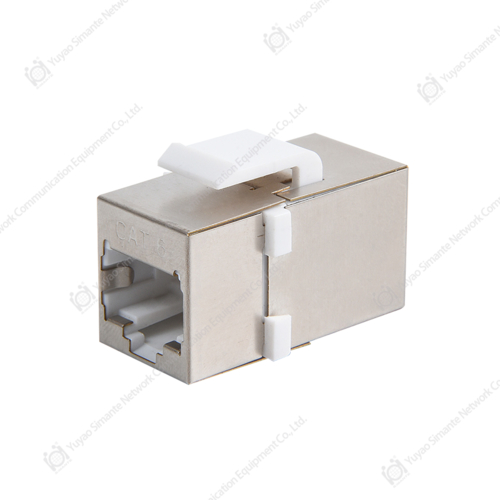 Cat6 Keystone Jacks for Structured CablingBrowse shielded, toolless, 90/180-degree and slim Cat6 jack variants with T568A/T568B wiring, IDC termination and keystone compatibility for structured cabling projects.View Product → built for 23 AWG solid conductors, with a clear wiring label and consistent IDC geometry, reduces the variation between one installer and the next. That variation is what shows up as a handful of failing links in an otherwise clean certification report.
Separation, Fill and the Routes Nobody Documents
Electromagnetic separation is usually handled well in new construction and badly in refurbishment. Keep data cable at least 300 mm from fluorescent fixtures and power circuits where the specification demands it, cross power runs at 90 degrees rather than running parallel, and avoid sharing a conduit with motor feeds. Where separation cannot be maintained, shielded constructions or fibre may be the better answer, but that decision belongs in design rather than in the back of a van.
Conduit and tray fill deserve the same attention. Overfilled conduit raises temperature, and temperature raises attenuation. If the design calls for a 40 percent fill, do not accept a 60 percent pull because it saved a second conduit. The cable may still certify on the day of installation and drift out of specification once the building reaches summer operating temperature, which is a difficult fault to explain to a client who has already moved in.
How to Verify a Solid Copper Cat 6 Shipment Before It Reaches Site
Inspection at goods-in is cheaper than any warranty process. A distributor or contractor can screen a delivery in under an hour with a knife, a caliper, a resistance meter and a sample termination, and the results are far more persuasive than a supplier's brochure. The checks below are ordered from the least to the most time-consuming, so a suspicious delivery can be escalated quickly.
- Check the print legend on the jacket. It should show the category, the AWG, the conductor material, the fire rating, the listing mark and a lot number that matches the packaging.
- Weigh one box and compare it with a retained sample of known solid copper cable. Aluminium is much lighter than copper, so a substitute construction often shows an obvious weight difference.
- Strip a short section and inspect the conductor colour. Copper is reddish; aluminium is silver. Scrape the surface to see whether a copper skin hides a silver core.
- Measure conductor diameter with a caliper. A 23 AWG conductor should be close to 0.57 mm; a noticeably thinner conductor may be undersized copper or a different AWG altogether.
- Measure loop resistance on a full drum or a known length. Compare the result with the manufacturer's datasheet and the standard limit for the AWG declared.
- Terminate ten sample links across the batch and certify them as permanent links, then record the margin rather than the pass result.
- Check the delivered length. A box sold as 305 m that contains 280 m is a price increase disguised as a discount, and it is common in low-cost supply.
- Retain one metre from each lot with the delivery note, and store it where it will not be exposed to sunlight or heat.
Paperwork supports the physical checks rather than replacing them. Ask for the listing file number, the declaration of performance for the fire class, RoHS and REACH statements, and a batch-specific test report that names the construction. A generic certificate that covers every product the factory makes is worth very little when a link fails and the insurer asks which standard the cable was tested to.
The most useful single number in this process is the certification margin. A permanent link that passes with 0.2 dB of headroom is not equivalent to one that passes with 3 dB, even though both appear green in the report. Where a project has long runs, warm ceiling voids or a future PoE upgrade, the margin is the only part of the report that predicts how the link will behave in three years.
Sourcing Solid Copper Cat 6 From a Manufacturer or Wholesaler
For a single-site installation, the buying decision is mostly about the drum. For a distributor, integrator or private-label brand, the decision is about a supply relationship that has to repeat across dozens of orders and several markets. That changes which questions matter, and it moves the conversation from price per box to total landed cost, documentation and consistency.
Copper is a traded commodity, so a cable quotation is partly a financial instrument. A supplier quoting a fixed price for twelve months is either hedging, absorbing risk or planning to substitute material when the market moves. The professional approach is to agree a copper basis and a tolerance band: for example, the price holds while the reference copper price stays within five percent of the agreed baseline, with an adjustment mechanism above that. This protects both sides and removes the incentive to quietly change the conductor to protect a margin.
- Conductor specification in writing: solid bare copper, AWG, nominal diameter, maximum resistance and the standard edition being applied.
- Batch traceability: lot numbers on the jacket, packaging and test report, with retained samples for at least the warranty period.
- First article approval: a sample drum and terminated links certified before mass production begins, not after delivery.
- Factory evidence: process controls for drawing, insulation, pairing, jacketing and testing, plus the equipment used for the final electrical test.
- Customisation scope: print legend, jacket colour, box artwork, length options and connector combinations for OEM and ODM orders.
- Commercial terms: MOQ per construction, lead time by season, Incoterms, packaging suitable for sea freight, and a clear warranty period.
Site visits and video audits are useful, but they are not a substitute for the first article process. A factory that can produce a coherent sample report, explain its test equipment and repeat the result on the second order is a better partner than one with impressive showrooms and vague answers about where the copper came from. For buyers who want context on the production side, the manufacturer's factory and quality overview should describe the process, the capacity and the people responsible, not just the certifications.
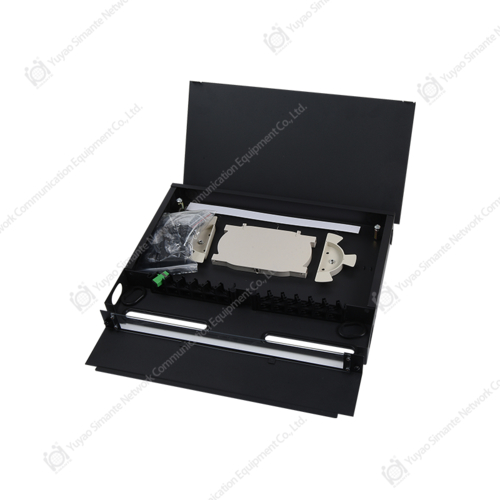
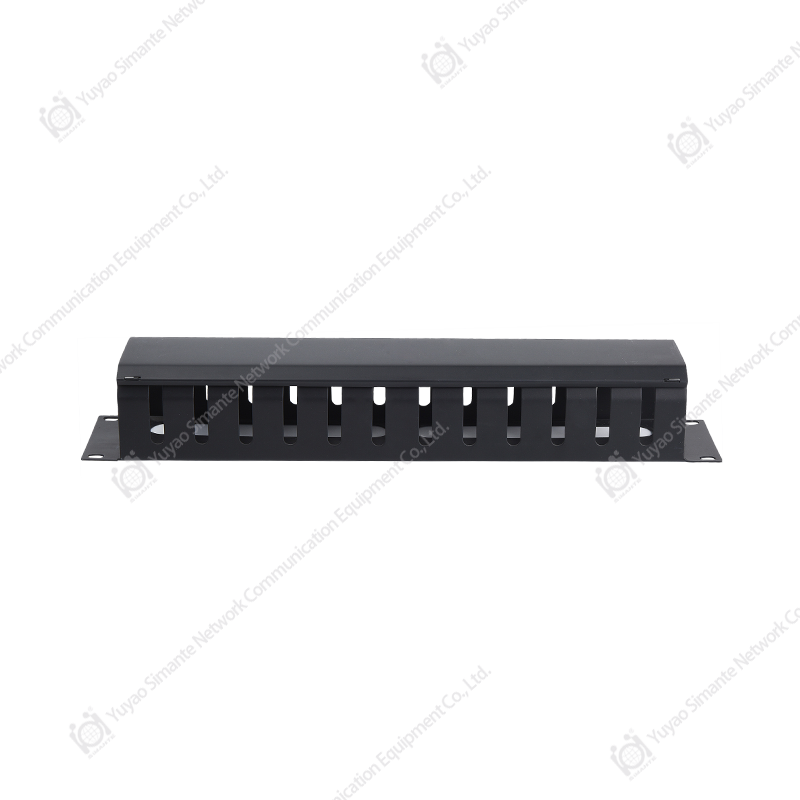
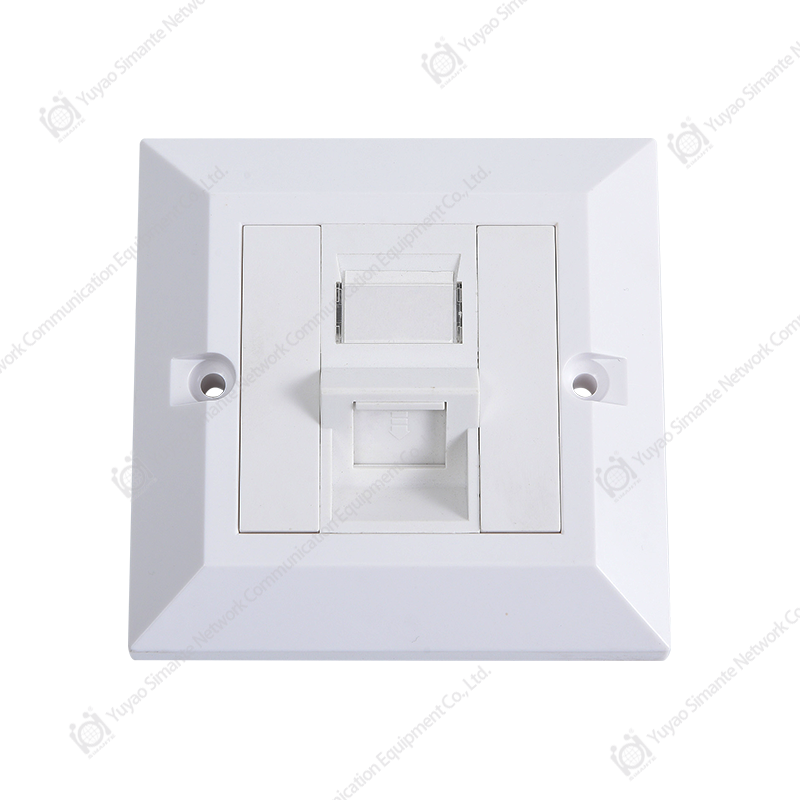
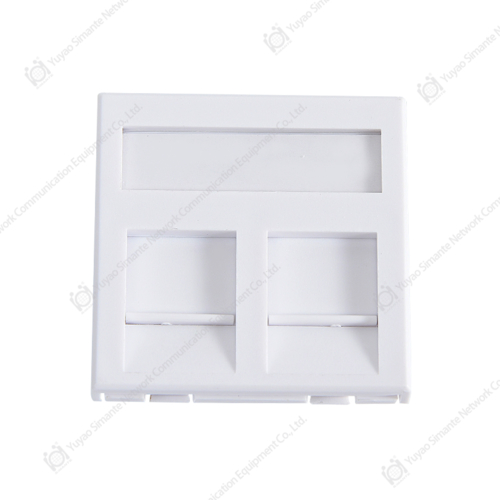
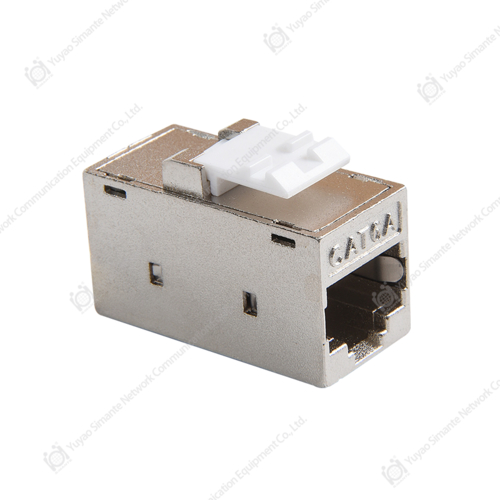
It also helps to align the product family before placing the first order. A structured cabling project usually needs cable, jacks, panels, faceplates and patch cords, and buying them from one source reduces the number of parties involved when a certification fails. The shown here is the kind of component that should be specified alongside the cable, because the panel's IDC geometry and the cable's conductor diameter interact directly at the termination point.
Total Cost of Ownership: Where the Cheap Drum Costs More
The invoice price of a box of cable is the easiest number to compare and the least useful. Total cost includes the labour to pull and terminate, the cost of retesting a failed link, the disruption of returning to a live site, the risk of a warranty claim and the reputational cost of a network that behaves unreliably. The table below lays out the comparison that experienced project managers run informally before they approve a low-cost supply.
| Cost Factor | Lowest-Price Cable | Verified Solid Copper Cat 6 |
|---|---|---|
| Material cost per box | Lower by a visible margin | Higher, and tied to the copper market |
| Installation labour | Similar, but often repeated after failed tests | Paid once if termination practice is followed |
| Certification | Higher fail rate, thinner margins, more rework | Passes with headroom that survives minor changes |
| PoE reliability | Voltage drop and heat become service calls | Stable power delivery across the run |
| Service life | Corrosion and oxide faults at terminations | Stable metallurgy for the life of the building |
| Warranty and claims | Frequently excluded or hard to enforce | Documented and traceable to a batch |
There is a commercial dimension to this table as well. Contractors who install marginal cable are the ones who absorb the return visit, because the client's first call is to the installation company rather than to the distributor. A single failed certification on a 200-port project can consume more margin than the entire cable purchase, which is why many established contractors treat conductor verification as part of their standard mobilisation, not as an optional quality step.
Distributors face a different version of the same arithmetic. Carrying a compliant solid copper Cat 6 line reduces the technical support burden, shortens the argument when a link fails, and protects the brand if the cable is private-labelled. For a wholesaler selling into several markets, the documentation package also becomes a sales asset, because an integrator bidding on an overseas project needs a report that the consultant will accept.
A Practical Approval Checklist for Solid Copper Cat 6
Design teams, procurement departments and site supervisors often use the same specification for different purposes, which is how a project ends up with a compliant document and a non-compliant delivery. A single checklist, agreed before the tender is issued, removes most of that ambiguity.
- State the conductor openly in the specification: solid bare copper, 23 AWG nominal, with a maximum resistance figure and the standard edition applied.
- Name the fire rating by route, and require the listing document for the exact construction being supplied.
- Require the cable, jacks, panels and cords to come from a matched family rated for the same category.
- Ask for a batch-specific test report and a first article sample before mass production is released.
- Agree the delivered length and a method for verifying it at goods-in.
- Set a copper price basis and a tolerance band so that neither party is tempted by substitution when the market moves.
- Record certification margins during commissioning and keep the test files with the as-built documentation.
- Retain a one-metre sample from every lot, labelled with the delivery note and the project reference.
- Train the termination crew on untwisted length, tie tension and bend radius, and audit the first fifty links.
- Write the warranty terms into the purchase order, including the response time for a disputed batch.
None of these steps is exotic, and together they take less time than a single failed re-certification. The value is that they move the argument from opinion to evidence. When a link fails, the conversation is about a measured resistance, a recorded margin and a batch number, not about whose memory of the installation is more reliable.
For manufacturers, the same checklist is a useful description of what a serious export customer expects. Capacity, certification and price matter, but the orders that repeat are the ones where the supplier can answer a technical question with a document and a number. That is also where custom work becomes a commercial advantage, because a customer with a specific jacket colour, print legend or length requirement needs a factory that can control the process rather than a trading company that forwards the request.
Frequently Asked Questions About Solid Copper Cat 6
Is solid copper Cat 6 the same as 100 percent copper?
Not automatically. Solid describes the conductor construction, while 100 percent copper describes the metal content. A copper-clad aluminium cable can be solid and still contain very little copper by weight. The correct requirement combines both phrases: solid bare copper conductors, with a stated copper purity and a maximum resistance figure that the supplier is willing to test against.
Does solid copper Cat 6 support 10GBASE-T?
Cat 6 supports 10GBASE-T over a limited distance, typically about 55 m in a four-connector channel, subject to alien crosstalk conditions. For a full 100 m run at 10 Gbps, Cat 6A is the more comfortable choice. A solid copper Cat 6 cable that meets the standard will meet the shorter distance, but marginal cable will fail even that, which is why certification margin matters more than the category printed on the box.
Can I use solid copper Cat 6 for patch cords?
You can terminate it, but it is the wrong construction for the application. Patch cords flex, get re-plugged and are frequently bent tightly behind equipment. Stranded conductors handle that movement far better. Use solid copper for the permanent link and stranded copper of the same category for the equipment cords, and keep the cord lengths short enough to leave room in the channel budget.
What AWG should I specify for solid copper Cat 6?
23 AWG is the most common and the easiest to source in a compliant design. The standard permits 22 to 24 AWG, and some constructions use 23 AWG for the best balance of resistance, diameter and termination compatibility. Thinner conductors reduce material cost and can be legitimate, but they leave less headroom for PoE heat and long runs, so the resistance figure should be checked rather than assumed.
How can I tell whether a Cat 6 cable is copper-clad aluminium on site?
Strip a short section and look at the cut end. Copper is reddish through the whole section; copper-clad aluminium shows a silver core with a thin copper skin, and a knife scrape will reveal it. Weight is another clue, since aluminium is much lighter than copper. A loop resistance measurement confirms it, and the reading is the evidence worth keeping if a batch has to be rejected.
Which fire rating do I need for a solid copper Cat 6 installation?
It depends on the route and the local code. Plenum spaces normally call for a plenum-rated construction, vertical shafts for a riser rating, and general horizontal runs for a general-purpose rating. Many export markets use the CPR classification instead. The reliable approach is to state the route, then ask the supplier for the listing document or declaration of performance for that exact construction.
Why is solid copper Cat 6 more expensive than the alternatives?
Copper is a traded commodity with a much higher material cost than aluminium, and a compliant construction uses more of it. The price difference is real, but it is a fraction of the installed cost of a link. When a quotation is far below the market, the difference is usually in the conductor rather than in the factory's efficiency, and that difference reappears later as rework, service calls or a failed warranty claim.
Can I mix solid copper Cat 6 cable with Cat 5e jacks or panels?
You can physically terminate it, but the resulting channel is limited by the lowest-rated component. A Cat 6 cable in a Cat 5e jack will typically fail at the higher frequencies the cable was bought to support. The practical rule is to keep cable, jacks, panels and cords in the same category and, where possible, from the same matched product family.
What should a distributor ask a manufacturer before an OEM order?
Ask for the conductor specification in writing, the AWG and resistance limits, the listing file number, the fire rating declaration, a batch test report and a first article sample. Then confirm MOQ, lead time, packaging for export, print legend approval and the copper price adjustment mechanism. A manufacturer who can answer all of that with documents is usually able to repeat the result on the second and third order as well.
Does solid copper Cat 6 need shielded construction for industrial sites?
Only where the electromagnetic environment demands it. Shielded cable helps in areas with variable-frequency drives, welding equipment or dense power distribution, but it requires correct grounding and bonding at both ends to be effective. Unshielded solid copper Cat 6 remains appropriate for most commercial and residential structured cabling, where separation distances and sensible routing solve the majority of interference problems.
What a Dependable Solid Copper Cat 6 Supply Chain Looks Like
The cable is a simple product with a complicated commercial life. It is bought months before it is installed, installed before it is tested, and tested long before the failures appear. That sequence means the buyer's best protection is evidence collected early: a written conductor specification, a resistance limit, a fire rating matched to the route, a first article sample and a batch report that survives an audit.
Manufacturers that serve export markets have an additional responsibility, because their documentation is often the only thing a consultant overseas will see. A clear print legend, a consistent box length, a stable jacket colour and a test report that names the construction are not marketing extras; they are the working interface between a factory and a project. Where the product is customised for a distributor, the same discipline applies to the artwork, the length options and the approval process.
For projects that need a single source across copper and fibre, the practical advantage is fewer handovers. Cable, keystone jacks, patch panels, faceplates and patch cords can be specified as one system, tested as one system and supported by one technical contact. That arrangement does not guarantee a perfect installation, because termination quality still decides the outcome, but it removes the most common excuse when a link fails: that the problem belongs to somebody else's component.
Buyers who follow the checks in this guide tend to end up with a simpler position at handover. They can show a specification that names the conductor, a delivery that matches it, a certification report with visible margin and a retained sample for every lot. That is a stronger defence than any claim about being a premium brand, and it is what makes solid copper Cat 6 a specification rather than a preference.