Español
 عربى
عربى русский
Content
- 1 What Is a Structured Cabling System and Why Do Its Components Matter?
- 2 Core Structured Cabling System Components: Keystone Jacks, Patch Panels, and Faceplates
- 3 How Structured Cable Products Work Together: Signal Path and Wiring Principles
- 4 Application Scenarios and Component Usage Across Environments
- 5 Comparing Cabling Categories: Cat5e, Cat6, and Cat6A Performance
- 6 Growth Trends in Structured Cabling Adoption
- 7 Keystone Jack vs RJ45 Male Connector: A Multi-Attribute Comparison
- 8 Installation and Maintenance Guidance for Structured Cabling Products
- 9 Choosing a Reliable Structured Cabling Manufacturer and Supplier
- 10 Frequently Asked Questions
- 10.1 Q1: What is the difference between Cat6 and Cat6A keystone jacks?
- 10.2 Q2: Do I need to use the same wiring standard on both ends of a cable run?
- 10.3 Q3: What is a blank patch panel used for?
- 10.4 Q4: Can a keystone jack and an RJ45 male connector be used in the same cable run?
- 10.5 Q5: How many ports should a network face plate include?
A structured cabling system is built from a small set of standardized components — keystone jacks, patch panels, and faceplates — connected with RJ45 terminations so that data moves reliably from a network switch to every wall outlet in a building. Once these Structured Cabling System components are correctly matched to the required cabling category and installation environment, the resulting network cabling solution tends to remain stable and easy to manage for years, even as the number of connected devices grows. This article looks at what each core component does, how they work together, how Cat5e, Cat6, and Cat6A products compare, and what buyers typically evaluate when selecting a supplier of structured cable products for a new build or an infrastructure upgrade.
What Is a Structured Cabling System and Why Do Its Components Matter?
A structured cabling system is a standardized approach to building a network's physical wiring so that every cable run, port, and connection point follows the same layout logic, regardless of how large the building or how many rooms it has. Rather than running individual cables directly from each device back to a switch, a structured cabling system organizes wiring into a predictable hierarchy: horizontal cable runs terminate at a wall-mounted network face plate on one end and at a Patch Panel in a central equipment room on the other. This approach is what allows a facilities team to add, move, or reconfigure a network connection by changing a single short patch cord instead of re-running cable through walls and ceilings.
The quality of each individual Structured Cabling Products component has a direct effect on the overall reliability of the network. A poorly terminated keystone jack or an inconsistent Patch Panel can introduce signal loss or intermittent connectivity issues that are difficult to diagnose once a building is fully wired and in use. This is why many facility planners work directly with established keystone jack manufacturers and Patch Panel manufacturers early in a project, rather than treating cabling components as an afterthought during final-stage procurement.
Key takeaway: because a structured cabling system standardizes the entire wiring layout, the quality and consistency of individual components determines how reliable and easy to maintain the whole network becomes.
Core Structured Cabling System Components: Keystone Jacks, Patch Panels, and Faceplates
Three components form the backbone of nearly every copper-based structured cabling system, and understanding what each one does makes it far easier to specify the right structured cable products for a given project.
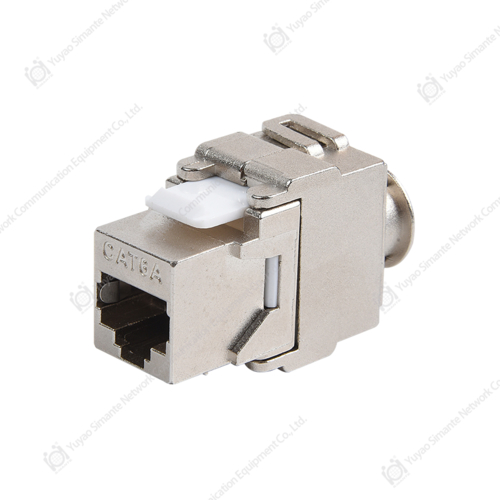
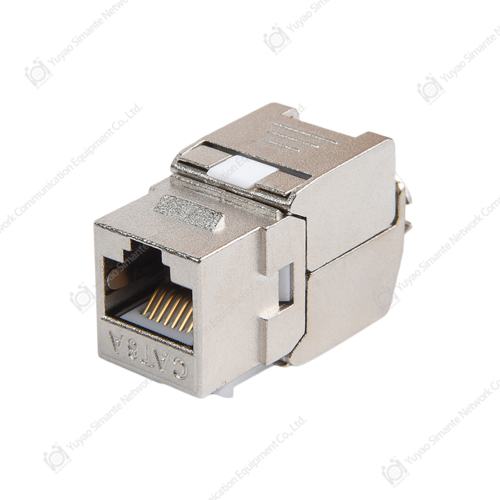
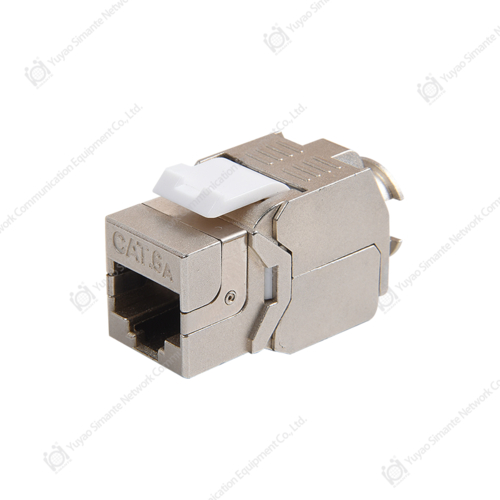
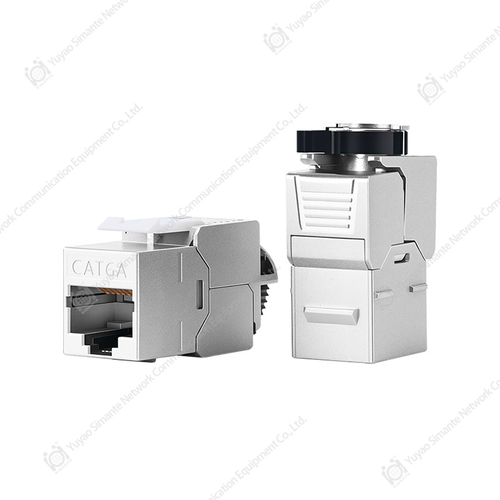
A modular termination point, such as an RJ45 keystone jack or keystone jack Cat6 module, that snaps into a face plate or patch panel opening and connects horizontal cable to a standard RJ45 port.Patch Panel
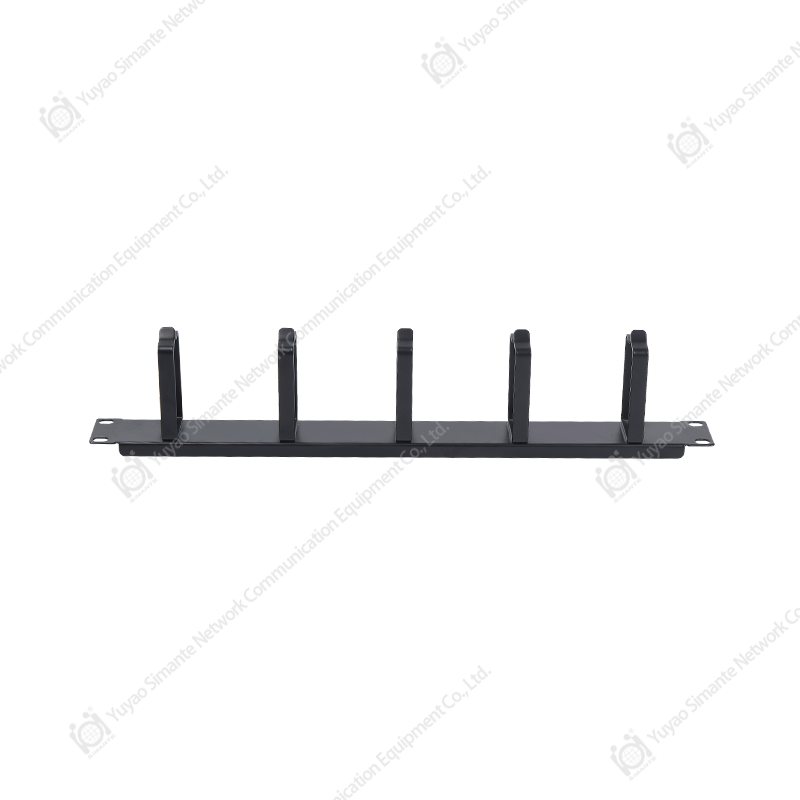
A rack-mounted panel, including patch panel Cat6 and blank patch panel formats, that consolidates dozens of horizontal cable terminations into one organized location near the network switch.Network Face Plate
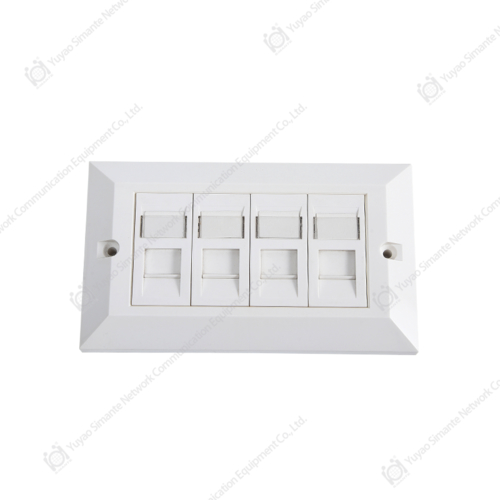
A wall-mounted housing that holds one or more keystone jacks, giving end users a clean, labeled access point for a patch cord.RJ45 Male Connector
The plug end terminated onto a patch cord, designed to insert into a keystone jack, patch panel port, or network device to complete the circuit.
| Component | Location in the System | Function |
|---|---|---|
| Keystone Jack | Wall outlet and patch panel port | Terminates horizontal cable into a standard RJ45 socket |
| Patch Panel | Central equipment rack | Consolidates and organizes cable runs for switch connection |
| Network Face Plate | Wall-mounted outlet | Houses keystone jacks and provides a clean user access point |
| RJ45 Male Connector | Patch cord ends | Plugs into jacks, panels, and network devices to complete the link |
Key takeaway: keystone jacks, patch panels, and face plates each handle a different stage of the wiring path, and matching all three to the same cabling category keeps the link performing consistently end to end.
How Structured Cable Products Work Together: Signal Path and Wiring Principles
Understanding the signal path helps explain why every Structured Cabling System component in the chain needs to match the same performance category. A typical horizontal cable run begins at a network switch port, travels through a short patch cord terminated with an RJ45 Male Connector, plugs into a Patch Panel port, continues through permanently installed horizontal cable behind the wall or ceiling, terminates at a Net Keystone Jack inside a network face plate, and finally connects to an end-user device through another patch cord.
Two wiring standards, T568A and T568B, define the exact order in which individual copper pairs are terminated inside a keystone jack Cat6 module or Patch Panel port. Both standards are electrically equivalent; the key requirement is that the same standard is used consistently across every termination point in a given cable run, since mixing the two on opposite ends of the same cable can create a crossover connection rather than a straight-through one. Most keystone jack manufacturers print both wiring diagrams directly on the housing to reduce the chance of a technician terminating the two ends inconsistently.
Because every stage of the path shares the same physical circuit, the overall link can only perform as well as its weakest component. A Cat6A backbone cable paired with a lower-category rj45 keystone jack will typically be limited by the jack's rated performance rather than the cable's, which is why cabling designers generally recommend matching the category rating across the cable, the keystone jack, the Patch Panel, and the patch cords used at both ends.
Key takeaway: a structured cabling link performs only as well as its weakest terminated component, so category consistency across cable, jacks, and patch panels matters more than upgrading any single part in isolation.
Application Scenarios and Component Usage Across Environments
Not every environment places the same demands on a structured cabling system. A residential installation may only need a handful of network face plate outlets, while an enterprise office floor or a data center requires dense, high-port-count Patch Panel arrangements supported by a much larger number of individual keystone jacks. Understanding this range helps buyers evaluating structured cable products from a supplier decide how many ports, what category rating, and what panel density their project actually needs before finalizing a bill of materials.
The chart below illustrates a general reference pattern for how port density needs scale across four common installation environments, using an illustrative index rather than a claim about any specific building.
The column chart compares relative port density needs across four installation environments using a ten-point index. Data centers score highest at 9.6, reflecting the dense concentration of Patch Panel ports required to support racks of servers and network equipment in a comparatively small physical footprint. Office environments follow at 8.5, since most workstations, meeting rooms, and shared equipment each require a dedicated network face plate outlet, often with more than one port per location to allow for future device additions. Education settings score 7.2, sitting between office and residential needs because classrooms and administrative areas require multiple outlets, but common areas and hallways typically need far fewer than a dense office floor. Residential installations score lowest at 4.8, since most homes need only a small number of face plate locations concentrated around a media area, a home office, or a few key rooms. This pattern is useful for buyers sourcing structured cable products at scale, since it suggests that data center and office projects generally justify ordering higher-density Patch Panel formats, while residential and small education projects are usually well served by smaller panel counts and fewer keystone jack units per outlet. Recognizing these differences before placing an order helps avoid both under-provisioning, which leads to costly retrofits, and over-provisioning, which leaves unused capacity sitting idle in a rack or wall box.
Key takeaway: port density requirements vary sharply by environment, with data centers and offices needing significantly more Patch Panel and keystone jack capacity than residential or light-education installations.
Comparing Cabling Categories: Cat5e, Cat6, and Cat6A Performance
One of the most common questions buyers ask a structured cable products supplier is how Cat5e, Cat6, and Cat6A actually compare in practice, beyond the category label printed on the box. Each category defines a different level of bandwidth capacity, resistance to interference between adjacent pairs, and signal stability at longer cable lengths. These differences matter most in dense installations where many cables run in parallel, since crosstalk and attenuation both increase with cable count and distance. The chart below compares the three categories across four practical performance attributes on a shared ten-point index, giving buyers a general reference point when deciding which keystone jack Cat6 or Cat6A product line best fits a given project. As with the earlier charts, the values represent a general comparative index rather than measurements from any specific laboratory test.
The grouped horizontal bar chart compares Cat5e, Cat6, and Cat6A across four practical attributes, and a consistent pattern emerges across every category: Cat6A scores highest, Cat6 sits in the middle, and Cat5e scores lowest, though the size of the gap varies by attribute. Bandwidth capacity shows the widest spread, with Cat5e at 6.0, Cat6 at 8.0, and Cat6A at 9.5, which reflects the significant jump in supported data rates as cabling categories advance. Crosstalk resistance follows a similar pattern, with Cat6A reaching 9.3 compared with 6.5 for Cat5e, largely due to tighter pair twisting and improved shielding options available in higher-category cable and connecting hardware. Signal stability at distance narrows slightly across the three categories, at 6.2, 7.8, and 9.0 respectively, since all three categories are designed to meet minimum performance standards at their rated maximum cable length, even though higher categories maintain more performance headroom. Future-proofing shows the largest practical gap for buyers to consider, with Cat5e at just 5.0 against 9.4 for Cat6A, reflecting how much more room Cat6A leaves for supporting higher network speeds as device requirements increase over a building's lifespan. For a buyer working with a Patch Panel manufacturer on a new installation, this comparison generally supports choosing Cat6 as a balanced, widely deployed option for standard office and residential work, while Cat6A is often the more forward-looking choice for data centers or any environment expected to scale in bandwidth demand over the coming years. Cat5e remains a functional, well-established choice for legacy installations or budget-constrained upgrades where existing infrastructure is already built around that category.
Key takeaway: Cat6A consistently outperforms Cat6 and Cat5e across bandwidth, crosstalk resistance, and future-proofing, making it the stronger choice for installations expected to scale over time.
Growth Trends in Structured Cabling Adoption
Beyond comparing categories at a single point in time, it is useful for buyers to understand how adoption patterns tend to shift as bandwidth-hungry applications become more common across offices, campuses, and data facilities. Higher-category structured cable products generally see a gradual increase in specification share over time, while older categories see a corresponding decline as new installations favor greater headroom. This kind of longer-term view helps buyers avoid over-investing in a category that is likely to be phased out of new specifications within a few years. The line chart below illustrates a general, industry-representative adoption pattern across a five-year span for two cabling categories, without attributing the figures to any single external report. Reading the two trend lines together highlights how quickly buyer preference can shift once a newer category becomes broadly available and cost-competitive to install.
The line chart tracks an illustrative specification share index for Cat6A and Cat5e structured cable products across a five-year span. Cat6A rises steadily from an index of 4.0 in the first year to 8.6 by the final year, reflecting a gradual but consistent shift toward higher-category cabling as bandwidth requirements from video conferencing, cloud applications, and wireless access point backhaul continue to increase. Cat5e follows the opposite trajectory, declining from an index of 8.0 to 4.2 over the same period, which is consistent with its role shifting from a default new-installation choice toward a legacy category used mainly for repairs and small-scale extensions of existing networks. The two lines cross between the second and third year, a point that often marks a meaningful shift in how project specifications default within an industry, moving from Cat5e as the standard assumption to Cat6 or Cat6A taking that role instead. This kind of long-term trend is relevant for a Patch Panel manufacturer and keystone jack manufacturers alike, since production planning and inventory strategy generally need to anticipate this kind of gradual category shift rather than react to it after demand has already moved. For buyers, the practical implication is that specifying Cat6A on new installations today, even where Cat6 would technically satisfy current requirements, tends to reduce the likelihood of needing a disruptive re-cabling project within the useful life of the building.
Key takeaway: specification preference is gradually shifting from Cat5e toward Cat6A, which suggests that new installations benefit from planning around higher-category structured cable products even when current bandwidth needs are modest.
Keystone Jack vs RJ45 Male Connector: A Multi-Attribute Comparison
Buyers new to structured cabling sometimes assume a keystone jack and an RJ45 male connector are interchangeable, but the two serve different roles and carry different practical trade-offs. A keystone jack is a fixed termination point designed to be installed once inside a face plate or Patch Panel and left in place for the working life of the cable run, while an RJ45 male connector is typically terminated onto flexible, replaceable patch cords that connect equipment to those fixed jacks. Because a radar chart can display several attributes at once, it offers a clearer picture of how these two component types differ than a single side-by-side metric would. The chart below compares a Net Keystone Jack against an RJ45 male connector across six attributes relevant to real-world installation and long-term use.
The radar chart plots a Net Keystone Jack against an RJ45 male connector across six attributes, and the two shapes reveal fairly distinct strengths. The keystone jack leads clearly on maintenance access, scoring 9.2 against 6.5, and on reusability, scoring 9.0 against 6.0, both of which follow from its role as a fixed, punch-down termination that rarely needs to be replaced once correctly installed inside a face plate or Patch Panel. Signal consistency and long-term reliability also favor the keystone jack, at 8.8 and 8.9 respectively compared with 8.0 and 7.8 for the RJ45 male connector, reflecting the more stable, vibration-resistant nature of a permanent punch-down connection versus a connector that is plugged and unplugged repeatedly over time. The RJ45 male connector, in turn, leads on installation speed, scoring 9.0 against 7.0 for the keystone jack, since crimping a connector onto a patch cord is generally a faster field operation than punching down eight individual conductors into a keystone jack housing. Termination ease sits close between the two, at 8.5 for the RJ45 male connector and 8.0 for the keystone jack, indicating that with proper tools, neither termination method presents a significant skill barrier for a trained installer. Taken together, this comparison explains why the two components are typically used side by side rather than as substitutes for one another: keystone jacks anchor the permanent, rarely disturbed portions of a structured cabling system, while RJ45 male connectors handle the flexible, frequently changed patch cord connections at both the equipment room and the end-user device.
Key takeaway: keystone jacks are built for stable, long-term terminations while RJ45 male connectors are built for fast, frequently changed patch cord connections, so a well-designed system relies on both.
Installation and Maintenance Guidance for Structured Cabling Products
Well-chosen components still depend on careful installation practices to deliver their rated performance over the long term. The steps below apply broadly across most copper-based structured cable products, including keystone jacks, patch panels, and network face plates, and following them consistently helps a network cabling solution perform closer to its rated potential.
- Maintain the twisted-pair structure of each cable as close to the termination point as possible, since untwisting conductors more than necessary increases crosstalk between adjacent pairs.
- Use the same wiring standard, either T568A or T568B, consistently across every keystone jack, blank patch panel, and face plate in a given installation to avoid unintended crossover connections.
- Avoid exceeding the recommended bend radius of the cable during routing, since sharp bends can deform the internal pair geometry and degrade signal performance over the life of the installation.
- Label every port on the Patch Panel and every network face plate outlet at the time of installation, which significantly reduces troubleshooting time during later moves, additions, or changes.
- Periodically inspect patch cords and RJ45 male connector tips for wear, since repeated plugging and unplugging is the most common source of gradual connection degradation in an otherwise stable system.
Routine maintenance for a structured cabling system is generally lighter than for active network equipment, since keystone jacks, patch panels, and face plates have no moving parts and no firmware to manage. The main maintenance task is keeping documentation and port labeling current as a network cabling solution grows, since undocumented changes are the most frequent cause of extended troubleshooting time when a connectivity issue eventually appears.
Key takeaway: consistent wiring standards, careful cable handling during installation, and up-to-date port labeling do more to protect long-term performance than any ongoing maintenance task.
Choosing a Reliable Structured Cabling Manufacturer and Supplier
Selecting a production partner for keystone jacks, patch panels, and network face plates has a lasting effect on how well a structured cabling system performs once it is installed and in daily use. Buyers generally look for keystone jack manufacturers and faceplate and RJ45 connector manufacturers with an established design and development process, consistent quality control across production runs, and the technical depth to advise on category selection, port layout, and wiring standards rather than simply supplying parts from a catalog.
Yuyao Simante Network Communication Equipment Co., Ltd. is one example of a supplier built around this kind of integrated approach. The company is a professional manufacturer of network cabling solutions and optical fiber products, bringing together design, development, sales, and service under one operation. Over nearly twenty years of service, the company has focused on meeting customer requirements through technical expertise, aiming to add value for buyers from the very first stage of a project conversation rather than only at the point of order placement. Its structured cable products span keystone jacks, patch panels, and face plates, giving buyers the option to source multiple Structured Cabling System components from a single, consistent supplier rather than coordinating across several vendors.
Quality stability at Yuyao Simante is supported by a mature research and development system, with the company's engineering and technical team, made up of more than ten engineers and over thirty full-time technical staff, working to guard quality at the design stage rather than relying solely on downstream inspection. This design-stage focus is intended to help ensure that each Net Keystone Jack, Patch Panel, and network face plate leaving the factory performs consistently across large production runs, which matters considerably to buyers placing bulk orders for multi-site rollouts or large commercial installations.
Key takeaway: a structured cabling supplier that combines in-house engineering depth with design-stage quality control tends to deliver more consistent component performance across large, multi-site orders.
Frequently Asked Questions
Q1: What is the difference between Cat6 and Cat6A keystone jacks?A Cat6A keystone jack is rated to support higher bandwidth and offers better crosstalk resistance and signal stability at distance than a Cat6 keystone jack, making it a stronger choice for installations expected to scale in future bandwidth needs. |
Q2: Do I need to use the same wiring standard on both ends of a cable run?Yes. Using the same wiring standard, either T568A or T568B, on both the keystone jack and the Patch Panel end of a cable run avoids creating an unintended crossover connection. |
Q3: What is a blank patch panel used for?A blank patch panel provides unpopulated openings that accept modular keystone jacks, giving installers the flexibility to mix cabling categories or port types on a single panel rather than committing to a fixed, pre-loaded configuration. |
Q4: Can a keystone jack and an RJ45 male connector be used in the same cable run?Yes, and in most structured cabling systems they are meant to be used together — the keystone jack terminates the fixed horizontal cable, while RJ45 male connectors are used on the flexible patch cords that plug into the jack at either end. |
Q5: How many ports should a network face plate include?This depends on the environment, but many installations use at least two ports per location to allow for future device additions, with denser environments such as offices and data centers typically specifying higher port counts per outlet or rack unit. |