Español
 عربى
 русский
Content
- 1 Pre-Terminated Fiber Optic Cable Assemblies: The Short Answer Before You Buy
- 2 What Ships in a Factory-Terminated Assembly
- 3 Connector, Polarity, and Fiber Grade Choices That Decide the Order
- 4 Where Pre-Terminated Fiber Cabling Earns Its Place
- 5 Loss Budget, Test Reports, and Acceptance Criteria
- 6 Pulling, Bend Radius, and Handling on Site
- 7 How Pre-Terminated Trunks Connect to Patch Panels and Enclosures
- 8 Custom Lengths, Labeling, and Breakout Configurations for Contractors
- 9 Quality Checks for a Manufacturer or Supplier
- 10 Lead Time, Packaging, and Wholesale Order Planning
- 11 Cost Comparison: Field Termination vs Factory Termination
- 12 Common Specification Mistakes and How to Avoid Them
- 13 Site Resources for Specifiers and Buyers
- 14 FAQ: Pre-Terminated Fiber Optic Cable Assemblies
- 14.1 Are pre-terminated fiber optic cable assemblies suitable for small projects?
- 14.2 How should a buyer measure length for a pre-terminated assembly?
- 14.3 Can a pre-terminated fiber assembly be repaired on site?
- 14.4 What is the difference between UPC and APC connectors?
- 14.5 How many spare assemblies should a contractor order?
- 14.6 Why does polarity matter on a multifiber trunk?
Pre-Terminated Fiber Optic Cable Assemblies: The Short Answer Before You Buy
The short answer is that pre-terminated fiber optic cable assemblies are usually worth considering when the route is repeatable, the connector interface is already decided, and the project can absorb a factory lead time in exchange for lower field risk. A contractor pricing a 96-port floor distribution box, for example, may find that factory-terminated trunks remove several splicing steps from a crowded ceiling void and leave the site with a tested loss report instead of a pile of bare fiber ends.
That does not make them the right answer for every link. Pre-terminated assemblies work best when lengths can be measured with a sensible allowance, when the cable route will not change after the order is released, and when the project team understands that the factory is building to a specification rather than to a site condition discovered on the morning of installation. The same product can be a smooth plug-and-play solution on one job and an expensive rework item on another.
For buyers comparing a manufacturer, supplier, or wholesaler, the useful question is not whether pre-terminated fiber is modern. The useful question is where the project can trade field flexibility for factory consistency. That trade is easiest to justify in riser backbones, data hall rows, campus links between buildings, and repeatable zone cabling where the same assembly type appears many times.
Choose pre-terminated assemblies when speed, repeatability, and tested loss matter more than last-minute length changes.
What Ships in a Factory-Terminated Assembly
A pre-terminated fiber optic cable assembly is more than a patch cord with a long cable jacket. A typical trunk or breakout assembly includes the optical cable, factory-installed connectors, a fanout or breakout section where multifiber cable separates into duplex or simplex legs, labels at both ends, and a test record for insertion loss and polarity. On larger orders, the shipment may also include pulling eyes, protective caps, coil packaging, and a length schedule matched to the project riser diagram.
The value sits in the word “assembly.” The factory controls the termination environment, the polish or cleave quality, the epoxy or mechanical termination process, and the test setup. That control is useful when the site has limited clean space, when the schedule cannot support a splicing team for every floor, or when the same connector map must be repeated across many identical links.
| Decision area | Field termination | Pre-terminated assembly | What it means on site |
|---|---|---|---|
| Termination environment | Site conditions affect dust, space, power, and lighting. | Controlled factory process with repeatable tooling. | Less dependence on the quality of a temporary work area. |
| Testing | Testing is performed after installation or during commissioning. | Factory test data can be supplied before shipment. | Loss issues can be separated from installation damage more easily. |
| Length flexibility | Length can be adjusted during installation. | Length is fixed at order release, with a planned service loop. | Measurement discipline matters before the purchase order is approved. |
| Installation speed | Splicing, cleaving, and connector housing take time per link. | Pull, secure, connect, and test the installed link. | Useful where access windows are short and labor is stretched. |
| Rework risk | Local rework is possible but depends on skills and tools. | Damage usually means replacing or repairing the assembly. | Pulling protection and bend control become part of the installation plan. |
| Best fit | Irregular routes, unknown final lengths, and small one-off links. | Repeatable routes, known interfaces, and schedule-driven projects. | The route survey is as important as the bill of materials. |
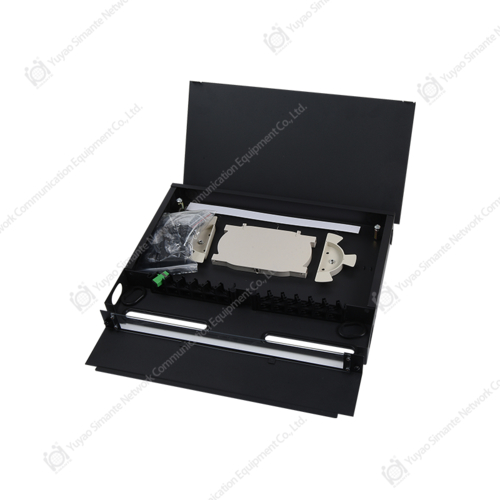
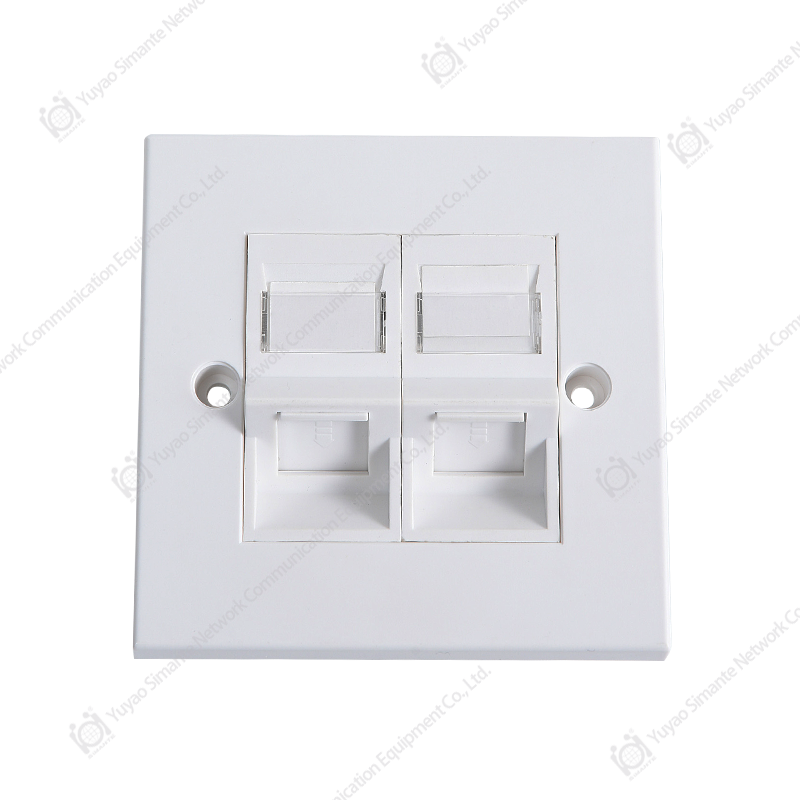
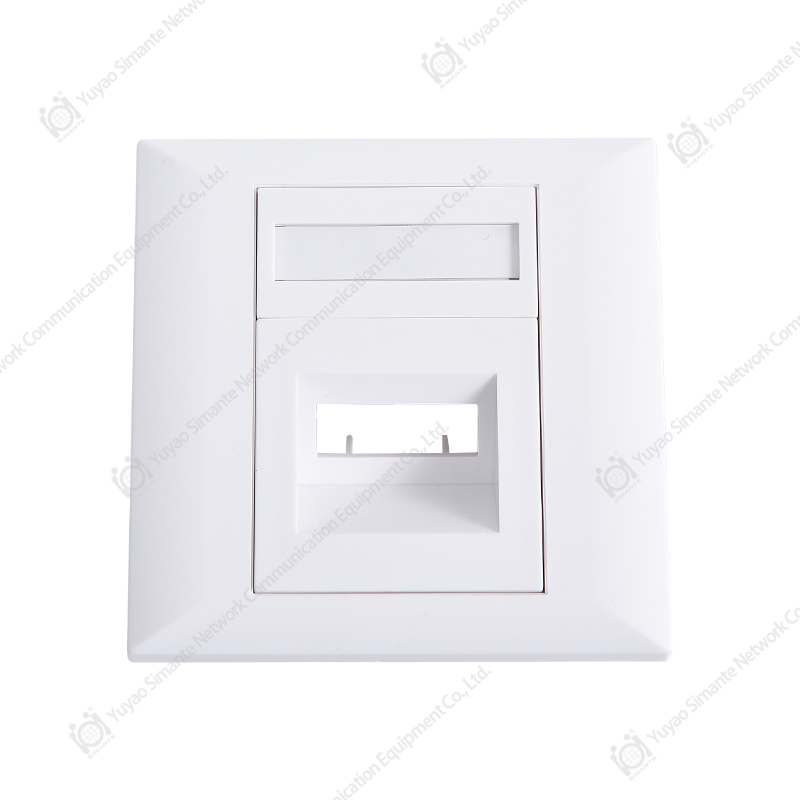 Fiber Optic Faceplates and Patch PanelsExplore SC faceplates and 1U 24-port patch panels with OEM/ODM options, supporting coordinated fiber and copper cabling packages.View Product →
The fiber series on the Simante site sits within a broader structured cabling catalog, which matters for buyers assembling a complete package rather than sourcing one isolated item. A project may need fiber assemblies alongside copper patch panels, faceplates, keystone jacks, and cable management, so the supplier’s ability to coordinate categories can reduce the number of shipments and specification gaps.
A pre-terminated assembly is a factory-built link with a fixed length and a test record, so the order release is the point where flexibility becomes cost.
Connector, Polarity, and Fiber Grade Choices That Decide the Order
Most ordering mistakes do not come from the cable jacket. They come from small interface decisions that were left to the last minute. The connector family, polish, fiber type, polarity method, and breakout style all need to be confirmed before a manufacturer starts cutting lengths. A buyer who sends only a length list without a connector map is inviting a second review cycle.
Connector interface and polish
LC and SC are common choices in enterprise and campus fiber, while MPO or MTP interfaces appear in high-density trunk applications where several fibers terminate in one housing. UPC and APC are not interchangeable just because they fit a similar looking port. APC ferrules are angled and are often used in single-mode access and outside plant links, while UPC remains common in many inside-plant environments. The assembly drawing should state the connector type, polish, and male or female gender where relevant.
Polarity and fiber grade
Polarity is the quiet source of many troubleshooting calls. A duplex link has an A-to-B orientation, while multifiber trunks may use Method A, Method B, or another agreed mapping. The purchase order should not rely on a verbal “standard” because the installer, tester, and end user may each picture a different orientation. Fiber grade also needs a clear callout: OM3, OM4, OM5, or OS2 single-mode are different products with different performance expectations and different connector loss budgets.
- Confirm whether the link is single-mode or multimode before discussing connector loss.
- State the connector family, polish, and gender in the assembly drawing, not only in an email subject line.
- Agree on polarity method and label convention before the factory builds the first trunk.
- Keep spare assemblies to a practical minimum, because fiber type and length make them project-specific.
The connector map and polarity method belong in the purchase specification, because they are harder to correct after shipment than a cable length.
Where Pre-Terminated Fiber Cabling Earns Its Place
Pre-terminated fiber cabling tends to earn its place where the same link pattern repeats. In a data center row, the distance from an overhead tray to a rack-mounted fiber patch panel may be similar across dozens of cabinets. In a campus backbone, the route from a building entrance facility to a main distribution area may be long, but the connector count is modest and the installation window is short. Those are natural candidates for factory termination.
Healthcare and education projects often have congested ceiling spaces and strict access windows. A pre-terminated trunk can reduce the time a contractor spends working above a corridor ceiling, provided the route has been surveyed and the pulling path is clear. Industrial facilities may value the assembly because the connector is sealed and tested before it reaches a dusty or vibration-heavy area, although the cable jacket and connector housing still need to match the environment.
The fit is weaker when the route is genuinely unknown. A renovation where walls are opened one week at a time, or a tenant fit-out where the final rack position may move, is better served by field termination or by a hybrid plan with pre-terminated backbone links and field-terminated edge connections. The point is not to force every link into the same method.
Pre-terminated fiber is strongest on repeatable routes with known endpoints and weakest on projects where the final layout is still moving.
Loss Budget, Test Reports, and Acceptance Criteria
Loss budget is where a technical discussion becomes a commercial one. A pre-terminated assembly with more connectors, more breakout points, or longer cable may still fit the link budget, but only if the buyer has done the arithmetic before comparing prices. Two suppliers can quote the same connector count and still produce different link performance if the cable grade, polish, or test method differs.
The purchase order should define the acceptance test, the test wavelength, the test direction, and the record format. For duplex links, insertion loss and return loss are usual checkpoints. For multifiber trunks, polarity and end-face inspection records may matter as much as the loss number. A factory test report is useful, but it is not a substitute for post-installation verification after pulling and termination at the rack.
| Parameter | Why it matters | What to request |
|---|---|---|
| Insertion loss | Shows how much optical power the assembly removes from the link. | Measured values per assembly or per trunk, with the test wavelength stated. |
| Return loss | Reflected light can affect sensitive links and higher-speed systems. | Connector polish and return-loss values that match the project specification. |
| Polarity | A reversed pair can stop a link even when loss is good. | Agreed method, orientation drawing, and label convention. |
| Length tolerance | The assembly must reach the rack without tight bends or excess coils. | Length definition, measurement points, and allowed service loop. |
| End-face quality | Scratches or contamination can create loss and unstable connections. | Inspection criteria and cleaning caps or protective packaging. |
A practical acceptance plan separates factory data from site data. Factory data tells the buyer what was shipped. Site data tells the project what survived the pull. If a link fails, the two records help the contractor, supplier, and installer locate the problem without guessing.
Agree on loss, polarity, length tolerance, and test records before shipment, because a low price without a test basis is not a comparable quote.
Pulling, Bend Radius, and Handling on Site
Factory termination removes splicing from the schedule, not installation risk. The assembly still has to travel from the packaging to the tray, rack, or enclosure without being crushed, kinked, or pulled by the connector body. A common site failure is to attach a pull line to the connector or fanout instead of using the designated pulling eye or cable jacket. That mistake can turn a tested assembly into a scrap item before it is ever connected.
Bend radius deserves a written limit in the method statement. The limit depends on the cable construction and whether the cable is under load, but the installation team should know the minimum bend radius for the installed state and for the pulling state. Cable ties should be snug enough to support the assembly without deforming the jacket. In vertical risers, support intervals and strain relief need to be planned so the connector housing is not carrying the cable weight.
- Pull from the strength member or pulling eye, never from the connector boot.
- Keep the coil diameter generous during handling and avoid sharp tray edges.
- Leave a service loop at the rack, but keep it organized rather than stuffed into a void.
- Inspect and clean end faces before mating, even when protective caps were fitted at the factory.
The fastest way to lose the benefit of a factory-tested assembly is to pull it by the connector or bend it beyond its stated radius.
How Pre-Terminated Trunks Connect to Patch Panels and Enclosures
The assembly is only half of the link. The other half is the fiber optical patch panel, enclosure, or rack-mounted termination point that receives it. A 24-port or 48-port fiber panel may look like a simple metal box, but the internal routing, splice tray, adapter plate, and cable entry point determine whether the pre-terminated trunk can be dressed properly. If the panel has no room for the fanout and service loop, the installer will improvise, and improvisation is where bend radius limits are usually broken.
Before ordering both items, check the adapter type, panel density, and whether the trunk enters from the top or rear. A high-density panel may save rack space but leave little room for labels and strain relief. A sliding drawer panel can improve access during maintenance, but the drawer travel must not pull on a short trunk. The best result comes from specifying the panel and the assembly as one connection package rather than two unrelated line items.
In campus and building backbone projects, the fiber panel is also the point where the pre-terminated trunk meets the passive infrastructure. If the panel is mounted in a locked room, the label convention and test record should match the building drawing so the facilities team can trace a link without opening every enclosure.
Plan the fiber patch panel and the pre-terminated trunk as one assembly, because the panel interior is where cable management and bend radius succeed or fail.
Custom Lengths, Labeling, and Breakout Configurations for Contractors
Contractors rarely order a single generic length for a whole floor. They order a schedule: six trunks at 18 meters, twelve at 24 meters, four at 35 meters, and a few special runs for the main cross-connect. A manufacturer that supports custom lengths can reduce excess coil without turning the order into a fully engineered one-off product. The buyer still needs to define how the length is measured, from connector tip to connector tip or from boot to boot, and how much service loop is included.
Labeling is another small item with a large effect on handover. A label at each end should identify the source, destination, and assembly number in a way that matches the project drawing. Color coding can help, but it should not replace text. For breakout assemblies, the leg labels need to follow the same polarity map as the trunk so the installer does not have to translate a different convention at the rack.
Custom breakout configurations are useful when a multifiber trunk needs to split into duplex LC or SC legs at a distribution point. The factory can build the fanout, label the legs, and test the assembly as a unit. That is more controlled than pulling a multifiber cable and terminating each leg in a cramped ceiling box. The trade-off is that the breakout length and leg sequencing must be fixed before production.
A custom length is only useful when the measurement rule, service loop, and label convention are written down before order release.
Quality Checks for a Manufacturer or Supplier
When comparing a fiber optic cable assembly manufacturer or supplier, ask for evidence that the production process is controlled rather than described. A useful supplier should be able to explain how connectors are cleaned, how end faces are inspected, how loss is measured, and how assemblies are packed. The answer does not need to be a long quality manual, but it should show that the same checks apply to the first unit and the last unit in a batch.
Factory capability also matters when the order includes mixed products. A supplier that already produces patch panels, faceplates, keystone jacks, and cable management may be able to coordinate the fiber assemblies with the rest of the structured cabling package. That does not replace a careful specification, but it can reduce the risk of mismatched adapter plates, label formats, or packaging schedules.
- Request a sample test record and confirm the units and wavelength used.
- Ask how polarity is checked before packing, especially on multifiber assemblies.
- Confirm the end-face inspection method and what happens when a connector fails the check.
- Check that labels, caps, and packaging protect the assembly during export and site storage.
- For repeat orders, confirm whether test data can be tied to an assembly serial number or batch number.
The Simante site presents itself as a manufacturer with in-house design, production, and customization capability. Buyers should still verify the specific product drawing, test method, and delivery schedule for their order. A factory profile is a starting point for a supplier conversation, not a substitute for an approved sample or a written specification.
Ask for process evidence, sample data, and packing details, because a supplier’s general capability statement does not prove that a specific assembly will meet the link budget.
Lead Time, Packaging, and Wholesale Order Planning
Pre-terminated assemblies add a factory step that field termination does not have. That step is usually short for standard lengths, but it can lengthen when the order includes custom breakout legs, special labels, or a connector type that is not held in stock. A wholesaler or distributor planning a project should separate standard repeat items from project-specific items so the standard stock can move while the custom lengths are being built.
Packaging is part of lead time planning. A trunk coiled in a large box may be easy to ship but awkward to move through a finished building. A coil that is too tight can stress the fiber, while a coil that is too loose can tangle during pulling. The supplier should state the coil diameter, the protection on the connectors, and whether pulling eyes are fitted. For export orders, the carton labeling and pallet plan should match the contractor’s site delivery schedule, not just the freight forwarder’s preference.
Wholesale buyers also need a clear change policy. If a length is changed after production starts, the supplier may need to scrap the cable and connectors. If a label is changed after testing, the assembly may need to be unpacked and inspected again. These are not unreasonable costs, but they should be visible before the order is confirmed so the buyer can decide whether the change is worth the delay.
Separate repeatable stock items from project-specific assemblies, because custom lengths and labels create a different lead-time and change-cost profile.
Cost Comparison: Field Termination vs Factory Termination
A like-for-like cost comparison is harder than it looks. The field-terminated option includes cable, connectors, splice protection, consumables, test time, and skilled labor. The pre-terminated option includes the assembly, factory testing, packaging, freight, and a longer order planning cycle. If the project is small and the route is irregular, field termination may still be cheaper. If the project has many repeat links and a tight commissioning window, the labor and schedule savings can outweigh the higher unit price of the assembly.
The comparison should also include the cost of a failed link. A field-terminated link can be reworked on site if the technician has the tools and skill. A damaged pre-terminated assembly usually needs a replacement or a field repair that may not match the factory test condition. That does not make one method better in every case. It means the risk should be priced, not ignored.
- Count the number of connector ends and the labor hours needed for field termination.
- Include test time, rework time, and the cost of a return visit if a link fails commissioning.
- Add the cost of service loops, pulling protection, and packaging disposal for pre-terminated assemblies.
- Compare total installed cost, not only the price per assembly.
Compare total installed cost, because the lower unit price can lose to labor, testing, and schedule risk on a repeatable fiber project.
Common Specification Mistakes and How to Avoid Them
The most common mistake is to specify a pre-terminated fiber optic cable assembly by length alone. Length without connector type, polarity, fiber grade, and test criteria is not a complete specification. A second mistake is to use a patch cord drawing for a trunk assembly. Trunks may include fanouts, pulling eyes, and leg labels that are not shown on a simple duplex patch cord drawing.
A third mistake is to ignore the route survey. Factory assemblies arrive with a fixed length and a fixed breakout position. If the tray entry is moved or the rack is shifted, the service loop may become too short or too long. A fourth mistake is to treat the factory test report as the final commissioning record. The assembly still needs to be inspected and tested after installation, because pulling, bending, and mating can change the result.
A practical checklist helps: confirm the connector map, confirm polarity, confirm length definition, confirm label format, confirm test method, and confirm the packaging plan. Each item is small, but together they separate a smooth delivery from a site full of adapters and explanations.
Do not release a pre-terminated fiber order until the drawing shows length, connector, polarity, labeling, test method, and packaging as one approved package.
Site Resources for Specifiers and Buyers
Two site pages are useful when preparing a specification or checking how the product fits the wider cabling system. The first covers the company’s manufacturing and customization background, which helps a buyer judge whether a supplier can support a mixed structured cabling order. The second explains the role of the fiber optical patch panel in the link, which is often the missing piece when a trunk assembly is ordered without its receiving panel.
Use the supplier profile to test capability and the patch panel guide to close the receiving-end gap, so the fiber assembly is specified as part of a complete link.
FAQ: Pre-Terminated Fiber Optic Cable Assemblies
Are pre-terminated fiber optic cable assemblies suitable for small projects?
They can be suitable, but the benefit is smaller when there are only a few links and the route is irregular. Small projects often struggle to justify the measurement effort, factory lead time, and minimum order quantities. A better fit is a small backbone link where the connector interface is known and the site cannot support a splicing team.
How should a buyer measure length for a pre-terminated assembly?
Measure the actual route, including vertical rises, tray bends, and rack entry, then add a defined service loop. The purchase order should state whether the length is measured from connector tip to connector tip or from boot to boot. A route survey with photos and tray dimensions is more useful than a single number on a drawing.
Can a pre-terminated fiber assembly be repaired on site?
Some damage can be repaired with field connectors or splicing, but the result may not match the factory test condition. For a damaged trunk, replacement is often the cleaner path. The project plan should include a small number of spare assemblies or a rapid replacement route for critical links.
What is the difference between UPC and APC connectors?
UPC and APC refer to the ferrule end-face geometry and polish. APC uses an angled end face and is often used in single-mode links where return loss matters. UPC is common in many inside-plant links. They should not be mixed without confirming the adapter and mating connector, because a mismatch can create poor contact and high loss.
How many spare assemblies should a contractor order?
The number depends on the criticality of the link and the lead time for a replacement. A common approach is to hold one or two spares for the most repeated assembly type, not one for every length. Spares should be stored with caps fitted and labels intact so they can be identified quickly.
Why does polarity matter on a multifiber trunk?
Multifiber trunks carry several links in one cable. If the polarity method is not agreed, the fiber that leaves port one may arrive at the wrong port at the other end. The result can look like a bad loss reading when the real problem is a reversed pair. A drawing and label convention should be approved before production.
Most pre-terminated fiber problems are specification problems, so a complete connector, length, polarity, and test package prevents more failures than a last-minute site fix.