Español
 عربى
 русский
Content
Custom fiber assemblies can look simple on a purchase order: a cable, two connectors, and a length. In practice, they carry the interface between a fiber patch panel, an active device, and the person who has to trace a fault at 2 a.m. The order becomes risky when the drawing, polarity, labeling, and test record are not fixed before production. A buyer’s real task is to turn a site requirement into a repeatable assembly specification that a manufacturer can build, inspect, and pack without guesswork.
For buyers working with a manufacturer or supplier, the practical question is not only “Can you make this?” but “Can you document it, repeat it, and inspect it?” Simante, based in Yuyao, China, builds network cabling products across copper and fiber systems, including fiber series and fiber optical patch panels. Its stated factory footprint, custom production lines, and export experience are useful reference points when comparing a custom fiber assembly quote against the real cost of a site delay.
Custom Fiber Assemblies Are a System, Not a Single Part
An assembly drawing should identify every point where a project can drift: fiber type, connector style, polish, cable construction, breakout length, polarity, labeling, test method, and packaging. Two quotes can show the same connector count and still describe different products. One may include serialized test data and a port map; the other may treat polarity as an installation problem.
That difference matters because fiber links are less forgiving than copper links at the patch point. A polarity swap, a damaged end face, or a label that does not match the panel schedule can stop a commissioning test even when every component was individually purchased at a low price. In a fiber patch panel, the assembly’s connector, polarity, and labeling must match the panel’s port map. A low insertion loss on a test sheet does not compensate for a polarity error at the panel.
What changes when the assembly is customized
- Connector and polish choices affect mating compatibility, return loss, and cleaning routines.
- Fan-out and breakout dimensions affect bend radius, tray fill, and service access inside cabinets.
- Polarity method affects whether a duplex or multi-fiber link works on the first plug-in.
- Labeling and packaging affect installation speed, spare-part control, and warranty traceability.
- Test records affect how quickly a contractor can prove the link is good before blaming the switch.
The most useful quote review is therefore a drawing review. Ask the manufacturer to return a marked-up assembly drawing with the port map, test plan, and label schedule. If the reply is only a price and a lead time, the buyer is carrying specification risk that should sit with the production team.
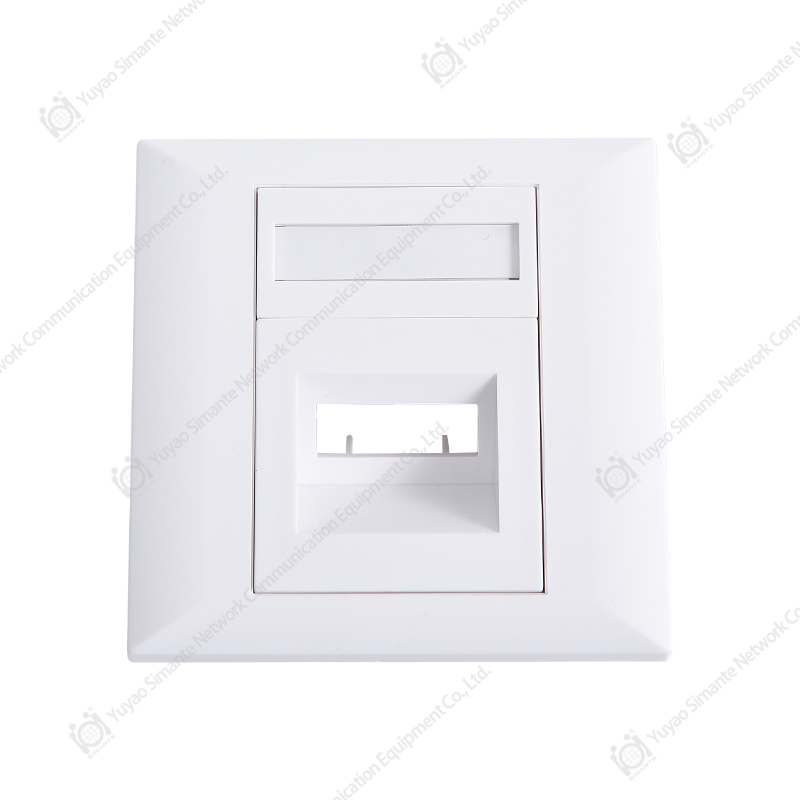 Custom Fiber Cabling and Patch Panel SeriesIncludes SC faceplates and a 24-port 1U patch panel; supports drawing-led quote review of port maps, labels, and test documentation.View Product →
The Specification Checklist Buyers Should Freeze Before Quoting
A specification table is not a substitute for an engineering standard, but it is a practical way to keep a quote review honest. The points below are the ones that most often create change orders, site rework, or spare-parts confusion in structured cabling and fiber backbone projects.
| Decision point | What to lock down | Why it matters | Common buying risk |
|---|---|---|---|
| Fiber type and grade | Singlemode or multimode, core size, jacket material, and fire or environmental rating | Affects reach, bandwidth, routing, and compliance with the installed environment | Substituting a lower-grade cable after the quote is approved |
| Connector interface | Connector style, polish, housing color, and mating adapter | Controls compatibility with patch panels, cassettes, and active equipment | Mating parts that fit physically but do not match the link design |
| Polarity and port map | Duplex pair or multi-fiber method, position A/B, and panel-to-switch schedule | Prevents link failure at commissioning and simplifies moves, adds, and changes | Treating polarity as an on-site correction instead of a factory build rule |
| Length and breakout | End-to-end length, tolerance, breakout stagger, and service loop | Controls bend radius, cabinet fit, and cable management inside the rack | Lengths measured from the wrong reference point or without tolerance |
| Labeling | Source and destination IDs, label material, and placement on both ends | Speeds installation and makes future troubleshooting traceable | Handwritten labels that fade or do not match the as-built schedule |
| Test evidence | Insertion loss, return loss, end-face inspection, continuity, and polarity check | Gives the contractor a baseline before the link is handed over | A certificate without unit-level results or traceable serial numbers |
| Packaging and spares | Coil size, protection, bag or box marking, and recommended spare ratio | Reduces transit damage and keeps replacement parts identifiable on site | Bulk packing that mixes lengths or hides damaged connectors |
Use the table as a buyer’s checklist, then attach the approved drawing to the purchase order. The goal is not to make the document longer; it is to remove questions that the factory would otherwise answer by assumption. A supplier that can quote against a clear drawing is easier to compare than one that quotes against a verbal description.
Where Custom Fiber Assemblies Fit in Real Projects
Custom fiber assemblies are usually part of a larger physical-layer plan. They appear where a standard length, a standard polarity, or a standard connector mix would create waste in the rack. The same product can serve very different buyers, so the application should shape the specification rather than the other way around.
Datacom and enterprise LAN
In a data center or enterprise network, the assembly may run between a fiber patch panel and a switch port, or between adjacent racks. The buying focus is usually on connector compatibility, polarity discipline, and test records that can be filed by rack and port. A clean port map is more valuable than a small price difference because it reduces commissioning time and later move requests.
Building backbone and campus links
For building backbone cabling, the assembly may connect a main distribution frame to an intermediate distribution frame. Length tolerance and cable routing become more important because the assembly has to follow trays, risers, and equipment rooms. The fiber patch panel at each end should be reviewed together with the assembly, not purchased as an unrelated item.
Industrial and automation cabinets
In automation cabinets, vibration, bend radius, and service access can matter more than office-grade appearance. A ruggedized jacket, a defined breakout, and a label that survives cleaning are practical requirements. The buyer should state the cabinet environment clearly so the manufacturer can propose a construction that fits the route.
Buyers often compare quotes on price per assembly alone. A more useful view is to see which specification choices carry the most risk when the project reaches installation.
polarity match
and traceability
breakout fit
packaging
only
The weightings above are a buying view, not a market statistic. They reflect the fact that a lower unit price rarely helps if the assembly does not match the fiber patch panel port map or if the test record cannot be tied to a serial number. For Simante’s fiber series and fiber optical patch panel range, the useful conversation is about interface compatibility, labeling logic, and how test data will be handed over with the shipment. A buyer should ask for a sample assembly and a sample test report before approving a volume order. That review often reveals more than a catalogue page because it shows how the manufacturer controls the last few centimeters of the assembly.
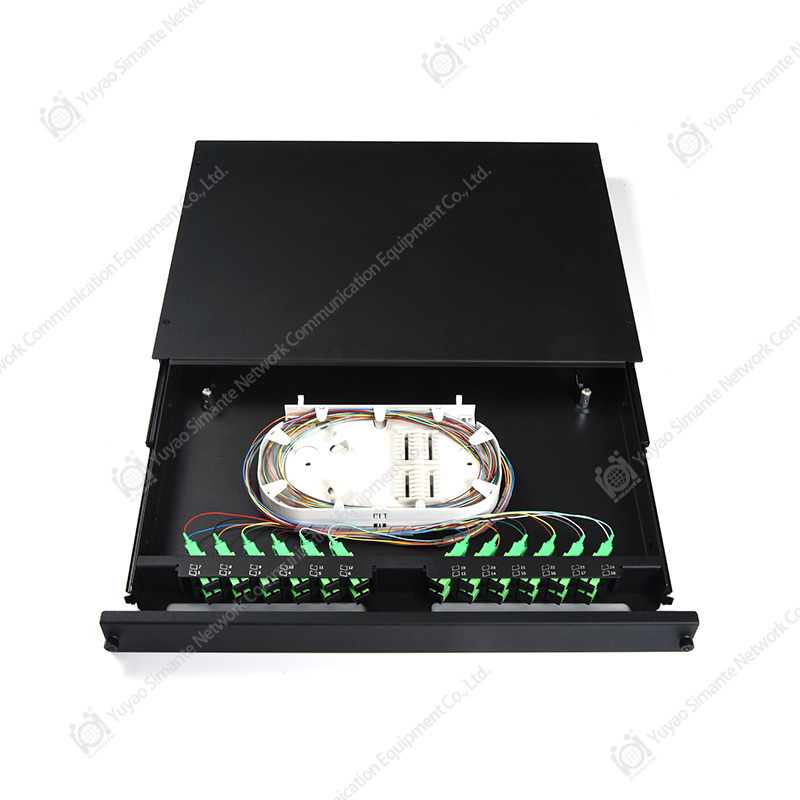 Custom Fiber Optical Patch Panels for Rack-Mounted NetworksRack-mount panels from 12 to 72 ports, including SC/LC and MPO-MTP options, suited to interface, labeling, and test-data review before volume orders.View Product →
How to Compare a Manufacturer, Supplier, or Wholesaler
Not every seller of fiber assemblies is the same kind of partner. A wholesaler may hold stock and shorten delivery for standard items, but custom fiber assemblies usually need an engineering review, a production slot, and a test plan. A manufacturer that controls termination and testing can often resolve a drawing question faster than a trading company that forwards the question to a third party. The right choice depends on the project’s tolerance for change and the buyer’s need for documentation.
Ask for evidence in four areas: engineering support, production control, test method, and export experience. Simante states that it has more than 10 engineers, over 30 full-time technicians, 10 regular and custom production lines, and exports to more than 45 countries. Those figures are company statements, so they should be verified in the quote review rather than treated as a substitute for a sample. Still, they give the buyer concrete topics to discuss: Who checks the drawing? Who signs the test record? How are custom labels controlled? What happens when a length falls outside tolerance?
- Ask whether termination and testing are handled in-house or subcontracted.
- Ask for a sample label schedule and a sample test report, not just a certificate template.
- Ask how the factory handles engineering changes after the drawing is approved.
- Ask for the packing method that will be used for mixed lengths and connector types.
For company background and production context, see the Simante company profile. For a broader view of the components around these assemblies, see this guide to core components of a structured cabling system.
Lead Time, Testing, and Total Cost
Custom fiber assemblies usually take longer to quote than standard patch cords because the factory has to review the drawing, confirm material availability, and plan the test sequence. The buyer can shorten the process by sending a complete package: assembly drawing, port map, label schedule, test standard, quantity by length, and delivery location. Missing one of these items often causes a second quote round and a later production start.
Testing should be discussed before price. A useful test record should identify the assembly, the test date, the instrument or method, and the result. For many projects, the relevant checks include insertion loss, return loss, end-face condition, continuity, and polarity. The exact acceptance values depend on the fiber type, connector, and project standard, so the buyer should state the required values instead of accepting a generic statement.
- Approve the assembly drawing and port map.
- Confirm fiber type, connector, polish, length tolerance, and labeling.
- Agree on the test method and the record format.
- Approve a sample or first-article report before volume production.
- Check packaging, carton marking, and spare ratio before shipment.
Total cost should include site labor, retesting, and downtime, not only the price per assembly. A lower quote that arrives with unclear polarity or thin test records can cost more than a higher quote that arrives with a complete drawing and serialized results. This is especially true when the assemblies feed a fiber patch panel in a live equipment room, where a single mismatch can delay a whole rack.
FAQ: Custom Fiber Assemblies
What are custom fiber assemblies?
Custom fiber assemblies are built-to-order fiber cable assemblies that follow a project’s connector, length, polarity, labeling, and test requirements. They are used where a standard patch cord would not fit the route, the panel, or the documentation plan.
How do you specify custom fiber assemblies for a project?
Start with the route and the port map, then define fiber type, connector interface, polish, length tolerance, breakout, label schedule, test method, and packing. Attach the approved drawing to the purchase order so the manufacturer and the installer work from the same document.
Can a manufacturer support a trial order before volume production?
Many manufacturers can support a sample or first-article order, but the buyer should confirm the sample cost, lead time, and whether the sample will be built on the same line and test method as the volume order. A sample is most useful when it includes the label and test record that will be used in production.
What test records should come with custom fiber assemblies?
Ask for unit-level or lot-level records that identify the assembly and show insertion loss, return loss, continuity, polarity, and end-face inspection where applicable. The record format should match the project’s acceptance standard, not just a generic pass statement.
How do these assemblies connect to a fiber patch panel?
The assembly connector must match the panel adapter, and the polarity must match the panel port map. Buyers should review the panel schedule and the assembly drawing together so that labels, positions, and test records line up at installation.
When you request a quote, send the assembly drawing, the panel port map, the required test values, and the quantity by length. Ask for a marked-up drawing before price approval and a sample test record before volume release. That package gives a manufacturer a fair chance to quote accurately and gives the buyer a clear basis for comparing a supplier, a wholesaler, or a factory-led custom program.
Simante’s fiber series and fiber optical patch panel range sit within a broader network cabling product system that also includes copper structured cabling components. For a project team, that matters because the same physical-layer plan often includes both fiber backbone links and copper horizontal links. Keeping the interface, labeling, and test logic consistent across both sides of the network reduces the chance that a small assembly detail becomes a large handover problem.