Español
 عربى
عربى русский
Content
- 1 Core Protective Features of Faceplates
- 2 Flame Retardancy Ratings and Safety Compliance
- 3 Supported Interface Types and Port Configurations
- 4 FAQ: Common Questions About Faceplates
- 4.1 What is the difference between a faceplate and a wall plate?
- 4.2 Can I mix different port types on one faceplate?
- 4.3 How do I choose between shuttered and non-shuttered faceplates?
- 4.4 What tools are required for faceplate installation?
- 4.5 Are metal faceplates better than plastic ones?
- 4.6 How do angled faceplates improve cable management?
- 5 Selection Guidelines for Specific Environments
Core Protective Features of Faceplates
A faceplate serves as the critical interface between structured cabling and end-user devices, offering multiple layers of protection. The primary protective features include dust and debris shielding through integrated spring-return shutters or sliding covers, physical impact resistance via high-impact ABS or polycarbonate construction, and electrical insulation to prevent accidental contact with live terminals. According to OSHA standards, faceplates must completely cover box openings and seat against finished surfaces to eliminate exposure hazards [^16^].
Modern faceplates incorporate IP20-rated protection against solid objects larger than 12.5mm, making them suitable for standard indoor environments [^2^]. For high-traffic areas, shuttered faceplates feature automatic spring-loaded covers that close when ports are unused, preventing dust accumulation and physical damage to internal connectors [^14^].
Material Durability Standards
Faceplate housings are manufactured from high-impact thermoplastics such as ABS and polycarbonate (PC) blends. These materials provide exceptional resistance to aging, discoloration, and mechanical stress. Commercial-grade faceplates withstand operating temperatures from -54°C to +60°C, ensuring reliability across diverse installation environments [^2^][^6^].
Flame Retardancy Ratings and Safety Compliance
Faceplate flame retardancy is governed by the UL 94 standard, which classifies plastic materials based on their burning characteristics. The majority of commercial and industrial faceplates achieve UL 94V-0 rating—the highest classification for self-extinguishing plastics. This means the material stops burning within 10 seconds after flame removal, with no dripping of flaming particles [^5^][^12^].
| Rating | Burn Time (After Flame Removal) | Dripping Behavior | Typical Application |
|---|---|---|---|
| UL 94V-0 | ≤ 10 seconds | No flaming drips | Commercial/Industrial |
| UL 94V-1 | ≤ 30 seconds | No flaming drips | Residential Standard |
| UL 94V-2 | ≤ 30 seconds | Flaming drips permitted | Low-cost Residential |
| UL 94HB | Slow burning | N/A | Minimal Safety Requirement |
Premium faceplates from manufacturers such as Tripp Lite and Allen Tel utilize UL 94V-0 rated ABS plastic, providing maximum protection against fire and high heat in critical infrastructure environments [^5^][^12^]. Additionally, many faceplates comply with GB/T 5169.11 (Chinese flame retardancy standard) and IEC 60695 international standards, ensuring global applicability [^3^][^7^].
Environmental and Safety Certifications
Beyond flame retardancy, faceplates frequently carry RoHS compliance certification, restricting hazardous substances such as lead and cadmium. Antibacterial variants are also available for healthcare environments, incorporating antimicrobial additives that inhibit bacterial growth on high-touch surfaces [^5^].
Supported Interface Types and Port Configurations
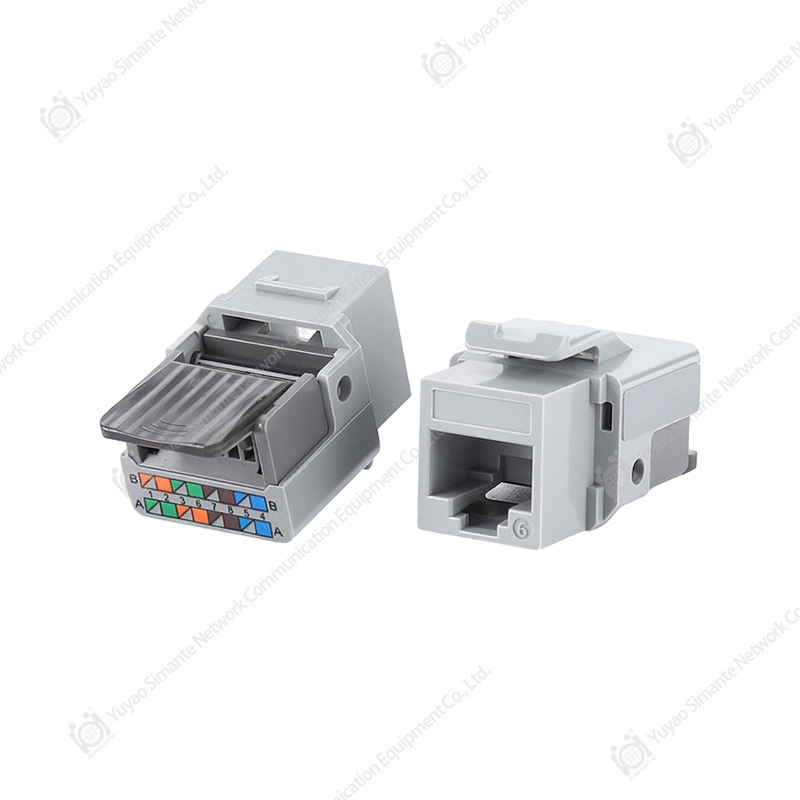
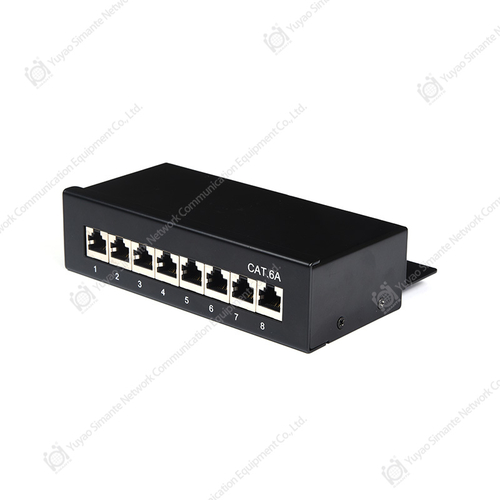
Faceplates support a diverse range of interface types through modular keystone jacks or fixed integrated ports. The most common configurations include:
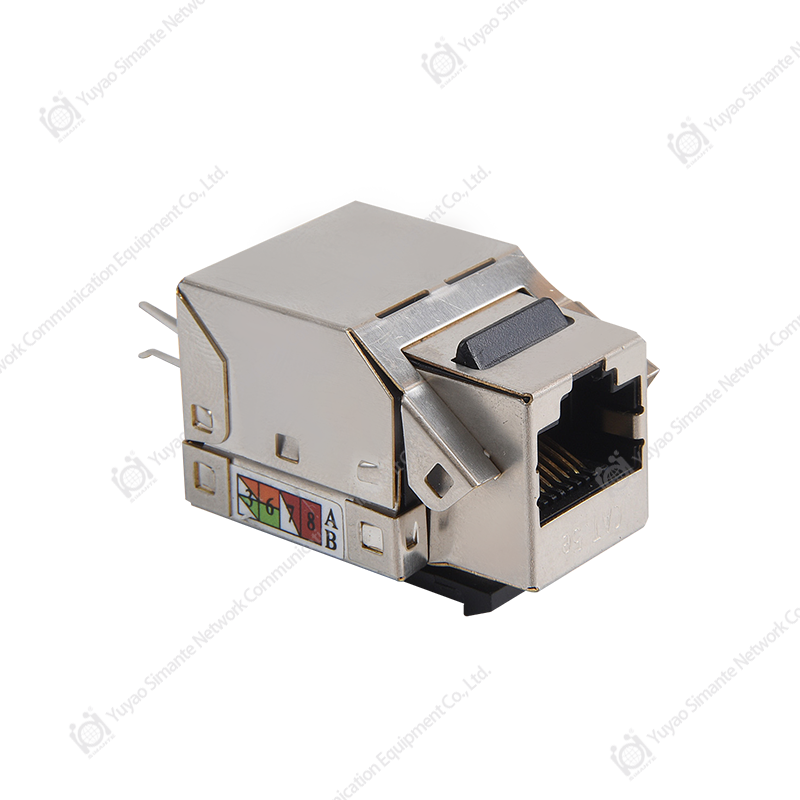
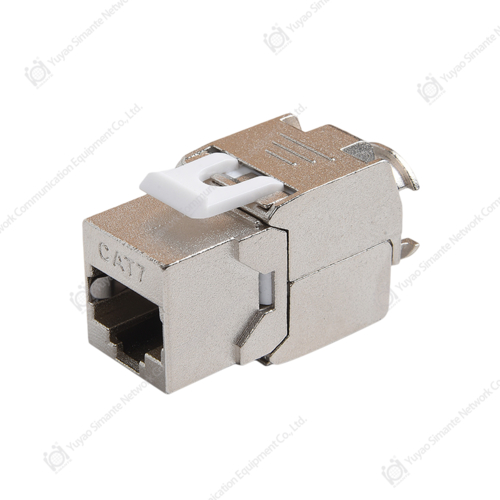
- RJ45 Ethernet: Cat5e, Cat6, Cat6a, and Cat8 keystone jacks for 10/100/1000BASE-T to 25/40GBASE-T networks [^6^][^8^]
- Fiber Optic: LC, SC, ST, and FC adapters for single-mode and multimode fiber installations [^4^][^9^]
- Coaxial: F-type connectors for cable TV, satellite, and broadband RF applications [^1^]
- Telephony: RJ11/RJ12 jacks for analog voice and legacy PBX systems [^1^][^8^]
- Multimedia: HDMI, USB-A, USB-C, and DisplayPort keystone inserts for A/V integration [^11^][^22^]
Modular vs. Fixed Port Designs
Modular faceplates accept interchangeable keystone jacks, allowing field customization of port types and densities. A single 4-port faceplate can simultaneously host RJ45, fiber optic LC, HDMI, and USB-C connectors based on deployment requirements [^14^]. Fixed port faceplates come with pre-installed connectors, offering simplified installation but reduced flexibility. These are typically used in standardized office deployments where interface types are predetermined [^14^].
Regional Form Factor Standards
Faceplate dimensions vary by geographic region and electrical standards:
| Standard | Dimensions | Primary Markets | Mounting |
|---|---|---|---|
| 86 Type | 86mm × 86mm | China, Asia-Pacific | Single-gang back box |
| UK Type | 86mm × 86mm (square) | United Kingdom, Commonwealth | Flush or surface mount |
| US Type | 4.50" × 2.75" (1-gang) | North America | Single-gang electrical box |
| European | Variable (80mm × 80mm typical) | EU, Germany, France | DIN or proprietary boxes |
FAQ: Common Questions About Faceplates
What is the difference between a faceplate and a wall plate?
The terms are often used interchangeably; however, "faceplate" typically refers to the decorative cover that mounts over an electrical box or back box, while "wall plate" may describe the entire assembly including jacks and connectors. In networking contexts, both terms describe the interface panel that terminates structured cabling [^1^][^19^].
Can I mix different port types on one faceplate?
Yes. Modular faceplates with keystone openings allow mixing RJ45, fiber optic, HDMI, and USB ports on a single plate. Ensure the faceplate port spacing accommodates the physical size of your selected keystone jacks, as some oversized connectors may interfere in adjacent ports [^14^].
How do I choose between shuttered and non-shuttered faceplates?
Select shuttered faceplates for industrial environments, public areas, or installations where unused ports will remain disconnected for extended periods. The spring-loaded shutters prevent dust accumulation and physical contamination. For residential or clean office environments where all ports remain connected, non-shuttered models offer easier access and lower cost [^3^][^14^].
What tools are required for faceplate installation?
Standard installation requires a 110 punch-down tool for terminating keystone jacks, a level to ensure straight mounting, and a screwdriver for securing the plate to the back box. For flush mounting, verify that the faceplate seats completely against the finished wall surface with no gaps exceeding 1mm [^17^].
Are metal faceplates better than plastic ones?
Metal faceplates (brass, aluminum, stainless steel) offer superior EMI/RFI shielding and physical durability, making them ideal for industrial or medical environments. However, they require proper grounding per NEC and OSHA standards [^16^]. Plastic faceplates (ABS, PC) provide better electrical insulation, corrosion resistance, and cost efficiency for standard commercial and residential applications. OSHA mandates that ungrounded switches must use nonconducting, noncombustible faceplates when within reach of conducting surfaces [^16^].
How do angled faceplates improve cable management?
Angled faceplates feature ports oriented at 30 to 45 degrees downward, reducing cable bend radius stress and allowing patch cords to route naturally along the wall surface. This design minimizes protrusion into walkways and reduces the risk of accidental disconnections in high-traffic areas [^3^][^14^].
Selection Guidelines for Specific Environments
Choosing the appropriate faceplate requires matching specifications to environmental demands:
- Data Centers: Use 4-port or 6-port high-density faceplates with Cat6a/Cat8 RJ45 or LC fiber adapters. Prioritize UL 94V-0 rated materials and integrated cable management features [^14^].
- Healthcare Facilities: Specify antibacterial-coated faceplates with smooth, easy-to-clean surfaces and UL 94V-0 flame retardancy [^5^].
- Industrial Sites: Select IP-rated faceplates with sealed shutters and metal construction to withstand dust, vibration, and electromagnetic interference [^25^].
- Educational Institutions: Deploy shuttered faceplates with clear ID labeling to prevent unauthorized access and simplify troubleshooting [^10^].
Always verify that selected faceplates comply with TIA/EIA-568-C.2 and ISO/IEC 11801 standards to ensure compatibility with your structured cabling infrastructure [^3^][^6^].