Español
 عربى
عربى русский
Content
The speed of a Cat5e patch panel depends primarily on whether it fully supports the link performance of the Cat5e standard. Under proper installation and with qualified products, a Cat5e patch panel can stably support a data transmission rate of 1000Mbps (Gigabit Ethernet), with a link bandwidth of 100MHz, fully meeting the needs of most enterprise LANs, monitoring systems, and small to medium-sized data communication scenarios.
Actual Transmission Performance Supported by Cat5e Patch Panels
From a standards perspective, the Cat5e patch panel is not a device that solely determines "speed," but rather a key component in a permanent link. According to the TIA/EIA-568 standard:
- Rated Bandwidth: 100MHz
- Maximum Supported Rate: 1000BASE-T (1Gbps)
- Maximum Single Link Length: 100 meters (including patch cords)
As long as the Cat5e patch panel meets the standards for return loss, near-end crosstalk (NEXT), etc., it will not become a performance bottleneck for gigabit networks.
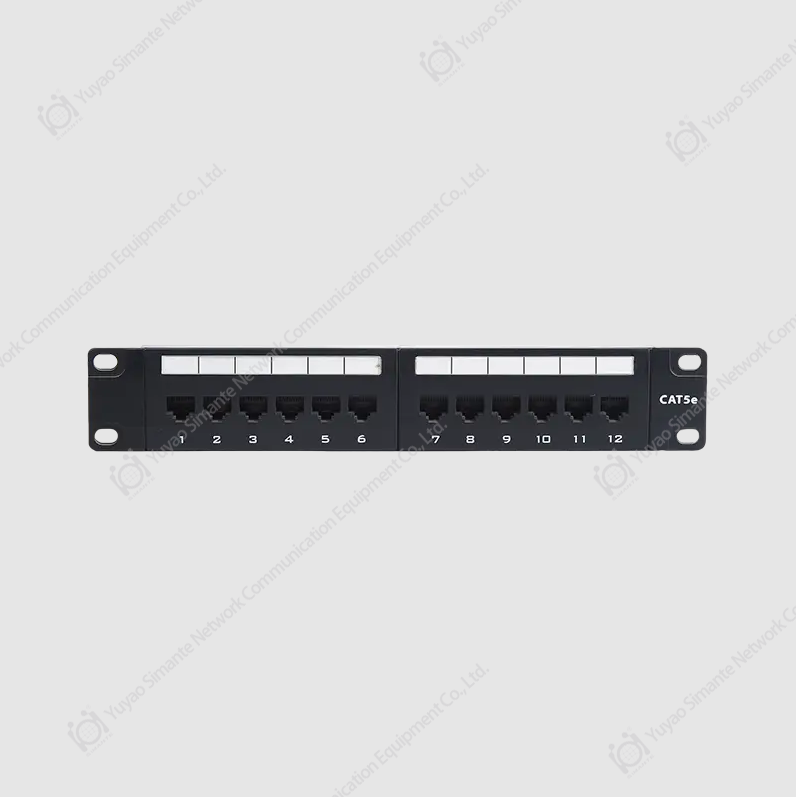
Performance of Cat5e Patch Panels in Gigabit Networks
In practical deployments, Cat5e patch panels are commonly used in the following scenarios:
- Office structured cabling systems
- Enterprise access layer switch cabling
- Security monitoring and low-voltage equipment rooms
- Small to medium-sized networks such as schools and hotels
Taking a typical office network as an example: Using a Cat5e patch panel + Cat5e network cables + a gigabit switch, the measured internal network file transfer speed can reach over 900Mbps, almost indistinguishable from a Cat6 patch panel in a gigabit environment.
Cat5e Patch Panel vs. Cat6 Patch Panel Speed Comparison
| Comparison Item | Cat5e Patch Panel | Cat6 Patch Panel |
| Rated Bandwidth | 100MHz | 250MHz |
| Common Speed | 1Gbps | 1Gbps / 10Gbps (short distance) |
| 100m Gigabit Support | Stable | Stable |
| 10Gbps Support | Not Recommended | ≤55 meters |
| Cost | Lower | Higher |
When choosing a patch panel, many users are concerned about the differences between Cat5e and Cat6. It can be seen that in a gigabit network environment, the speed of a Cat5e patch panel is perfectly sufficient. The main difference lies in the potential for future upgrades to 10Gbps.
Key Factors Affecting Cat5e Patch Panel Speed
Even when using Cat5e patch panels, the following factors directly impact final network performance:
- Termination Process: Improper wiring significantly increases crosstalk.
- Patch Panel Quality: Has it passed Fluke testing and certification?
- Overall Link Compatibility: Network cables, modules, and patch cords must all be Cat5e or higher.
- Construction Environment: Avoid strong electrical interference and excessive bending.
For example, even with Cat5e patch panels, links using copper-clad aluminum cables often experience a 10%–20% decrease in throughput.
Is Cat5e Patch Panel Suitable for Current Deployment?
From a speed perspective, if your needs are:
- Primarily using gigabit networks for the current and next 3–5 years
- Prioritizing cost-effectiveness and stability
- Small network size or sensitive to upgrade costs
Then, Cat5e patch panels remain a very practical choice. Upgrading to Cat6 or Cat6A is only necessary when there are clear plans for 10 Gigabit access or high-density data center scenarios.
Considering both standard parameters and practical applications, Cat5e patch panels can reliably support network speeds of 1000Mbps under standardized cabling conditions, and still hold practical value in mainstream office and low-voltage engineering projects. Choosing a qualified Cat5e patch panel and adhering to standardized installation procedures will ensure that speed does not become a bottleneck for network performance.