Español
 عربى
عربى русский
Content
In the process of modern enterprise informatization and home automation, many people wonder about the complex web of network and power cables behind server racks: What is a cable manager? Simply put, a Cable Manager is a specialized device used to organize, support, manage, and protect cable, fiber optic, and other wiring connections. It's not only a "beautician" for maintaining a clean server room, but also a core component ensuring the stable operation of network systems.
I. Core Functions and Definition of a Cable Manager
Cable managers are typically used in conjunction with standard 19-inch server racks and installed between servers, switches, or patch panels. Its main task is to guide messy patch cords to predetermined paths, thereby solving problems such as cable tangling, sagging, and uneven stress.
By using cable managers properly, not only can the aesthetics of cabling be improved, but more importantly, it ensures that cables meet the bending radius requirements of the physical layer transmission, preventing signal attenuation.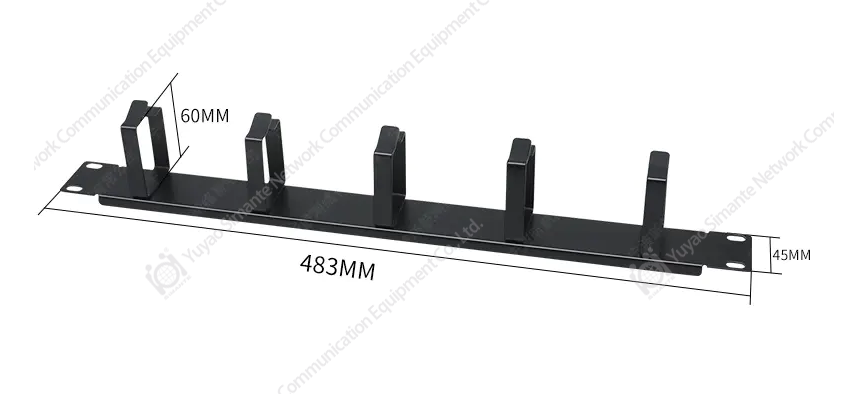
II. Common Cable Management Types
To address different cabling environments, various types of cable management systems have emerged in the market:
Horizontal Cable Management System: This type of cable management system typically occupies 1U or 2U rack space, installed on the front of the rack, and manages horizontal patch cords between network switches and patch panels.
Vertical Cable Management System: Installed on the side or support of the rack, it is primarily used to manage large numbers of vertically extending cables and is standard equipment in high-density data centers.
Cable Rings and Racks: A simpler type of cable management system that uses metal or plastic rings to bind cables together, suitable for simple cabling scenarios.
Orifice-Type Cable Management Boards: This device serves both a management function and effectively prevents hot and cold air from flowing between the racks, improving heat dissipation efficiency.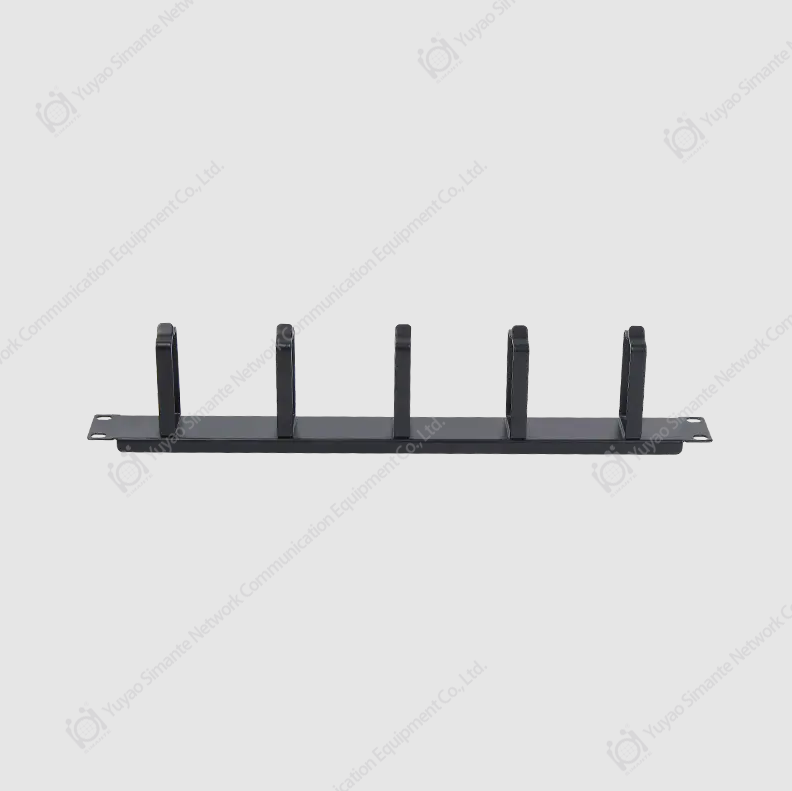
III. Why are Cable Management Systems Important for Data Centers?
After understanding what cable management systems are, we should focus more on the technological value behind them. A well-designed cabling system cannot function without a high-quality Cable Manager solution:
Optimizing Heat Dissipation and Airflow: Without cable management systems, messy cables will block the air intake and exhaust vents of servers. Organized cable management ensures smooth airflow within the server rack, reducing the risk of equipment downtime.
Improved Maintenance Efficiency: During equipment maintenance or link adjustments, a clear cable management layout allows technicians to locate target lines within seconds, significantly reducing troubleshooting time.
Protecting Cable Physical Structure: Prolonged suspension and stacking of cables can cause deformation due to gravity. Cable managers provide stable support, extending the lifespan of network cables and fiber optic cables.
IV. How to Choose a High-Quality Cable Manager?
When purchasing a Cable Manager, it is recommended to evaluate it from the following dimensions:
Material Durability: High-quality cold-rolled steel or high-strength engineering plastics ensure no deformation over long-term use.
Installation Ease: Does it support tool-free installation, and does it have a removable cover for easy cable addition or removal?
Space Adaptability: Select a cable manager with an appropriate capacity based on the depth of the server rack and the cable density.
What is a Cable Manager? It is not only a tool for organizing space but also an indispensable security guarantee in the network physical layer architecture. Whether it's a startup's office server room or a large cloud data center, a well-designed cable management system is fundamental to achieving a high-performance, easy-to-maintain system.