Español
 عربى
عربى русский
Content
In modern communication engineering and structured cabling systems, we often hear the term "110 Wiring Block." Although it's not as conspicuous as a router in a computer room or low-voltage distribution box, it's a core component ensuring stable voice and data transmission.
What is a 110 Wiring Block?
A 110 Wiring Block (also often called a 110 patch panel) is a termination device used for copper cable management. Originally developed by Bell Labs, it quickly became a standard device in telephone systems and local area network (LAN) cabling due to its efficient cable management capabilities.
It typically consists of a plastic base with multiple punch-down posts with metal slots. A specialized punch-down tool is used to press the wires into the slots to achieve a physical connection.
Main functions of a 110 Wiring Block:
1. Centralized termination and cable management
In large office buildings or residential areas, hundreds or thousands of telephone lines and network cables need to be centralized. 1. 110 Wiring Block: This type of junction box can neatly terminate messy cables in fixed locations, facilitating later maintenance and identification.
2. Signal Transfer and Patch Connection
This is one of its core functions. By performing "patch" operations on the 110 Wiring Block, engineers can easily change the routing of lines. For example, switching a telephone line from one workstation to another extension can be done without rewiring; simply change the patch cord on the junction box.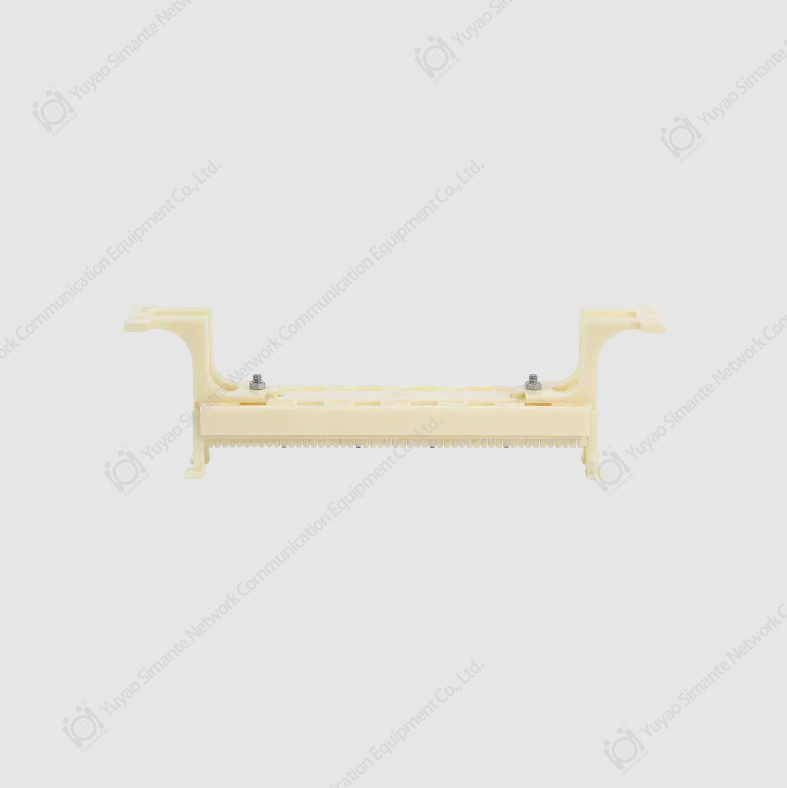
3. Increased Cabling Density
Compared to traditional 66-type junction boxes, the 110 Wiring Block has a more compact design. It can handle more cable pairs in a limited space (commonly available in 50, 100, or even 300-pair configurations), significantly saving cabinet space.
4. Protecting Physical Links
By terminating trunk cables at the junction box, wear and tear on the main cables caused by directly plugging and unplugging devices is avoided. In case of interface damage, only the patch cord needs to be replaced, without needing to re-terminate the trunk line buried in the wall.
Application Scenarios of 110 Wiring Blockes
Despite the widespread adoption of fiber optic and wireless networks due to technological advancements, 110 Wiring Blockes remain irreplaceable in the following areas:
Voice Communication Systems
It is the most common connection method for traditional analog telephone systems (PABX).
Low-Speed Data Transmission
110 patch panels still perform excellently in Cat5 or Cat5e standard network cabling.
Garden Cabling Systems (GCS)
A crucial connection device for the vertical backbone subsystem and management subsystem.
How to Choose a High-Quality 110 Wiring Block?
During procurement or installation, it is recommended to pay attention to the following points:
Material
The base should be made of flame-retardant material, and the metal contacts should have good conductivity and corrosion resistance.
Compatibility
Confirm whether it supports 110-type punch-down tools and whether it conforms to the current cabling category (e.g., Cat6).
Pair Count Requirements
Choose 50-pair, 100-pair, or higher specifications based on project size.
The 110 Wiring Block is a crucial "transfer station" in low-voltage systems. It not only solves the problem of messy cabling but also provides significant flexibility for system expansion and maintenance. If you are planning office wiring or a smart home low-voltage system, the proper use of 110 Wiring Blockes will significantly improve system reliability.