Español
 عربى
عربى русский
Content
- 1 What Network Patch Panels Do Inside a Structured Cabling System
- 2 Common Types of Network Patch Panels and Keystone-Based Components
- 3 How Patch Panel Structure Supports Signal Termination and Cable Management
- 4 Bandwidth Demand Trends Driving Category Upgrades in Patch Panel Selection
- 5 Application Scenarios and Selection Criteria for Network Patch Panels
- 6 Detailed Comparison of Patch Panel Categories and Configurations
- 7 Maintenance Guidance for Long-Term Cabling Reliability
- 8 Manufacturing Standards, OEM/ODM Support, and Sourcing Considerations
- 9 Frequently Asked Questions About Network Patch Panels
- 9.1 Q1: What is the difference between a modular and a fixed network patch panel?
- 9.2 Q2: How many ports does a standard network patch panel usually have?
- 9.3 Q3: What is a blank patch panel used for?
- 9.4 Q4: Can Cat6 keystone jacks be used with a Cat6A patch panel frame?
- 9.5 Q5: Does Yuyao Simante support OEM and ODM patch panel manufacturing?
The most direct answer for most buyers is this: network patch panels are the fixed termination point in a structured cabling system that connects horizontal cable runs from wall outlets or keystone jacks to active network equipment such as switches, and for the majority of enterprise, campus, and data center projects a rack-mounted 24-port or 48-port Cat6 patch panel paired with modular keystone jacks is the practical starting configuration. Network patch panels separate permanent cabling from flexible patch cords, which keeps a rack front panel easy to trace, label, and service over many years. The sections below walk through the common types of network patch panels, how their internal structure supports signal termination, where different configurations are typically applied, how port categories compare, and how to keep a patch panel installation reliable over the long term.
What Network Patch Panels Do Inside a Structured Cabling System
In a structured cabling system, cable runs are rarely connected directly from a wall outlet to a switch port. Instead, they are terminated at a patch panel, which acts as a stable, labeled interface between the building's permanent horizontal cabling and the active electronics in a network rack. This separation means that if a workstation needs to move to a different switch port, only a short patch cord has to be re-routed at the front of the rack, while the wall-side cabling stays untouched. Because structured cable products are designed to remain in place through several generations of active equipment, keeping the permanent link isolated from daily patching activity extends the useful life of the underlying cable plant and reduces the risk of damaging a wall-mounted RJ45 connector or keystone jack through repeated handling.
A typical network patch panel is a rack-mountable frame, usually 1U or 2U in height, holding a row of RJ45 ports that are either fixed 110-style punch-down terminations or open slots that accept keystone jack modules. Cabling installers value network patch panels because they consolidate dozens of individual cable ends into one labeled, serviceable strip, which is far easier to document, test, and troubleshoot than loose cable ends behind a rack. This is why a network cabling solution for an office, school, or data hall typically specifies patch panels as a core structured cabling system component, alongside keystone jacks, faceplates, and patch cords, and keystone jacks themselves are widely treated as a fundamental structured cabling products component in their own right.
- Centralizes and labels every horizontal cable run at one serviceable point in the rack
- Protects permanent cabling from repeated plug and unplug cycles at the workstation side
- Simplifies moves, adds, and changes by limiting daily handling to short patch cords
- Supports structured documentation and testing at a single, accessible front panel
A patch panel's main job is to keep permanent structured cable products stable while making daily network changes fast, traceable, and low-risk.
Common Types of Network Patch Panels and Keystone-Based Components
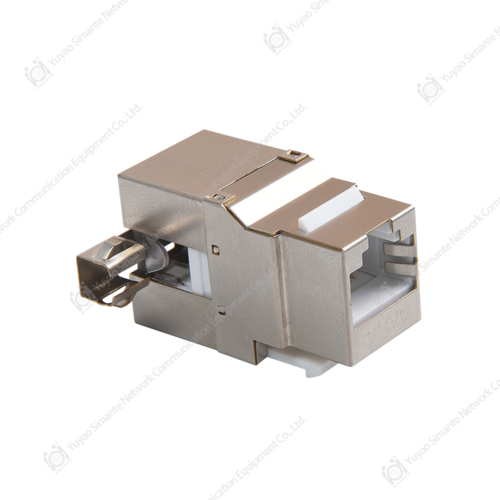
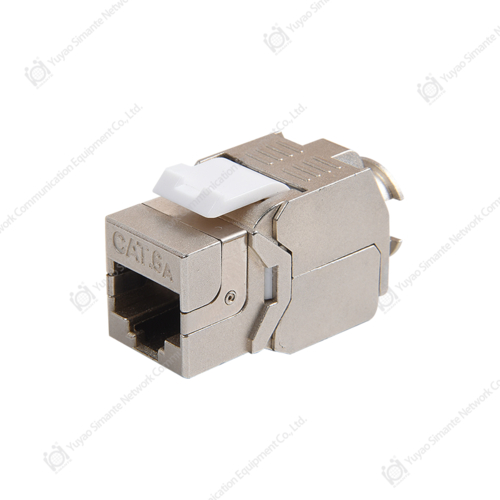
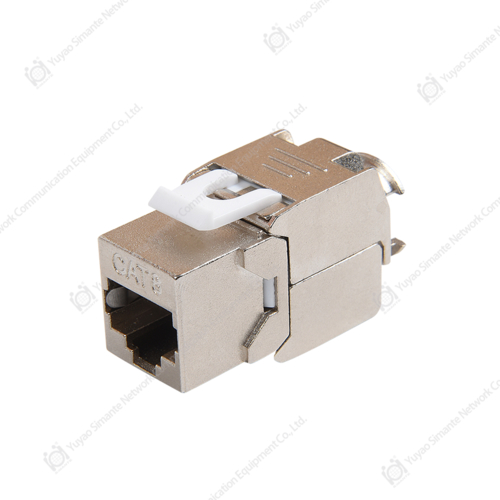
Network patch panels are generally grouped into two structural families: fixed-port panels, where each RJ45 port is permanently terminated onto the rear of the panel using 110-style punch-down blocks, and modular keystone patch panels, where empty slots accept individual keystone jack modules that installers snap in and wire separately. A patch panel cat6 model in fixed format is common in straightforward deployments because every port ships pre-terminated to a single wiring category, while modular panels let a technician mix a cat6 rj45 keystone jack with other keystone jack types, such as fiber couplers or blank inserts, inside the same frame.
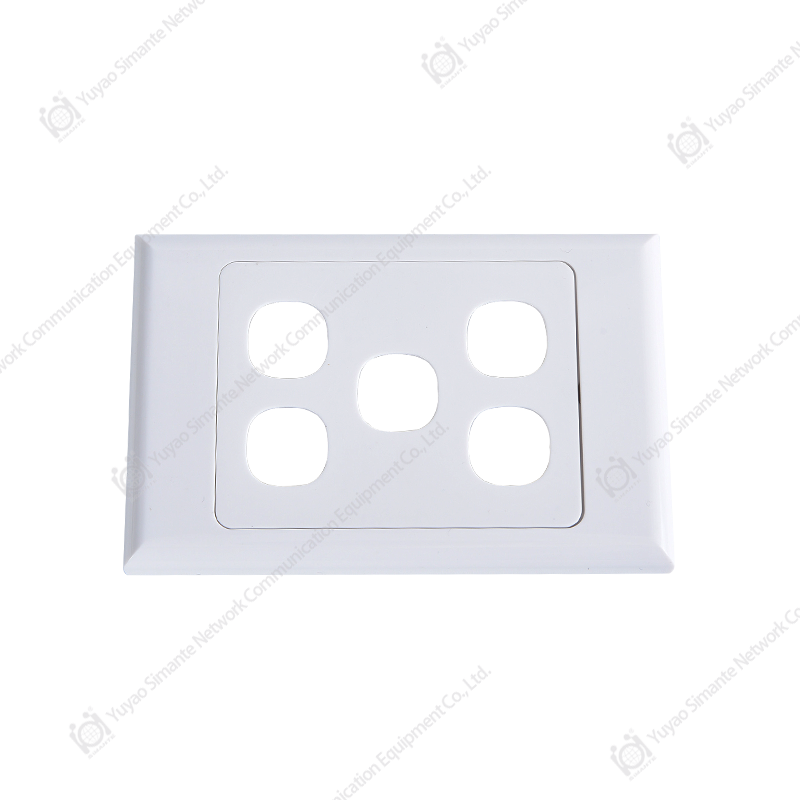
A blank patch panel, sometimes paired with keystone-ready network face plate hardware, gives installers an unpopulated frame of open slots so that port count and cable category can be decided project by project rather than fixed at the factory. This flexibility suits facilities that expect to add security cameras, wireless access points, or additional workstations later, since unused slots can be filled with new keystone jack cat6 or higher-category modules without replacing the whole panel. Many keystone jack manufacturers, including those offering a net keystone jack style module, provide color-coded jacks so that data, voice, and specialty circuits can be told apart at a glance on a densely populated panel.
Fixed Patch PanelEvery port is punch-down terminated at the factory to one cabling category, offering a simple, ready-to-mount frame for straightforward Cat5e or Cat6 deployments where port assignments will not change category later. |
Modular Keystone Patch PanelOpen slots accept individual keystone jack modules, an adjustable approach that lets installers mix categories, replace a single damaged port, or convert part of the panel to a multifunction layout without discarding the frame. |
Common Port Configurations
12-Port
Small offices, low-density wiring closets 24-Port
General office and classroom floors 48-Port
Larger floors, campus and data center rows 96-Port
High-density machine rooms and MDF areas
Port density is one of the first decisions a buyer makes when comparing network patch panel options for a project. Small offices and light branch locations often need only a 12-port or 24-port frame, while enterprise floors, data halls, and campus main distribution frames typically require 48-port or higher-density panels to keep rack space efficient. Because rack units are limited and cooling airflow matters in dense equipment rooms, installers generally try to match panel port count closely to the number of active drops rather than over-provisioning empty ports that add unnecessary rack height. Field experience from cabling contractors and structured cabling system integrators shows that certain port counts recur far more often than others across typical projects, since they map naturally onto common rack layouts and standard patch cord bundle sizes. The chart below illustrates a representative distribution of how frequently different port configurations tend to appear across a mixed set of enterprise and commercial cabling projects, based on general industry patterns rather than any single site. It is intended as a planning reference rather than a precise market count.
As the chart shows, 24-port network patch panels account for the largest share of typical deployments, reflecting their fit with common 1U rack layouts and standard 24-way patch cord organizers. 48-port panels follow closely behind, which is expected in larger offices, education campuses, and data center rows where consolidating more drops onto fewer rack units helps conserve limited cabinet space. Smaller 12-port panels remain useful for compact wiring closets, remote offices, or supplemental drops added after an initial build-out, though they use rack space less efficiently at scale. High-density 96-port panels appear least often in this illustrative distribution, since they are generally reserved for large machine rooms or telecom rooms where floor space is at a premium and cable management systems are engineered specifically to support that density. This pattern is a useful starting point for anyone specifying a network cabling solution, because it shows that a mid-range port count often balances cost efficiency, cable management, and future headroom better than defaulting to the highest or lowest available option. It also helps explain why many keystone jack manufacturers and patch panel manufacturers focus their standard product lines on 24-port and 48-port frames, since these configurations serve the widest range of commercial and light industrial projects. For buyers sourcing from a patch panel manufacturer or exploring wholesale patch panel options, understanding this typical distribution can help set realistic expectations about lead times and stock availability, since higher-volume port counts are usually kept in stronger supply. At the same time, project-specific factors such as expected growth, redundancy requirements, and rack layout should generally take priority over simply following the most common configuration. A facility expecting rapid headcount growth may reasonably choose a higher port count than the illustrative average suggests, while a small satellite office may be well served by a modest 12-port frame. Matching port density to documented drop counts, plus a modest allowance for future changes, tends to produce a cost-effective and serviceable structured cabling system component selection over the life of the installation.
Mid-range 24-port and 48-port network patch panels cover most common enterprise cabling layouts, making them a practical starting point for most projects.
How Patch Panel Structure Supports Signal Termination and Cable Management
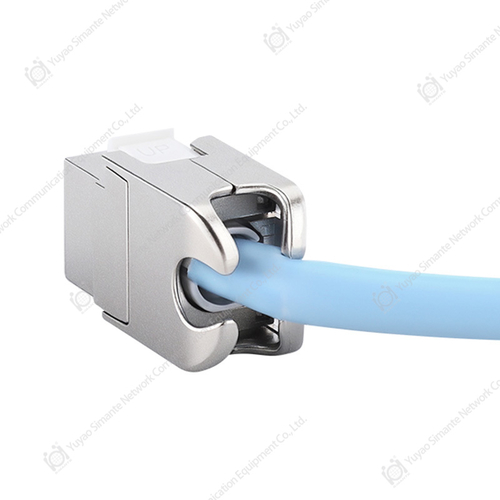
On the rear side of a network patch panel, each port terminates individual conductors from a twisted-pair cable onto small metal contacts, either through a 110-style insulation displacement block on a fixed panel or inside a separate keystone jack module on a modular panel. Correct termination depends on keeping each conductor pair twisted as close to the termination point as possible, since untwisting the pairs even a short distance can raise crosstalk and reduce the effective bandwidth of an otherwise correctly rated Cat6 or Cat6A link. On the front side, the panel exposes a row of standard 8P8C female ports, which are the mating half for the RJ45 male connector on every patch cord, keeping the physical interface consistent across most structured cable products regardless of source.
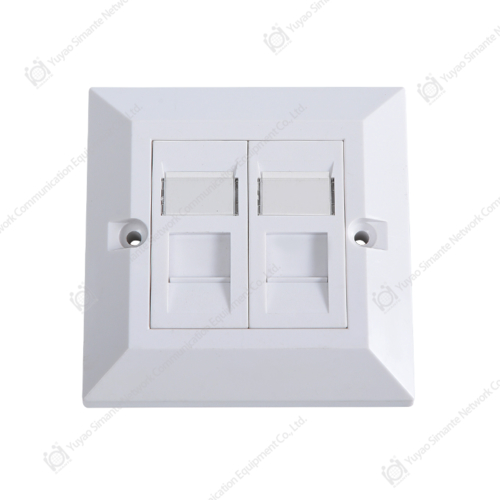
Cable management is built into most professional patch panel designs through a rear cable bar or strain-relief bracket that keeps incoming horizontal cables from placing tension directly on the termination points, and an adjustable labeling window above or below each port group helps technicians document circuit numbers, room locations, or VLAN assignments. Grounding is another structural detail worth checking, since shielded patch panels used with shielded twisted-pair cabling need a reliable bonding path to the rack frame to help control electromagnetic interference in electrically noisy environments such as manufacturing floors. Faceplate manufacturers generally mirror this same keystone-based approach at the wall outlet end, so a network face plate at a desk or classroom uses the same style of keystone jack as the patch panel in the rack, which keeps the entire link consistent from the RJ45 connector at the workstation to the corresponding port in the equipment room; this consistency is one reason faceplate and RJ45 connector manufacturers typically design their keystone lines to match common patch panel slot dimensions.
- Rear termination points (punch-down blocks or keystone jack modules) fix each conductor pair in place
- Front-facing 8P8C ports accept standard RJ45 male connector patch cords
- Cable management bars and strain-relief brackets protect terminations from cable weight and movement
- Labeling zones support documentation for circuit numbers and locations
- Grounding provisions on shielded panels help control interference in noisy electrical environments
A well-structured patch panel keeps every termination point mechanically protected and clearly labeled, which is often what separates an easy-to-service structured cabling system from a difficult one.
Bandwidth Demand Trends Driving Category Upgrades in Patch Panel Selection
Network patch panel category selection is closely tied to how much bandwidth a facility's applications are expected to need, both today and over the next several years. Early office networks were built around modest data requirements, and cabling categories at the time reflected that lighter load. As applications shifted toward richer file sharing, video conferencing, cloud-based tools, and increasingly capable wireless access points feeding wired uplinks, the practical bandwidth expected from a single cabling drop climbed steadily. This shift is one of the main reasons structured cabling system designers now default to Cat6 or Cat6A network patch panels even in projects that do not require the highest category today, since upgrading active equipment is far less disruptive than replacing wall-to-rack cabling later. The chart below presents an illustrative index of how typical per-port bandwidth expectations have trended across broad eras of enterprise networking, intended to show the general direction of demand rather than precise historical figures. It is a planning reference, not a certified measurement.
The upward slope in the chart reflects a broad pattern in enterprise IT: each successive generation of active networking equipment has pushed more traffic through the same physical cabling infrastructure, and cabling categories have needed to keep pace. During the fast ethernet era, a modest cabling category was generally sufficient for typical office tasks, and patch panels rated for that level were the practical, cost-effective choice at the time. As gigabit ethernet became standard, Cat5e and early Cat6 patch panels moved into the mainstream, since they offered enough headroom for the higher throughput without requiring a complete cabling overhaul. The multi-gig era, driven largely by faster Wi-Fi access points that need more bandwidth on their wired uplink than older switches could deliver, pushed many new installations toward Cat6 and Cat6A patch panels as a forward-looking default rather than a premium option. In the current 10G-capable era, Cat6A has become a practical baseline for many data center and campus backbone projects, because it supports higher throughput over longer distances with better resistance to alien crosstalk than earlier categories. This trend matters directly for anyone choosing a patch panel manufacturer or evaluating a network cabling solution proposal, because selecting a category with some future headroom is generally more economical over the life of a building than repeatedly re-cabling as demand grows. It also explains why many keystone jack manufacturers and patch panel manufacturers have shifted their standard catalogs toward Cat6 and Cat6A as the default rather than the exception. For facilities with a long expected service life, such as schools, hospitals, and multi-tenant office buildings, planning around the higher end of this trend line is usually a reasonable, moderate approach. Even where budget favors a lower category today, choosing a modular keystone patch panel that can accept future keystone jack cat6 or higher-category upgrades without a full frame replacement is one practical way to manage this bandwidth trend without over-committing at the outset. In short, the direction of the trend is far more informative than any single data point, and it consistently favors specifying at least Cat6 as a reasonable floor for new structured cable products in most commercial settings.
Bandwidth demand per network drop has trended steadily upward across successive networking eras, which is why Cat6 and Cat6A patch panels are now common defaults rather than premium upgrades.
Application Scenarios and Selection Criteria for Network Patch Panels
Network patch panels appear across a wide range of facility types, and the right configuration usually depends more on the application than on any single technical spec. Data centers and server rooms typically call for high port density and Cat6A or better performance to support demanding, latency-sensitive traffic, while enterprise office floors are usually well served by 24-port or 48-port Cat6 patch panels that balance cost and available bandwidth for everyday business applications. Education campuses often mix voice, data, and Wi-Fi access point drops on the same floor, which is why modular keystone patch panels are a common choice there, since they support flexible future changes without a full panel swap. Security and surveillance networks, with numerous IP camera drops, generally benefit from a dedicated, clearly labeled patch panel zone kept separate from general office data to simplify troubleshooting.
Key Selection Criteria
- Port density matched to documented drop counts, plus a modest allowance for growth
- Cabling category (Cat5e, Cat6, or Cat6A) aligned with expected bandwidth over the building's service life
- Rack unit height and the cable management accessories available for the chosen frame
- Shielded versus unshielded construction based on electrical noise in the installation environment
- Compatibility between the patch panel's keystone slots and the keystone jack, faceplate, and RJ45 connector hardware used elsewhere in the project
- Availability of OEM or ODM customization when a project or wholesale buyer needs a private-label configuration
During installation, technicians commonly rely on portable cable testers to confirm continuity and wiring accuracy at each port before a rack is closed up, which helps catch a mis-terminated network face plate or keystone jack early, before it becomes a harder-to-diagnose intermittent fault. Choosing a network cabling solution with room for this kind of verification step, and with clear labeling from the outset, tends to reduce troubleshooting time significantly once the network is in daily use.
Matching port density, cabling category, and keystone compatibility to the actual application is generally more important than choosing the highest-rated panel available.
Detailed Comparison of Patch Panel Categories and Configurations
The table below summarizes how common network patch panel categories differ in port count, termination style, and typical application, which is a useful reference when narrowing options with a patch panel manufacturer or comparing a wholesale patch panel quote across categories.
| Category | Typical Port Counts | Termination Style | Typical Application | Shielding Options |
|---|---|---|---|---|
| Cat5e Patch Panel | 12 / 24 / 48-Port | 110 Punch-Down or Keystone | Basic voice and data, legacy networks | Unshielded (UTP) |
| Cat6 Patch Panel | 24 / 48-Port | 110 Punch-Down or Keystone | General office data, Wi-Fi access point uplinks | Unshielded (UTP) or Shielded (STP) |
| Cat6A Patch Panel | 24 / 48-Port | Keystone or Field-Terminated | Data centers, high-bandwidth backbones, 10G links | Shielded (STP) common, UTP available |
| Blank Patch Panel | Configurable (12 to 48-Port slots) | Field-Installed Keystone Modules | Custom or mixed-category projects | Depends on installed keystone jacks |
Beyond port count and termination style, buyers often want a simple way to compare the relative bandwidth capacity that each patch panel category supports, since this directly affects which applications a cabling run can reliably serve. Cat5e, Cat6, and Cat6A patch panels share a similar physical footprint and general keystone or punch-down termination approach, but their internal conductor geometry and shielding options are engineered to different performance targets. Because these differences are technical and can be hard to visualize from a specification sheet alone, a simple relative index makes it easier to see how much headroom each category typically offers compared with the others. The column chart below uses an illustrative index, with Cat5e set as a baseline of 100, to show roughly how Cat6 and Cat6A compare in relative bandwidth capacity. This kind of comparison is meant to support general planning conversations rather than substitute for a manufacturer's detailed technical datasheet.
The chart makes clear that the step from Cat5e to Cat6 is meaningful, and the further step up to Cat6A is substantially larger again, which is broadly consistent with how these categories are commonly described in structured cabling system documentation. Cat5e patch panels remain adequate for many legacy or lightly loaded networks, but they offer the least headroom of the three categories shown, which is why they are now found mainly in older buildings rather than new construction. Cat6 patch panels represent a practical mid-point that suits a wide range of general office and campus environments, offering meaningfully more capacity than Cat5e while remaining simpler to terminate than Cat6A in most cases. Cat6A patch panels sit clearly at the top of the illustrative index, reflecting their design for demanding applications such as data center interconnects, high-density Wi-Fi backhaul, and other bandwidth-intensive uses. It is worth noting that higher relative capacity does not automatically make Cat6A the right choice for every project, since many everyday office applications do not currently require that level of headroom. Instead, the comparison is most useful for weighing future-proofing against practical considerations such as termination complexity and available rack space, since Cat6A cabling and connectors are generally larger and can be more demanding to terminate cleanly than Cat6 or Cat5e. For a network cabling solution meant to serve a facility for many years, choosing Cat6 or Cat6A as a baseline, even where Cat5e might technically suffice today, is a common way to avoid an early and disruptive cabling upgrade. Buyers comparing patch panel manufacturers, or a patch panel manufacturer against a competing quote, often ask for this kind of category comparison early in a project, since it helps align the cabling plan with the expected lifespan of the building's network. It is also useful when evaluating a wholesale patch panel order across multiple sites, since standardizing on one category across a portfolio of buildings can simplify spare parts and keystone jack inventory. This relative index is best used as a starting point for a conversation with a structured cabling system designer, who can weigh it against the specific bandwidth, distance, and budget constraints of an individual project.
Cat6A patch panels offer the largest relative bandwidth headroom of the three common categories, while Cat6 remains a practical mid-point for most general-purpose networks.
Maintenance Guidance for Long-Term Cabling Reliability
Once a network patch panel is installed, a modest, consistent maintenance routine does more for long-term reliability than any single component choice. Dust, humidity, and physical disturbance from nearby rack work can gradually loosen terminations or wear connector contacts, so periodic visual inspection is a practical habit for any equipment room.
- Periodically inspect rear terminations for loose conductors or corrosion, especially in humid or industrial environments
- Keep documentation and port labels current whenever a circuit is reassigned, moved, or decommissioned
- Avoid exceeding the minimum bend radius of horizontal cabling near the rear of the panel to help prevent long-term signal degradation
- Test continuity and near-end crosstalk periodically on critical links, particularly after any rack reconfiguration
- Keep cable management bars and hook-and-loop ties snug but not overly tight to avoid deforming cable jackets
Maintenance planning is easier when a facility understands how different patch panel categories compare across the practical factors that affect day-to-day serviceability, not just raw bandwidth. Attributes such as installation ease, noise immunity, and long-term maintenance simplicity vary meaningfully between Cat5e, Cat6, and Cat6A hardware, and these differences influence how much ongoing attention a cabling plant will need. A radar-style comparison is a useful way to see these trade-offs at a glance, since it plots several attributes together rather than isolating just one metric such as bandwidth. The illustrative ratings below are based on general characteristics commonly associated with each category rather than a specific test report, and are intended to support planning discussions rather than serve as certified performance figures. The chart below compares Cat5e, Cat6, and Cat6A patch panels across five practical attributes: bandwidth capacity, noise immunity, installation ease, future readiness, and maintenance simplicity.
Cat5e Cat6 Cat6A
The radar chart highlights a common trade-off in structured cabling system planning: categories with the strongest bandwidth capacity and future readiness, such as Cat6A, generally require more careful installation due to larger connector geometry and stricter shielding and grounding requirements. Cat5e scores comparatively lower on bandwidth capacity and future readiness but tends to be simpler to install and terminate, which is one reason it remains present in older buildings where a full upgrade has not yet been justified. Cat6 sits in a balanced middle position across most attributes, offering a reasonable step up in bandwidth and future readiness compared with Cat5e while remaining more approachable to install and maintain than Cat6A in many field conditions. Noise immunity generally improves moving from Cat5e through Cat6 to Cat6A, which matters most in environments with significant electrical interference, such as facilities with heavy machinery, lighting ballasts, or dense cable bundles running near power conduits. Maintenance simplicity tends to decrease slightly as category increases, mainly because higher categories often involve tighter termination tolerances and, in shielded configurations, additional grounding connections that need periodic inspection. This pattern suggests that facilities with limited in-house technical staff may find Cat6 easier to maintain over time than Cat6A, even though Cat6A offers more headroom for future bandwidth growth. For organizations planning a large multi-site rollout, this kind of comparison can help standardize on a category that matches both the technical requirements and the available maintenance resources at each location. It is also a useful reference when training new technicians, since understanding these general trade-offs helps set realistic expectations about how much care a given category needs during installation and ongoing service. Regardless of category, consistent labeling, periodic visual inspection, and prompt attention to any loose or damaged terminations remain among the most effective ways to extend the service life of a network patch panel installation. Facilities that pair a well-chosen category with disciplined maintenance practices generally see fewer intermittent connectivity issues than those that focus on category alone while neglecting basic upkeep.
Higher-category patch panels generally offer stronger bandwidth and noise immunity but can require more careful installation and maintenance, so category choice should be balanced against available technical resources.
Manufacturing Standards, OEM/ODM Support, and Sourcing Considerations
When sourcing network patch panels, keystone jacks, faceplates, and related structured cable products for a project or for wholesale distribution, buyers generally look beyond the datasheet to the manufacturer's production capability, quality control process, and ability to support customization. A patch panel manufacturer with in-house engineering staff and a stable, high quality production process is generally better positioned to maintain consistent port alignment, durable termination quality, and shielding performance across large orders, which matters for buyers placing a wholesale patch panel order across multiple sites or working with a network cabling solution integrator on a large rollout.
Yuyao Simante Network Communication Equipment Co., Ltd. is a professional manufacturer of network cabling solutions and optical fiber products from China, working across design, development, sales, and service as a combined structured cabling system component supplier. Over nearly 20 years of service, the company has focused on meeting customer requirements through applied engineering expertise, aiming to add value from the earliest stages of a project conversation onward. Backed by a mature research and development process, the company maintains quality stability at the design stage itself, supported by a technical team of more than 10 engineers and over 30 full-time technical staff who continue to refine product quality and support ongoing product updates, including eco-friendly packaging practices where projects call for them. This kind of structured, engineering-led approach is typical of established patch panel manufacturers, keystone jack manufacturers, and faceplate manufacturers that serve both direct project buyers and wholesale or OEM/ODM partners.
For distributors, installers, and private-label buyers, working with a China factory or China supplier that offers OEM manufacturer and ODM manufacturer support, whether as an OEM factory, ODM factory, OEM supplier, or ODM supplier, can simplify sourcing by consolidating network patch panels, cat6 rj45 keystone jack modules, blank patch panel frames, network face plate hardware, and RJ45 male connector patch cords under a single, coordinated supply relationship. Whether the requirement is a standard catalog configuration or a custom OEM/ODM specification for a specific rack layout or branding requirement, evaluating a manufacturer's engineering depth, production consistency, and responsiveness is generally a more reliable indicator of long-term supply reliability than reviewing a single product listing in isolation. Buyers evaluating options among China brands, a China producer, a general wholesaler, or an exporter of structured cabling products should weigh these production fundamentals alongside standard technical specifications when narrowing a shortlist, whether the goal is a reliable long-term factory relationship or a one-time China wholesale order.
Production consistency, engineering depth, and OEM/ODM flexibility are practical indicators of a reliable network patch panel manufacturer, beyond what a single datasheet can show.
Frequently Asked Questions About Network Patch Panels
The answers below address common questions about network patch panels, keystone jacks, and related structured cabling system components.
Q1: What is the difference between a modular and a fixed network patch panel?A fixed patch panel has every port pre-terminated at the factory using 110-style punch-down blocks, while a modular keystone patch panel provides open slots that accept separate keystone jack modules, which can be mixed by category or replaced individually without affecting the rest of the frame. |
Q2: How many ports does a standard network patch panel usually have?Common configurations include 12-port, 24-port, and 48-port frames, with 24-port and 48-port panels covering most enterprise office and campus deployments, while higher-density options serve larger data center and telecom room applications. |
Q3: What is a blank patch panel used for?A blank patch panel provides an unpopulated frame of open keystone slots, letting installers choose port count and cabling category project by project and add or change keystone jacks later without replacing the entire panel. |
Q4: Can Cat6 keystone jacks be used with a Cat6A patch panel frame?Many modular patch panel frames accept keystone jacks across several categories, but mixing categories generally limits the link to the lowest-rated component in the path, so matching keystone jacks, patch cords, and panel category consistently is recommended when full Cat6A performance is required. |
Q5: Does Yuyao Simante support OEM and ODM patch panel manufacturing?Yes, as a China-based manufacturer and factory, Yuyao Simante supports OEM manufacturer and ODM manufacturer arrangements for network patch panels, keystone jacks, faceplates, and related structured cable products, working with distributors, installers, and wholesale buyers on standard and customized configurations. |