Español
 عربى
 русский




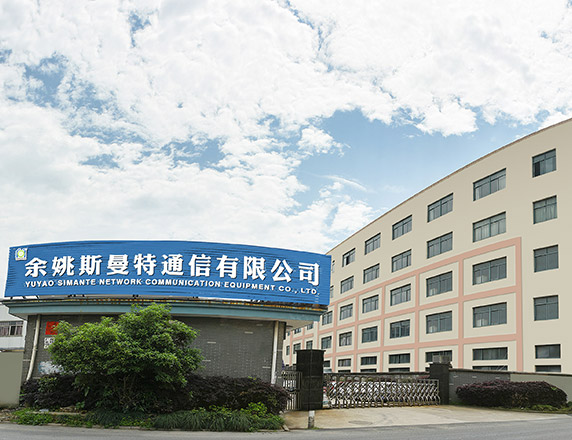
We specialize in network cabling solutions and optical fiber products integrating design, development, sales and service.
Based on the mature research and development system, the quality stability of Simante has been guaranteed at the design source. We have more than 10 engineers and over 30 full-time technical persons who continue to provide their professional value in the position, improving quality and promoting product update.
Simante provides specialized integrated solutions for customers to ensure it meets the customer's requirement. Welcome to visit.
Introduction
Every data socket is built around the same core function — providing a stable, repeatable transition between solid-conductor horizontal cabling and the stranded patch cords used at the device end — but the details vary by category and environment. Cat5e and Cat6 sockets are unshielded (UTP) in most commercial and residential settings, while Cat6A and shielded Cat6 (FTP/STP) sockets add a metal shield and grounding tail for environments with heavy electromagnetic interference, such as industrial floors or dense equipment rooms.
Termination typically follows the 110-style IDC punch-down method, color-coded for both T568A and T568B wiring schemes, though tool-free designs that clamp the conductors without a punch-down tool have become common for faster field installation. Most sockets are rated for at least 750 mating cycles and are designed to snap into standard keystone faceplates and patch panels.
Applications
Data sockets are installed anywhere a fixed network drop is needed at the point of use:
- Office work areas, desks, and meeting rooms as the user-facing end of a structured cabling run
- Schools and campuses standardizing on a single category across every classroom
- Data center and telecom room cross-connect points feeding into patch panels
- Retail counters and POS terminals requiring a dedicated data drop
- Smart-home and residential installs feeding Ethernet to media rooms and offices
Specifications
| Category rating | Cat5e, Cat6, or Cat6A |
| Shielding | UTP (unshielded) or FTP/STP (shielded, grounded) |
| Termination | 110-style IDC punch-down or tool-free clamp |
| Wiring scheme | T568A / T568B color-coded, dual labeled |
| Contacts | Gold-plated, 50µ minimum |
| Mating cycles | 750+ insertions rated |
| Housing | Flame-retardant plastic, keystone footprint |
| Compliance | TIA/EIA-568-C.2, ISO/IEC 11801 |
Installation Tips
Strip the outer jacket back only as far as needed, keep pair twists intact as close to the termination point as the category allows (13 mm for Cat6A, slightly more for Cat5e/Cat6), and follow one wiring scheme consistently across the whole project. For shielded sockets, make sure the drain wire is properly bonded to the housing's ground point.
Troubleshooting & FAQ
Intermittent or failed links most often trace back to untwisted pairs at the termination, a split pair, or a wiring-scheme mismatch between the two ends of the run — re-terminate and re-test with a certifier before suspecting the cable itself.
- Q: What's the difference between T568A and T568B wiring?
- A: They're mirror-image color-coding schemes for the same eight conductors; either works electrically as long as both ends of a link use the same scheme consistently.
- Q: How many mating cycles can a data socket handle?
- A: Most commercial-grade sockets are rated for at least 750 insertion cycles before contact wear starts to affect performance.
- Q: What's the difference between a data socket and a faceplate?
- A: The socket (or keystone jack) is the connector that terminates the cable; the faceplate is the cover plate that holds one or more sockets at the wall.
- Q: Can a data socket handle PoE++ current?
- A: Yes, provided the socket, cabling, and patch cords are all rated for the category the PoE class requires — the socket itself is a passive conductor path.
- Q: When should I use a shielded data socket?
- A: In environments with significant electromagnetic interference — near motors, fluorescent ballasts, or dense power runs — paired with shielded cable and a proper ground path.
- Q: Are data sockets rated for outdoor use?
- A: Standard indoor sockets are not; outdoor or industrial applications need enclosures or connectors specifically rated for moisture, dust, and temperature extremes.
- Q: How do I test a data socket after termination?
- A: Use a cable certifier or at minimum a wiremap tester to confirm continuity, correct pin order, and absence of shorts or split pairs before closing up the wall.
- Q: Can I mix Cat5e and Cat6 sockets on the same network?
- A: Physically yes, but the link's performance drops to the lowest-rated component in the path, so mixing categories undermines the benefit of the higher-rated parts.